

This post may contain affiliate links.
Most coconut oil guides are either a list of 77 things to do with a jar or a lecture about saturated fat. This one is about how to use coconut oil in a plant-based kitchen: which jar to buy, when it beats olive oil, how to swap it for butter, and why it turns into little white flecks in a smoothie (plus the fix). I’ve cooked with it for over a decade. It’s still one of the three fats within arm’s reach of my stove.
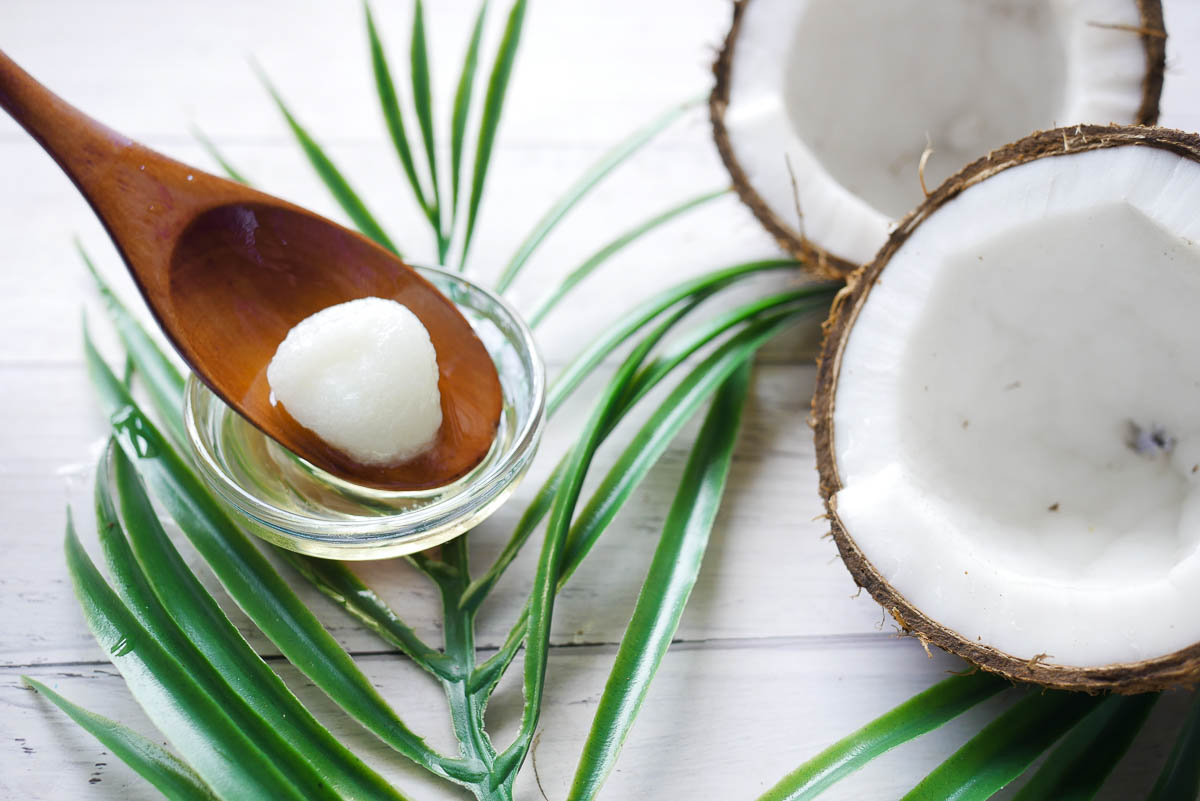
Table of Contents
What Is Coconut Oil?
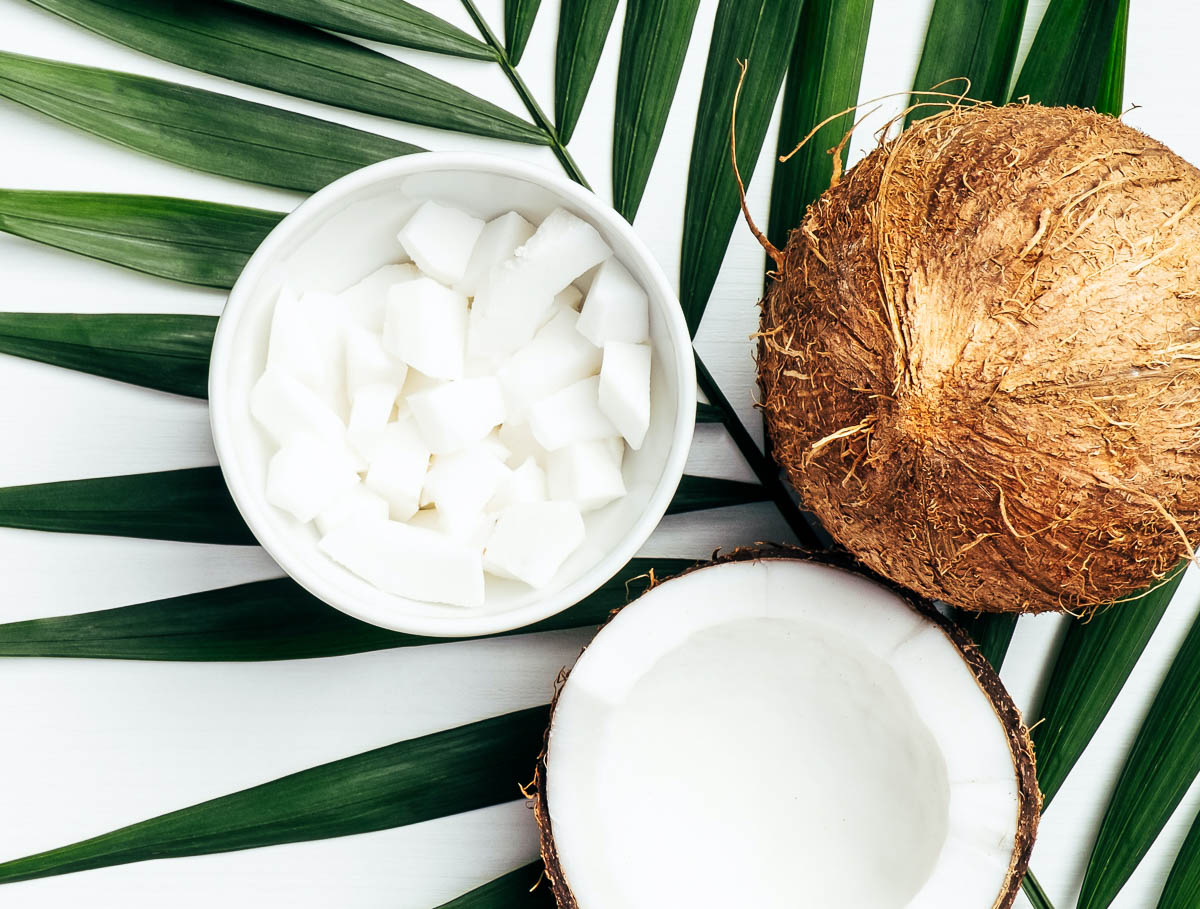
Coconut oil is the fat pressed from coconut meat. Unrefined (virgin) coconut oil comes from fresh meat. Refined coconut oil comes from dried meat, called copra, and gets cleaned and deodorized after pressing. Both end up as a plant-based fat that’s about 90% saturated, which is why it acts nothing like olive oil.
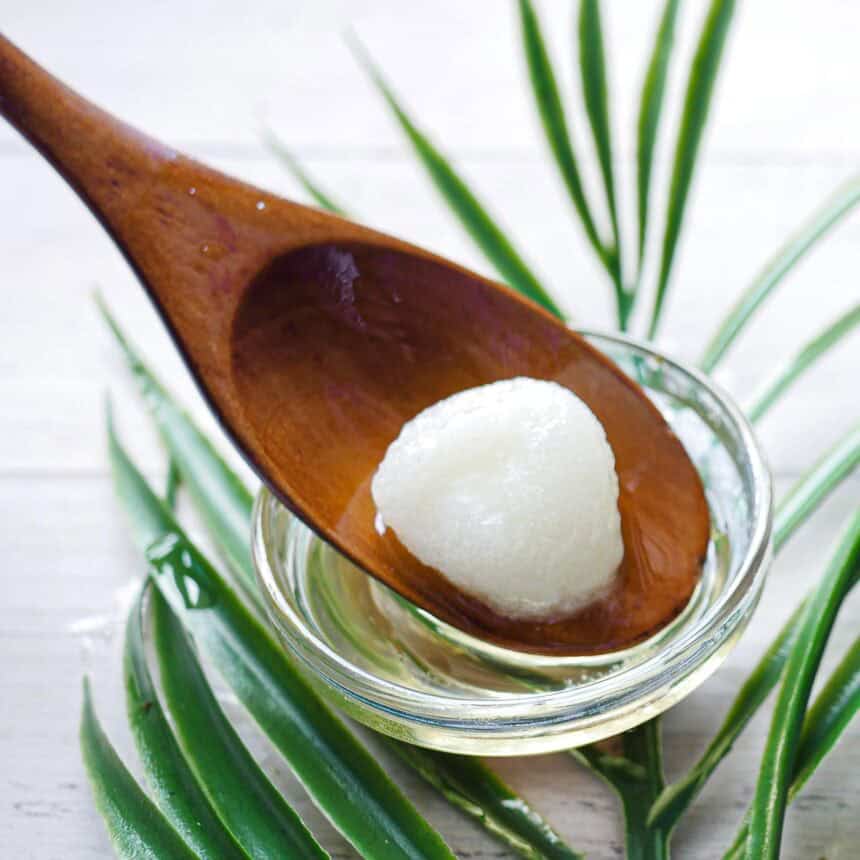
That saturated fat is why a jar is solid and white in a cool pantry and turns to clear liquid once the kitchen warms past 76°F. Mine goes liquid every July and firms back up by October, and it’s fine both ways. It’s also why coconut oil can stand in for butter in baking, and why it seizes up in a cold smoothie. More on both below.
One tablespoon of coconut oil has about 120 calories and 14 grams of fat, roughly 12 of them saturated. No sugar, no protein, no fiber. It’s a pure fat, so a little goes a long way, and I treat it as one fat in the rotation rather than the only one.
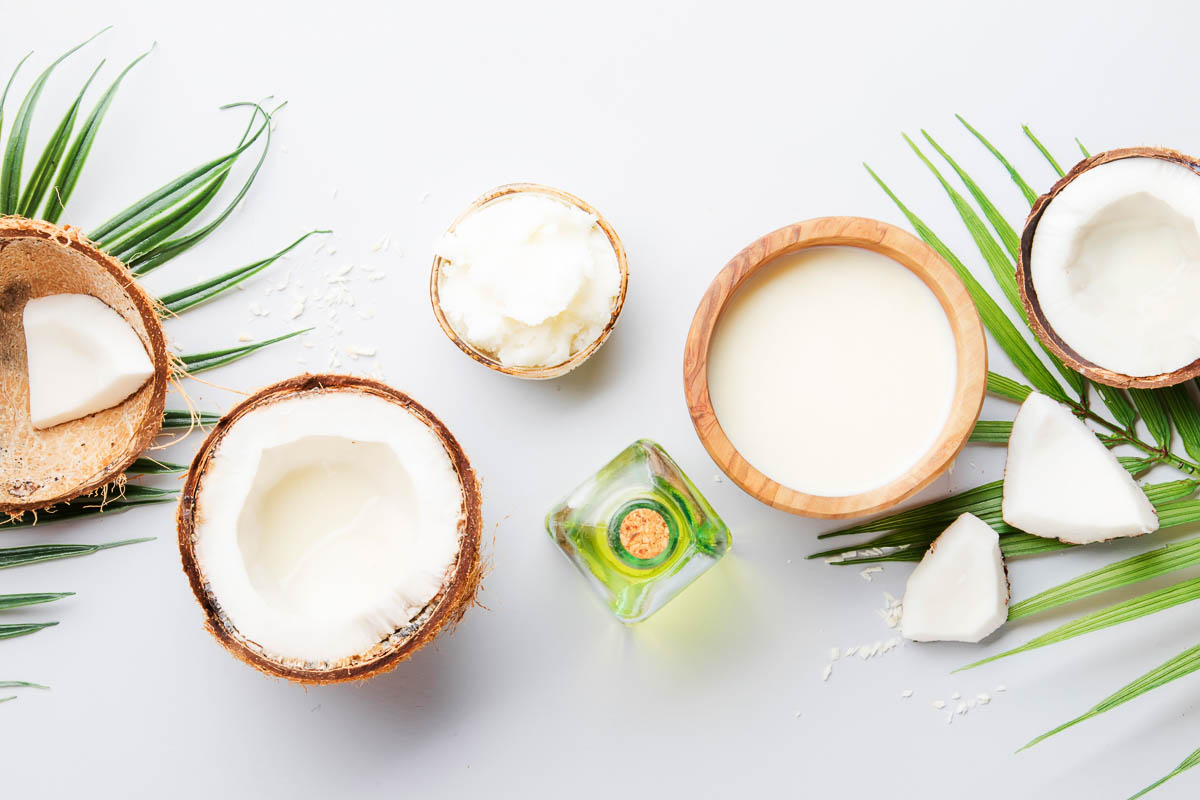
Coconut oil is one of the fats in my Healthy Fats guide, and if you’re deciding between the oil and the milk, Coconut Milk Brands covers the cans (or make your own with How to Make Coconut Milk). For smoothies, I skip the oil and drop in a Healthy Fats Smoothie Cube instead. And the fat in my morning Healthy Coffee is MCT oil, coconut oil’s runnier cousin. More on that below.
Refined vs. Unrefined Coconut Oil
Every jar on the shelf is one of two things, and the label tells you which. This is the decision that matters most, because the two behave differently at the stove.
- Unrefined (virgin, cold-pressed): Pressed from fresh coconut and left alone. It tastes and smells like coconut. Its smoke point is 350°F, so it’s the jar for baking, medium-heat sautéing, popcorn, smoothies and anything you’ll put on skin. If a label says cold-pressed, it’s unrefined.
- Refined: Pressed from dried coconut, then steamed and filtered until it’s nearly flavorless. Its smoke point is 400 to 450°F, so it’s the jar for searing tofu, roasting hot and stir-frying on nights when nobody wants dinner tasting like a macaroon. Look for expeller-pressed on the label. That means it was pressed by machine instead of extracted with a chemical solvent.
- What I buy: Two jars. An organic unrefined coconut oil for almost everything, and one refined jar for high heat. Costco and Trader Joe’s both carry organic unrefined at good prices if you’d rather grab it in person.
How to Use Coconut Oil in the Kitchen
Here’s where each jar earns its spot, with the recipes I make on repeat.
- Sautéing: I start Vegan Potato Soup and Red Lentil Soup by softening the onions in a spoonful of coconut oil. Unrefined is fine at medium heat and adds a soft sweetness that soups love. Switch to refined if you’re cranking the burner.
- Roasting: A teaspoon of coconut oil is what caramelizes the pear for the vinaigrette in my Winter Pear Salad and helps the maple walnuts on top toast without burning. It’s also my pick for Sweet Potato Noodles, because yes, I do want that hint of coconut.
- Baking: Coconut oil swaps for butter one to one. Use it solid where a recipe wants softened butter and melted where it wants melted. Baked goods come out a little crisper, since coconut oil has none of the water butter carries.
- Smoothies: This is the question I get most. Coconut oil hits frozen fruit, seizes, and blends into waxy white flecks. Two fixes. Blend the oil with your liquid and greens first, then add the frozen fruit. Or skip it and drop in a Healthy Fats Smoothie Cube, which is coconut milk, cashews and MCT oil already blended and frozen to melt in smoothly. If you just want coconut flavor, a Coconut Milk Smoothie gets you there with no oil at all. New to blending greens? Start with the Best Green Smoothie, then play with fats once the habit sticks.
- Coffee and warm drinks: MCT oil is the medium-chain fat pulled out of coconut oil and bottled on its own. It has no coconut flavor and stays liquid even in the fridge, which is why it blends into my Healthy Coffee without a slick on top and never flecks in a smoothie. Coconut oil itself works in a warm drink too, as long as the drink stays warm.
- Popcorn: Stovetop popcorn in a tablespoon of unrefined coconut oil is the movie-theater flavor without the movie-theater butter. Oil in the pot, three test kernels, lid on, then the rest once they pop.
How to Melt and Measure Coconut Oil
- Read the recipe first. If it says melted, measure after melting. If it says solid or softened, scoop it firm and level it off like shortening. The two measure differently, and cookies notice.
- Melt it gently. Set the jar in a bowl of warm water for ten minutes, or spoon what you need into a small dish and microwave in 10-second bursts. It melts at 76°F, so it doesn’t take much.
- Match temperatures. Add melted coconut oil to room-temperature ingredients. Cold plant milk or a cold flax egg turns it back into flecks before you can stir.
- Keep the spoon dry. Water in the jar is the quickest way to shorten its shelf life.
Coconut Oil vs. Olive Oil vs. Avocado Oil
I keep all three, and they don’t compete. Here’s how I decide which one to reach for.
- Coconut oil: Solid in the jar. Coconut flavor if unrefined, none if refined. Smoke point 350°F unrefined, up to 450°F refined. Best for baking, popcorn, medium-heat sautéing and anywhere you’d use butter.
- Olive oil: Liquid, grassy and a little peppery. Extra virgin sits around 375°F. Best for dressings, drizzling and everyday sautéing. It’s the fat I want to taste in a Lemon Vinaigrette.
- Avocado oil: Liquid and neutral, with a smoke point near 500°F. Best for searing, roasting hot and anything where the fat should disappear.
The short version: if I want to taste the fat, olive oil. If I want to forget it’s there, avocado oil. If I want a hint of coconut or something that behaves like butter, coconut oil.
Substitutions and Variations
- For sautéing: avocado oil or olive oil, same amount.
- For baking: butter or vegan butter one to one for solid coconut oil, or any neutral oil one to one for melted. Expect a slightly softer result with butter.
- For smoothies: MCT oil if you want the fat without the flecks, or a spoonful of almond butter, hemp hearts or half an avocado for creaminess. My Healthy Fats Smoothie shows how I rotate them.
- Oil-free: Skip it. Sauté in a splash of vegetable broth and bake with mashed banana or applesauce. My Oil-Free recipes are built this way.
- Not a coconut fan: Use refined coconut oil. Same behavior, no flavor.
How to Store Coconut Oil
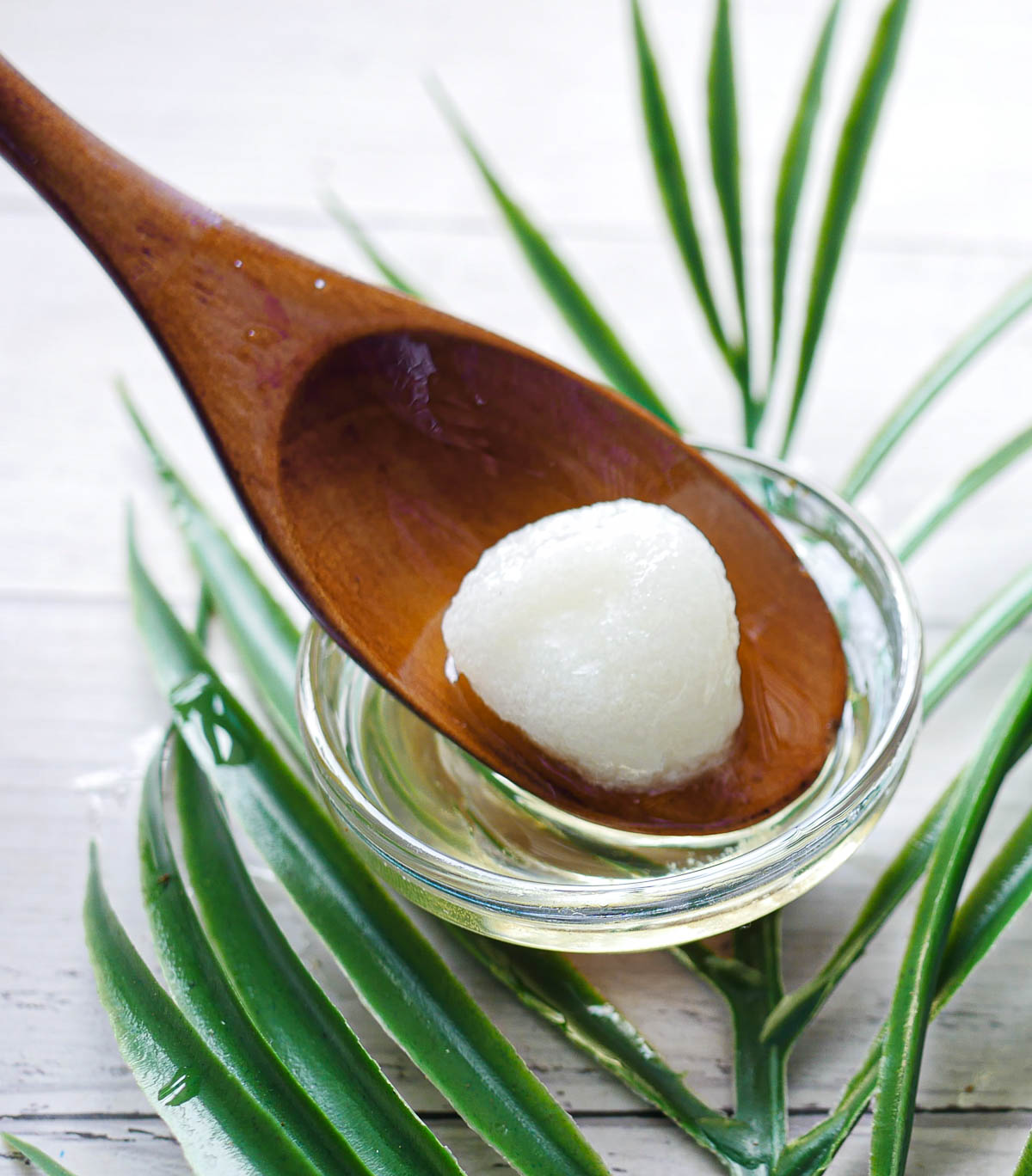
- Where: A cool, dark pantry with the lid on tight. Solid or liquid doesn’t matter, and going back and forth all summer doesn’t hurt it.
- How long: About two years from when it was pressed, and unrefined often lasts longer. Go by the date on the jar.
- Fridge: Not needed. Cold turns it rock-hard and annoying to scoop.
- Freezer: The oil doesn’t need it, but Healthy Fats Smoothie Cubes keep for six months and are the easiest way to portion coconut fat for smoothies.
- When it’s done: A yellow tint, dark specks or a sour smell. Good coconut oil is bright white and smells like coconut or like nothing at all.
Coconut Oil Beyond the Kitchen
Unrefined coconut oil is also the base of most of the DIY recipes on this site, because it’s solid at room temperature and melts on contact with skin. These three live in my bathroom cabinet:
- Homemade Deodorant: the DIY I’ve made the longest. Coconut oil is the base that holds everything together.
- Homemade Toothpaste: starts with a spoonful of coconut oil.
Around the house, a thin coat also keeps wooden cutting boards and spoons from drying out. Use the unrefined jar for all of it.
More Ingredient Guides
If you like knowing what’s in the jar before you buy it, these are next:
- Superfoods List for Smoothies: what I actually add to the blender, by the spoonful.
- Top 10 Leafy Green Vegetables: which greens blend best and how to keep them fresh.
- Non-Dairy Milk Alternatives: the plant milks I blend with and when each one works.
- Plant-Based Protein Powder: how I choose a tub without the chalky aftertaste.
- Blenders for Smoothies: the machines I’ve tested and the one I’d buy first.
Common Questions
Use coconut oil anywhere you would use butter or a neutral oil: sautéing vegetables, roasting, baking and popping popcorn. Unrefined coconut oil has a 350°F smoke point and a light coconut flavor, so it suits baking and medium-heat cooking. Refined coconut oil has a 400 to 450°F smoke point and no flavor, so it suits searing and high-heat roasting. Swap it for butter one to one in baking.
Use unrefined coconut oil when you want coconut flavor, are cooking at medium heat or plan to use it on skin. Use refined coconut oil when you want a neutral fat that can handle high heat up to 450°F. Both are solid below 76°F and work the same way in baking. If a label says cold-pressed, the oil is unrefined.
Yes, but coconut oil hardens the moment it touches frozen fruit and can blend into small white flecks. To avoid that, blend the coconut oil with your liquid and greens first, then add the frozen fruit. Or use MCT oil or a frozen coconut milk cube instead, since both blend smoothly into cold smoothies.
Yes. Swap coconut oil for butter one to one. Use solid coconut oil where a recipe calls for softened butter and melted coconut oil where it calls for melted butter. Because butter contains water and coconut oil does not, baked goods made with coconut oil often come out a little crisper.
For sautéing, use avocado oil or olive oil in the same amount. For baking, use butter or vegan butter one to one in place of solid coconut oil, or a neutral oil in place of melted coconut oil. For oil-free cooking, sauté in a splash of vegetable broth and bake with mashed banana or unsweetened applesauce.
Yes, but slowly. Coconut oil keeps about two years in a cool, dark pantry with the lid on, and unrefined coconut oil often lasts longer. Coconut oil that has gone bad turns yellow, develops dark specks or smells sour. Melting and re-solidifying in a warm kitchen does not harm it.















I have recently learned that I have high cholesterol. I just finished the 21 day cleanse and so have been using a lot of coconut oil. While researching how to lower my cholesterol naturally, it is recommended that I decrease the amount of saturated fat in my diet. I didn’t realize that coconut oil has SO much saturated fat – 13 g for 1 Tbsp! Any suggestions on what to substitute for the coconut oil in your recipes?
We’re def huge fans of coconut oil here, yet we understand your concern Nita. Polyunsaturated oils like safflower oil or flaxseed oil might be great for you to check out. In the meantime, all the added fiber you took in during the cleanse may have done just what you were after, despite the added coconut oil. We’d encourage you to go for a post-cleanse blood test to see what your cholesterol is now! 🙂
Do you recommend mixing coconut oil with anything if you use it as a moisturiser for your face?
Hey Sophie, I would use a very small amount of high-quality coconut oil and probably use it only on the delicate skin around your eyes. It can def be used as a makeup remover or as part of the “oil cleansing” method but, I recommend staying away from using it all over your face as a moisturizer (even if you mix it with something) because that could result in clogged pores.
You mentioned that coconut oil changed the texture? Does the coconut oil solidify in a smoothie if it’s cold? Is MCT oil better to use?
Hey Janshell,
Both are really great options and it really has to do with what you prefer. I would suggest trying both and seeing which one works for you. I personally prefer to use coconut oil in my smoothies.
Hope that helps!