

This post may contain affiliate links.
Curious about a plant-based meal plan, or did a friend say you should try one? However you landed here, I hope it’s not your last time on my blog.
I put this free seven-day plant-based meal plan together to help you give it a try. There’s no pressure and no strict rules, just recipes I know taste good. Along the way, you’ll taste a variety of flavors, fruits and vegetables, and pick up simple ways to prepare them. Then you can ease into a new way of eating at your own pace.

Every recipe is plant-based as written, and my family eats and enjoys these meals. If you’d like more ideas, browse my whole food plant-based recipes. When you’re ready to plan a full year, try my Rawk the Year Meal Planner.
Table of Contents

What Is a Plant-Based Meal Plan?
A plant-based meal plan puts vegetables, fruit, beans, whole grains, nuts and seeds at the center of your plate. Some people eat fully vegan, and others add a little dairy, eggs or meat. Either way works here.
Every recipe is plant-based as written, so you can add what you love. Each day includes breakfast, lunch, dinner and a snack, and runs about 1,200 to 1,400 calories. The oats repeat on purpose to save you time.

Download Grocery List
Enter your name + email and I’ll send you the grocery list for this plan. It covers every ingredient for the week, sorted by store section.
Day 1 Meal Plan
Day 1 totals (one serving of each recipe): 1,392 calories, 40 g protein, 34 g fiber, 44 g sugar.
Breakfast
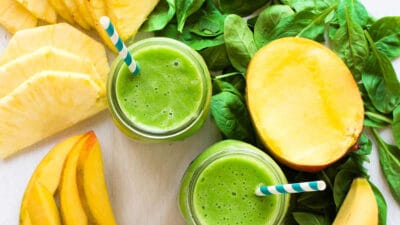
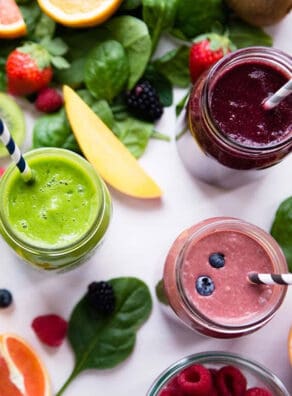
This green smoothie tastes like fruit first, with spinach blended in. It takes five ingredients and five minutes.
Lunch
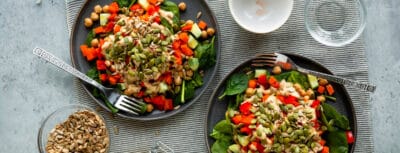
Chickpeas, crunchy veggies and a citrus tahini dressing make this salad filling. It comes together in 15 minutes.
Dinner
Rice, black beans, sautéed peppers and salsa fill this smoky bowl. It makes four servings, so lunch is covered tomorrow.
Snack
Chickpeas roast with coriander, cumin and turmeric until crispy. They bake on one pan in about 25 minutes.
Day 2 Meal Plan
Day 2 totals (one serving of each recipe): 1,341 calories, 38 g protein, 30 g fiber, 31 g sugar.
Breakfast
Tender oats with apple, carrot and cinnamon taste like carrot cake. Cook one batch today and reheat it on Days 4 and 6.
Lunch
Napa cabbage, cucumber and fennel get tossed in a creamy, herb-packed cashew dressing. Soak the cashews for an hour first.
Dinner
Mushrooms, cherry tomatoes and basil cook right alongside the linguine. It takes 30 minutes and leaves one pot to wash.
Snack
Herb-loaded hummus blends in 10 minutes with parsley, cilantro and dill. Scoop it up with raw veggies.
Day 3 Meal Plan
Day 3 totals (one serving of each recipe): 1,292 calories, 45 g protein, 40 g fiber, 44 g sugar.
Breakfast
Frozen berries and spinach blend into a thick, sweet smoothie. It takes five minutes.
Lunch
Silky potato and cauliflower soup comes topped with crispy kale croutons. Freeze extra portions for another week.
Dinner
Golden chickpeas with taco seasoning get piled into corn tortillas with creamy avocado. Dinner is ready in 30 minutes.
Snack
Two ingredients and one tray make a salty, crunchy snack. Bake them for 10 to 15 minutes.
Day 4 Meal Plan
Day 4 totals (one serving of each recipe): 1,191 calories, 36 g protein, 34 g fiber, 42 g sugar.
Breakfast
Reheat the oats you cooked on Day 2 with a splash of plant milk. There’s nothing new to cook this morning.
Lunch
Tender, massaged kale meets a creamy dairy-free garlic lemon aioli, chickpeas and pepitas. Sturdy kale also packs well.
Dinner
Brown rice, black beans, salsa and avocado get wrapped in warm tortillas. Make a few extra and freeze them for busy nights.
Snack
Apples, a little water, lemon and a cinnamon stick simmer in the slow cooker. Your kitchen will smell amazing.
Day 5 Meal Plan
Day 5 totals (one serving of each recipe): 1,312 calories, 26 g protein, 38 g fiber, 46 g sugar.
Breakfast
Stir this chia pudding together tonight and eat it tomorrow. Top it with banana, almond butter and granola.
Lunch
Crisp greens, apple and avocado meet a blended strawberry basil dressing. It takes 10 minutes.
Dinner
Crispy potato tacos fill corn tortillas with garlicky mashed potato. They take 50 minutes and taste like comfort food.
Snack
Oats, seeds and almonds get pressed into chewy bars. Bake a batch on Sunday and grab one all week.

Day 6 Meal Plan
Day 6 totals (one serving of each recipe): 1,278 calories, 43 g protein, 33 g fiber, 42 g sugar.
Breakfast
Finish the last portion of your oat batch. Add a spoonful of nut butter if you want extra staying power.
Lunch
Velvety carrot soup with fresh ginger and cashews reheats well. Make the full pot so you have leftovers.
Dinner
Crisp asparagus, carrots and snow peas get drizzled with a creamy almond butter sauce. Serve it over brown rice.
Snack
Chickpeas bake with garlic powder, cayenne and nutritional yeast until crispy. They taste a bit like popcorn.
Day 7 Meal Plan
Day 7 totals (one serving of each recipe): 1,192 calories, 29 g protein, 26 g fiber, 58 g sugar.
Breakfast
Avocado makes this smoothie rich and creamy with no dairy. Spinach and pineapple keep it bright.
Lunch
Roasted pumpkin blends with coconut milk into a silky soup. Make it on Sunday and reheat it all week.
Dinner
Meaty portobello caps hold a savory kale, sun-dried tomato and olive filling. A homemade almond-cashew sprinkle goes on top.
Snack
Oats, sliced almonds and dried blueberries bake into crunchy granola with a little maple syrup. Eat it by the handful.
Substitutions and Variations
- Swap anything you like: trade any lunch for another lunch, and do the same with dinners and snacks.
- Smoothies: blend one serving at a time in your Vitamix, or freeze the ingredients in bags on Sunday.
- Soups: the potato, carrot ginger and pumpkin soups freeze well. Portion them into Souper Cubes and thaw overnight in the fridge.
- If you eat dairy: add Greek yogurt to the Chipotle Veggie Bowl or parmesan to the portobellos.
5 Tips for Following a Plant-Based Meal Plan
- Meal prep. Give yourself an hour on Sunday to cook the oats, roast the chickpea snacks and chop vegetables. Then your weekday meals come together fast.
- Repeat recipes. Cooking the same recipe twice saves time and sanity. Leftovers are a good thing, and that’s why the oats appear three times.
- Buy the shortcuts. Pre-diced onions, cubed sweet potatoes and frozen vegetables handle the basic prep for you. Nobody needs extra chopping on a Tuesday.
- Build toppings you love. Add whatever makes you excited to eat, like grilled chicken, teriyaki sauce or sour cream. Those aren’t vegan, and that’s okay, because plant-based doesn’t have to be all or nothing. Think of them as condiments, and if they keep you going, that’s a win.
- Keep snacks within reach. Portion the chickpeas, almonds or bars into containers on Sunday so a snack is always ready. Find more in my snack recipes.
Common Questions
You’ll eat vegetables, fruit, beans, whole grains, nuts and seeds. This plant-based meal plan adds smoothies, soups, salads, tacos, burritos and a daily snack. Every recipe is plant-based as written.
Not exactly. Plant-based means plants take center stage, and some people still enjoy a little dairy or eggs. Vegan means no animal products at all. This plan is vegan as written, so add dairy or eggs back if you like.
Each day adds up to roughly 1,200 to 1,400 calories when you eat one serving of every recipe. These numbers come from each recipe card. If you need more food, double a dinner or add another snack.
Protein comes from chickpeas, beans, almonds, oats and seeds. Most days in this plan land between 26 and 45 grams. Also, each chickpea or almond snack adds 8 to 13 grams.
Yes, you can meal prep this plant-based meal plan. Cook the oats once for three breakfasts. Then freeze the soups in single portions and roast the chickpea snacks on Sunday. Dress your salads the day you eat them.
The plan covers one person’s week, and the larger recipes leave leftovers. Double the grocery list for two people. Recipes that serve four, like the soups and burritos, also give you freezer portions.

More Meal Plans
If you enjoyed this plan, here are a few more to try next.
- Vegan Meal Plan: a fully vegan week for when you want to skip animal products completely.
- Vegetarian Meal Plan: meatless meals that leave room for eggs and dairy.
- Mediterranean Diet Meal Plan: olive oil, beans, vegetables and whole grains across a week of easy dinners.
- 30 Days of Smoothies Plan: a month of smoothie recipes to blend, freeze and grab on busy mornings.
- Winter Meal Plan: cozy, seasonal recipes for the colder months.
- Weight Loss Meal Plan: a day-by-day plan with smoothies, lunches, dinners and snacks.
- All Meal Plans: the full library of free plans, in one place.
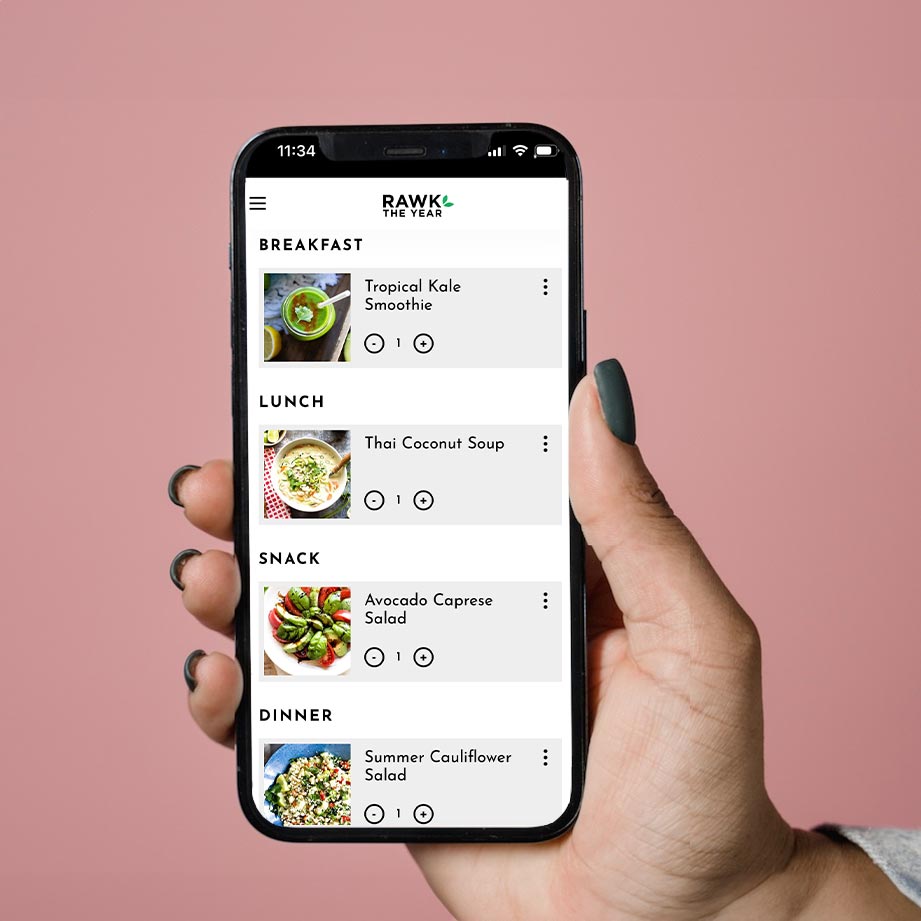
Love my recipes?
Let me plan your week!
Dinner decided, grocery list done. 750+ ad-free recipe library and live coaching calls included.
7 days free. Cancel anytime.











Hey Jen
I used to make smoothies years ago before all the comments of “they’re not good for you, too sugary, you should eat fruits not drink them” etc etc put me off. You’ve got me excited to give them another go in a bid to try and rescue my liver! I’m planning to do your 3 day smoothie plan and then follow up with a 7 day meal plan. But I’m confused about something. A lot of people swear by intermittent fasting, where you eat all your food in a 4 hour window (eg 4pm – 8pm) and then fast for 20 hours. Most health food practitioners dont recommend snacking, saying we’re not meant to graze like cows and we should only eat at mealtimes. Even dentists discourage snacking. What are your thoughts on this and how would you recommend tailoring your plans to take these views into account?
Love this question—and I totally get where you’re coming from. There’s so much conflicting info out there that it can make healthy eating feel harder than it needs to be.
Here’s my take: our bodies are smart. Listening to them is always priority #1. If you’re hungry, feed it! If you’re not, skip the snack. Depending on your activity level, metabolism, hormones, and even stress, your body’s needs can change day to day.
Some people thrive on intermittent fasting, while others feel sluggish or moody when they go that long without food. Feel free to experiment—use what you’ve learned from experts and try it out for yourself. You’ll know pretty quickly if it’s working or not.
For me personally, I’m pretty active but also sit at a desk for long stretches, so a mid-afternoon smoothie or snack helps me avoid that 3 p.m. crash and keeps my energy steady. Smoothies are such a gentle, nourishing way to give your body a boost without overdoing it.
You’re doing great by tuning in and trying things that support your body’s healing—keep rawkin’ it!
Since seitan is actually wheat gluten, it is not suitable for folks with celiac disease or those who are following a gluten-free weight loss program.
Yep— seitan is made from wheat gluten, so it’s definitely not a good fit for anyone with celiac disease or avoiding gluten. At Simple Green Smoothies, we don’t use seitan in our recipes. We focus on nourishing, plant-based ingredients that are naturally gluten-free (like beans, lentils, quinoa, nuts, and seeds) so everyone can enjoy healthy, delicious meals that make you feel amazing.
Thank you for sharing this free menu with me, I was wondering what am I supposed to do for lunch do I not eat? Or do I use one of the other meals? Thank you again
You can absolutely eat lunch!
If you’re looking for a recommendation – it might be easy to double up on your smoothies and have one for breakfast and one for lunch. Although, I would def recommend adding a plant-based protein powder to make it a worthy meal replacement, such as homemade protein powder
or doubling up on your dinner recipe and saving half for lunch the next day!
Both of these methods are used during our seasonal cleanses! Or you can have something totally different for lunch – the choice is yours! 🙂
All the menu looks delicious. Thank you for sharing a free menu plan 🙂
You’re so welcome! Hope you enjoy it as much as I do!
This is amazing! Thanks for sharing a free menu with us.
Welcome Erin!