

This post may contain affiliate links.
With over a decade of blending top-rated smoothie recipes, I’ve learned best smoothies come with intention. It starts with a great smoothie blender, the order you add ingredients, and a formula: liquid, plenty of fruit, a creamy thickener, and nutrient-rich add-ins to support your wellness goals. Let me show you how to make a smoothie like a pro!
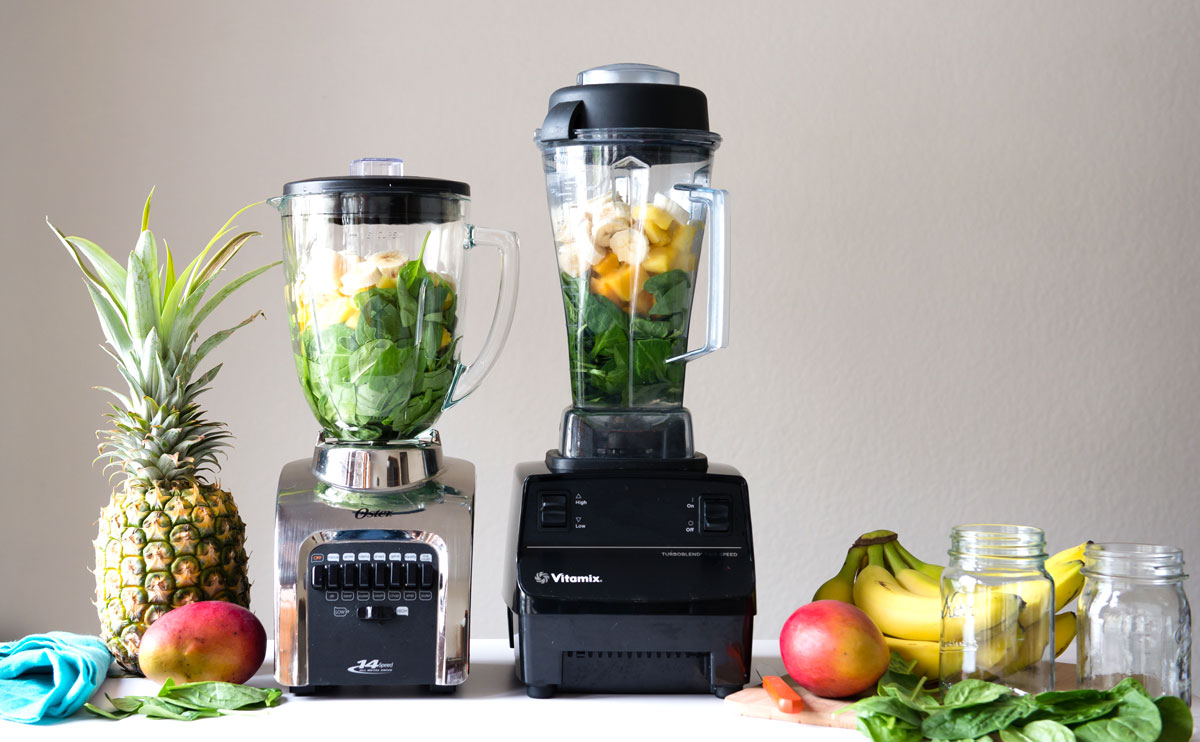
Table of Contents
Beginner Smoothie Formula
Most of my smoothie recipes follow a similar ratio that keeps them thick, creamy, and drinkable. A reliable starting point for 1 large (16oz) or 2 small (8oz) smoothies is below:
Fruit — 1 1/2 cups
- Apples
- Bananas
- Blackberries
- Blueberries
- Cherries
- Lemon + lime
- Mango
- Oranges
- Peaches
- Pineapple
- Strawberries
- Watermelon
Liquid Base — 1 cup
- Water
- Almond milk
- Coconut water
- Oat milk
- Coconut milk
- Protein shake
- Chilled tea
- Juice
- Cold brew
Optional Add-Ins — 1/2 -1 cup
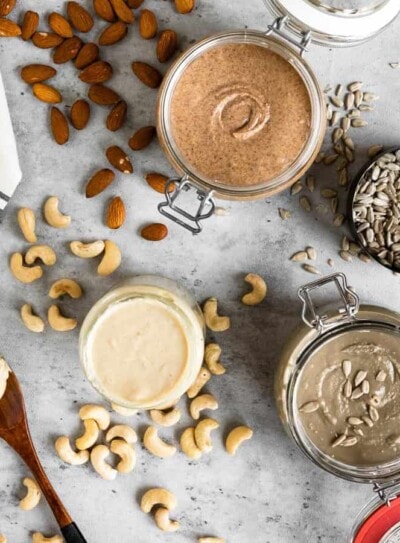
- Almond butter
- Cacao
- Chia seeds
- Cinnamon
- Collagen
- Cottage cheese
- Dates
- Flax seeds
- Frozen cauliflower
- Ginger root
- Hemp hearts
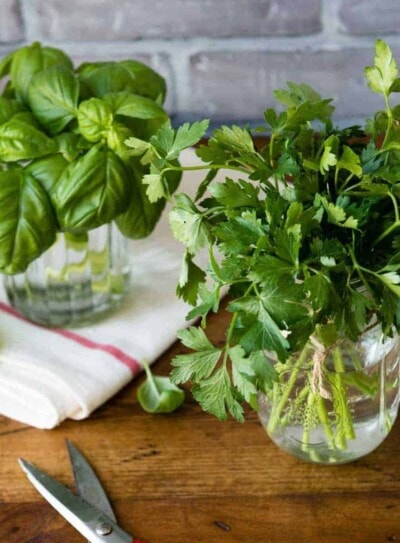
- Herbs: basil, cilantro, mint
- Honey
- Kale
- Nutmeg
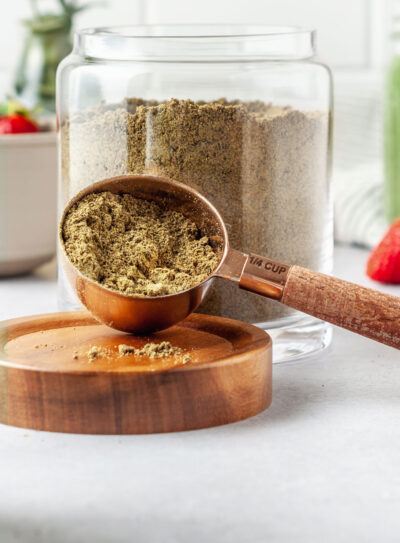
- Homemade protein powder
- Rolled oats
- Silken tofu
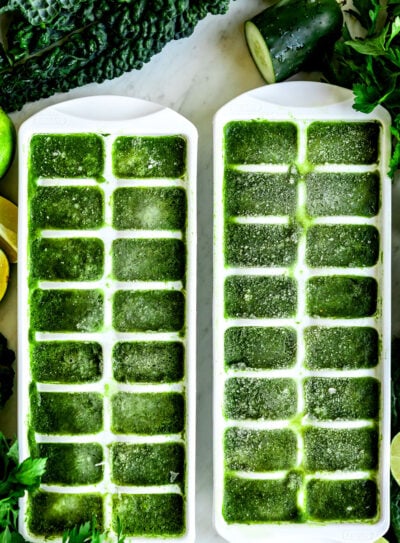
- Smoothie cubes
- Spinach
- Vanilla extract
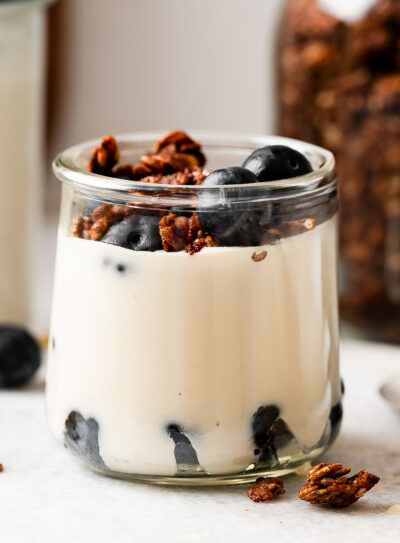
- Yogurt: Greek / Vegan yogurt
Save for Later!
Enter your info & I’ll send it to your inbox.
What Fruits Do I Put in a Smoothie?
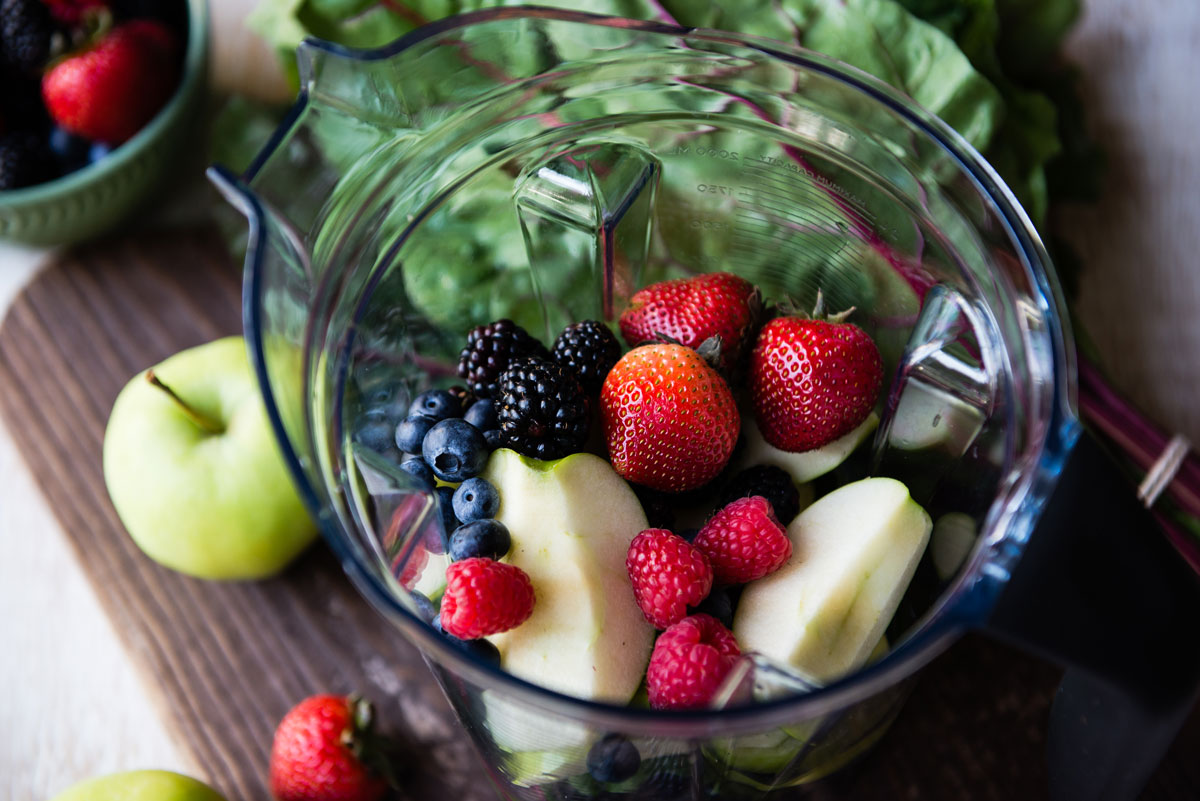
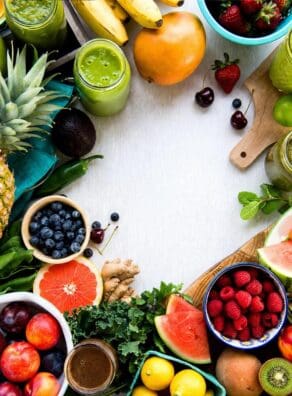
Frozen fruit creates a thick, flavorful blend without watering the smoothie down with ice. When adding fruit to a smoothie, I like to think in terms of these categories:
- Creamy base fruits: bananas, mango, or peaches help create a rich, smooth texture. Bananas are a great natural sweetener that add potassium and creaminess to a smoothie.
- High-flavor fruits: berries, pineapple, cherries, and citrus segments add acidity, color, and antioxidants.
- Tropical fruits: combinations of pineapple, mango, and banana pair especially well with coconut milk or water.
- Low-sugar fruit: berries, green apples, cherries and peaches are my go-to low sugar fruits to blend in smoothies
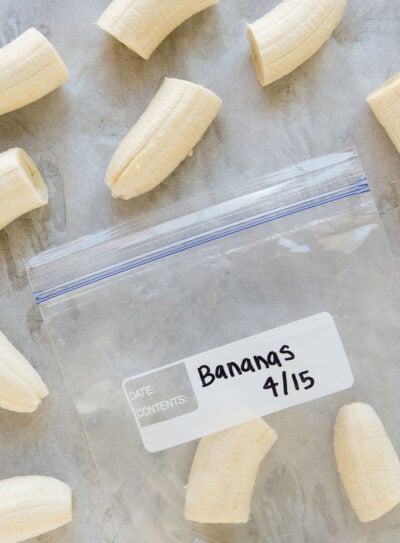
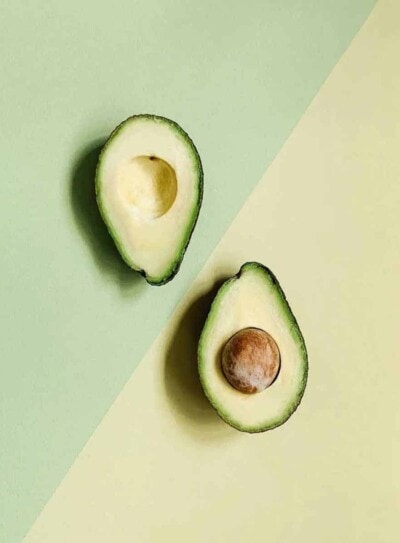
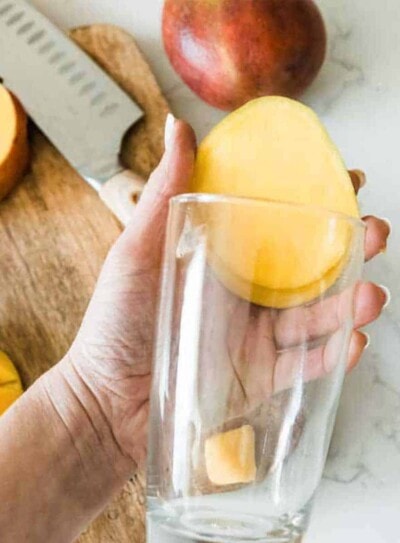
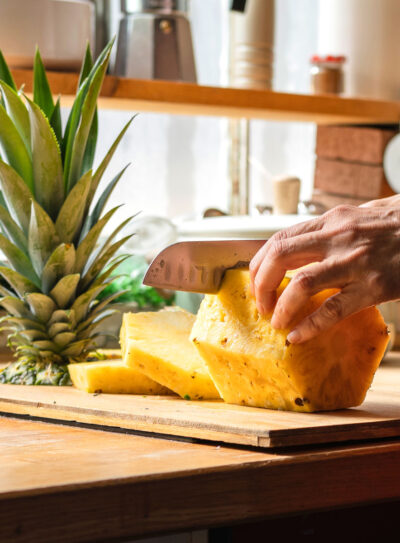
If using mostly fresh fruit, balance it with a frozen banana or a few smoothie cubes to avoid a thin, lukewarm smoothie.
Liquid Base for Smoothie
Your liquid sets the overall flavor and richness of the smoothie. Good options include:
- Water is great at hydrating the body, has zero calories and doesn’t alter the taste of a smoothie.
- Plant milks such as almond, oat, or coconut are great non-dairy milk alternative.
- Chilled tea, like green tea, is great for a natural energy boost as well as a fat-burning ingredient. Try herbal teas to soothe the stomach and calm the body.
- Coconut water is loaded with electrolytes and is terrific for replenishing electrolytes lost during your workout. It can be a strange taste, so if you’re new to coconut water, try doing half coconut water and half regular water in your next smoothie, then increase your ratio as you fall in love
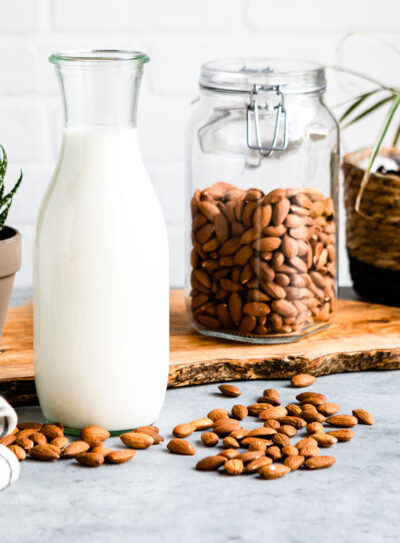
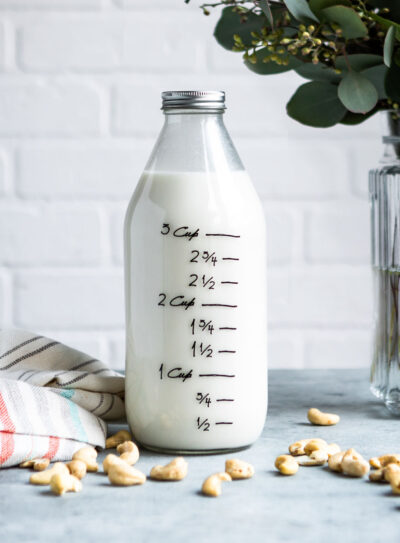
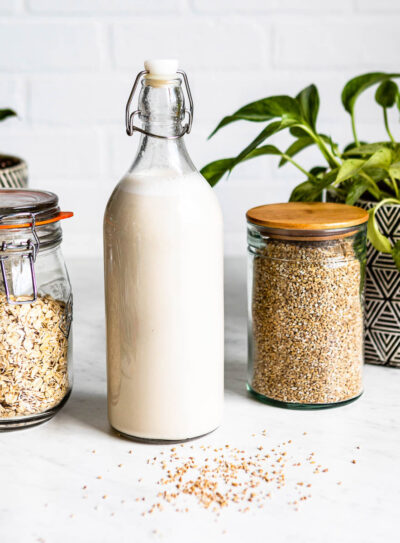
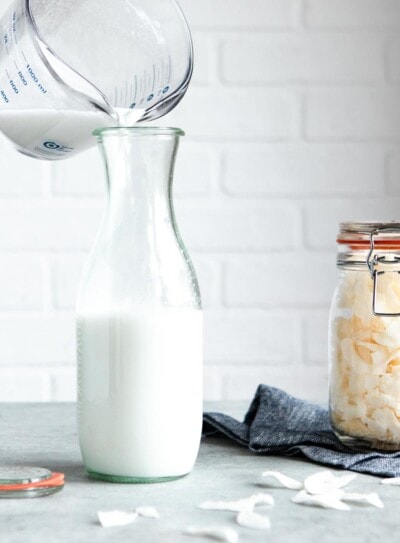
Aim for roughly 1 cup of cold liquid per smoothie, starting on the lower end if you like thicker smoothies and adding more only if the blender struggles.
Smoothie Add‑Ins
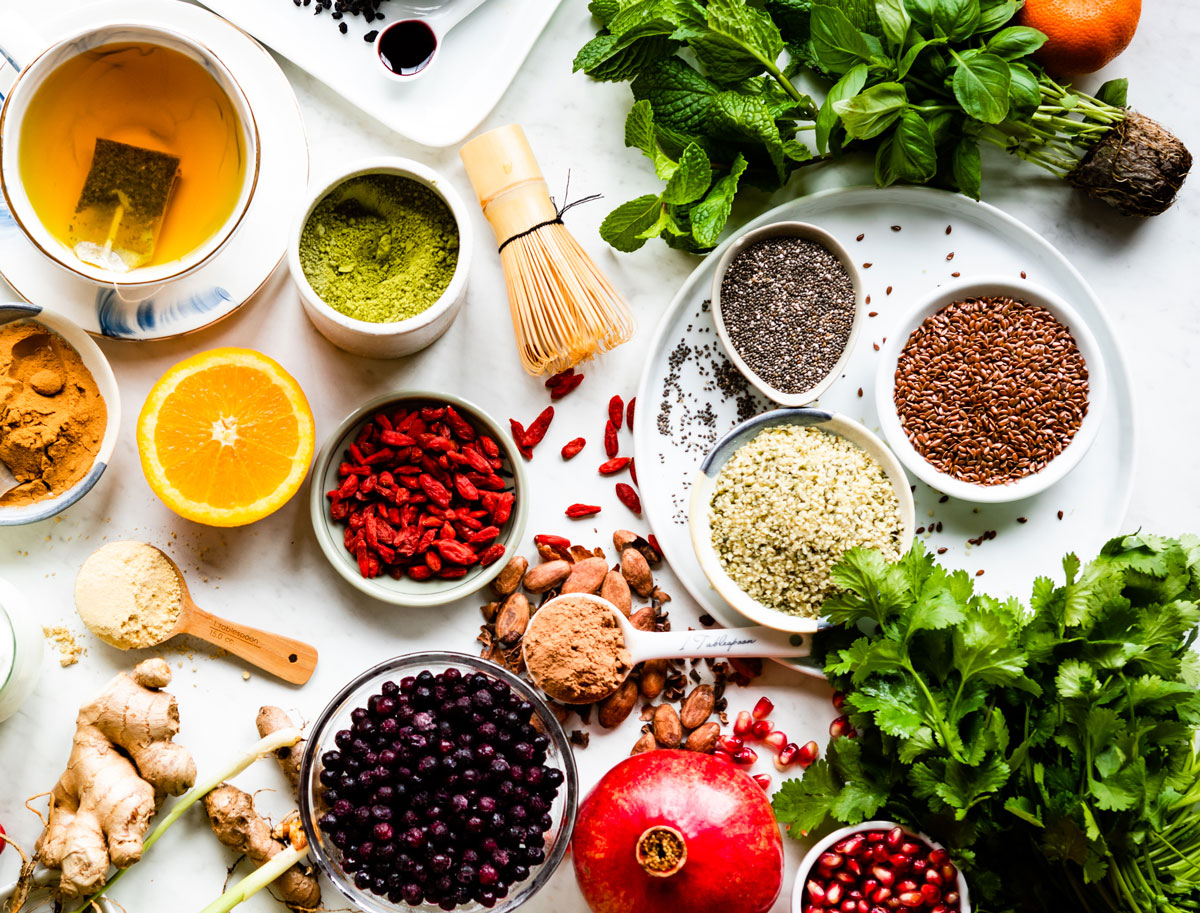
Add-ins are where smoothies become truly customizable and can lean more toward “treat,” “post-workout,” or “sneaky salad.” Popular options:
- Protein boost: homemade protein powder, collagen, nut butter
- Superfoods for smoothies: chia seeds, flax seeds, hemp hearts, or oats for fiber and healthy fats.
- Leafy green vegetables: spinach, kale, romaine, chard
- Frozen veggies: frozen avocado, zucchini or cauliflower for extra micronutrients and silky texture.
- Flavor enhancers: vanilla extract, cinnamon, nutmeg, mint, or cacao for depth and dessert-like vibes.
- Sweeteners (if needed): honey, maple, dates or extra fruit are how I sweeten smoothies.
Make‑Ahead Smoothie Tips
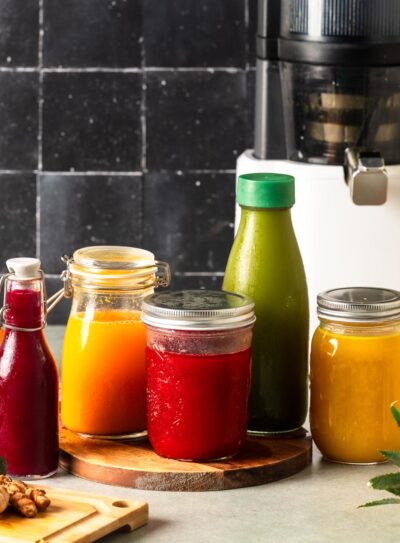
Smoothies are at their best right after blending, but you can prep smart to make busy mornings easier. Helpful strategies:
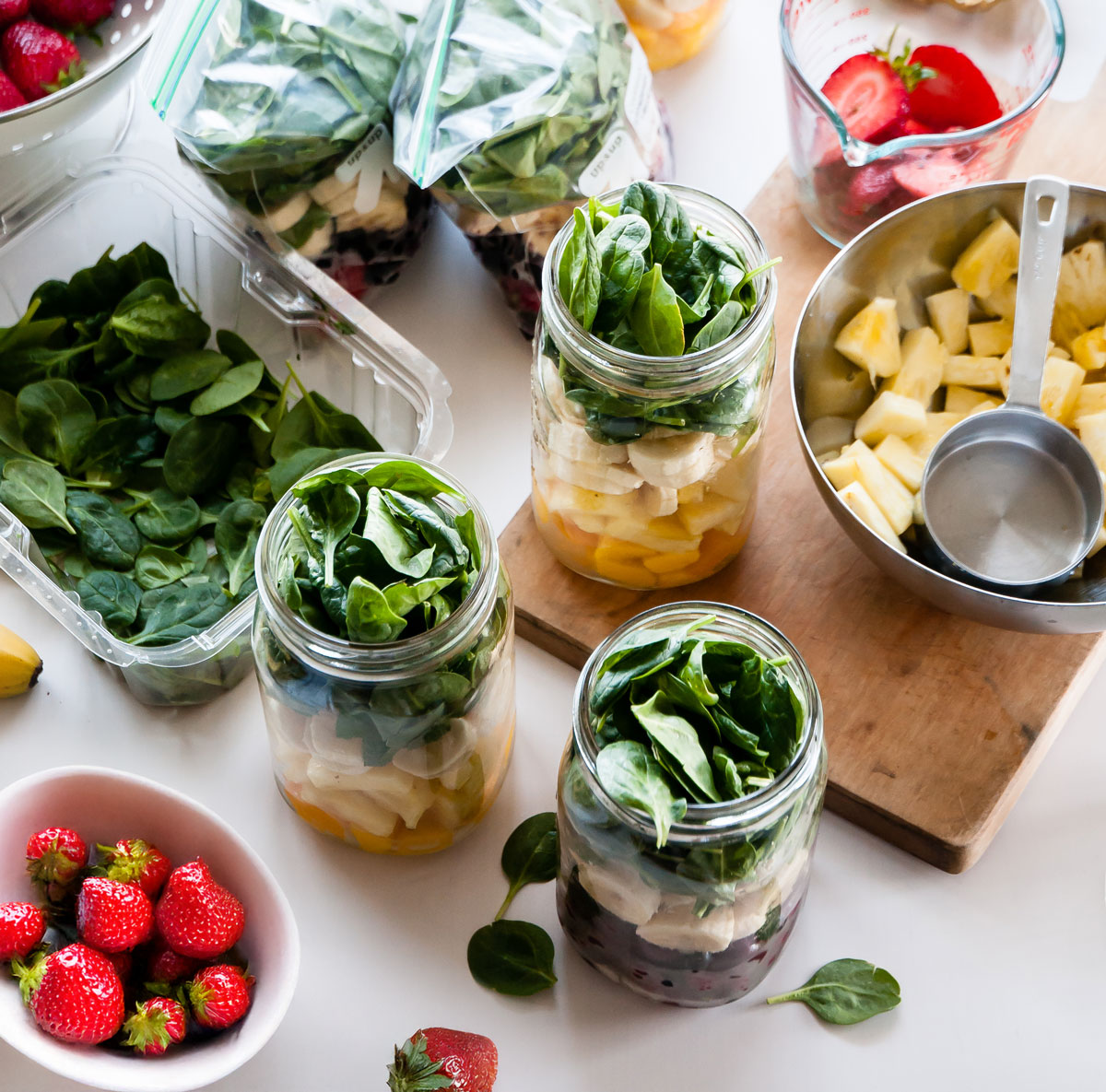
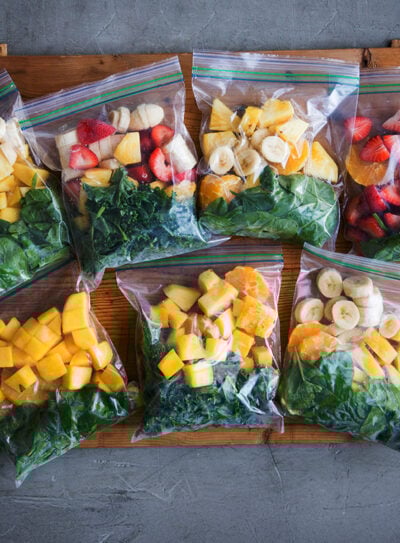
- For maximum time savings, prep “Frozen Meal Prep Smoothie Packs” for a week (or even a month) of smoothies into single-serving freezer bags or mason jars with the fruit, greens, and add-ins. When ready to drink, just add liquid and blend.
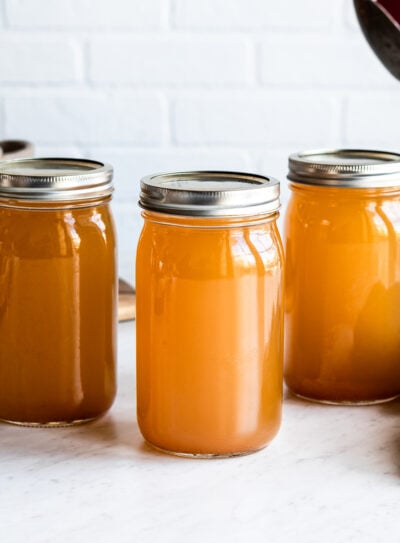
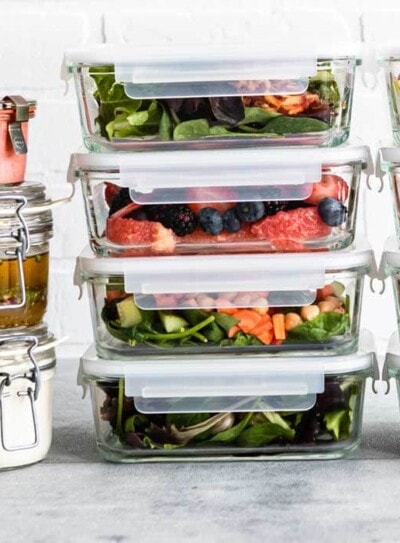
- Pour blended smoothies into airtight containers and fill them as close to the top as possible to minimize air exposure and oxidation. Store in the refrigerator for up to 2 days, but the sooner you drink, the best taste and texture.
- For longer storage, blend the smoothie fully and freeze it in freezer-safe containers with room for expansion, then thaw in the fridge the day before drinking.
Pre-made smoothies tend to separate if stored; a quick re-blend or shake helps, but for the best texture and flavor, plan to drink them soon after making.
Smoothie Blending Tips
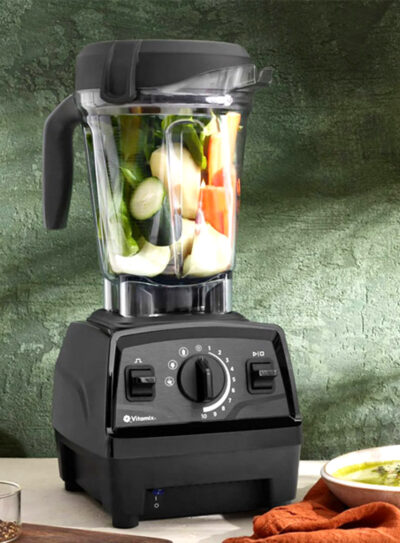
Aside from investing in a blender for smoothies, how you load the blender affects how smoothly and quickly everything blends. For most standard blenders:
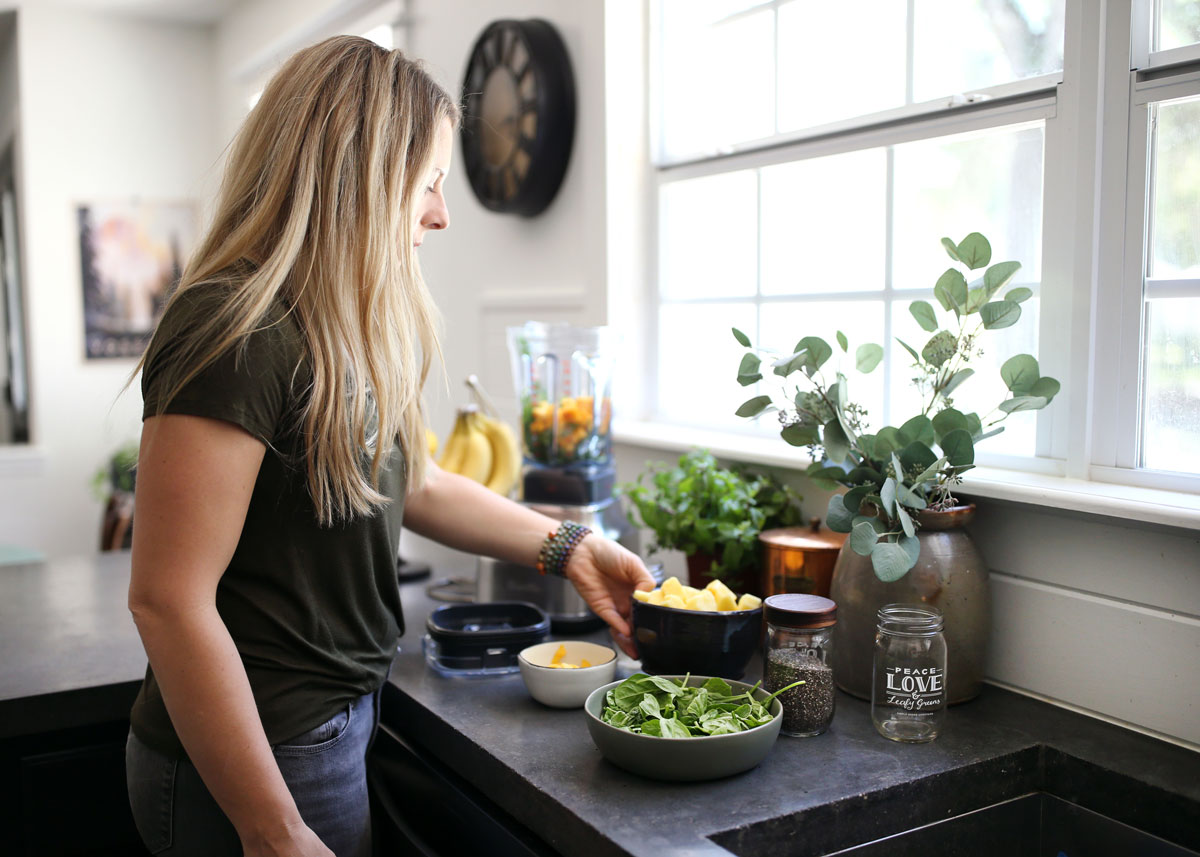
- If you’re using a standard blender, blend liquid and leafy greens first. Then add fruit and blend again.
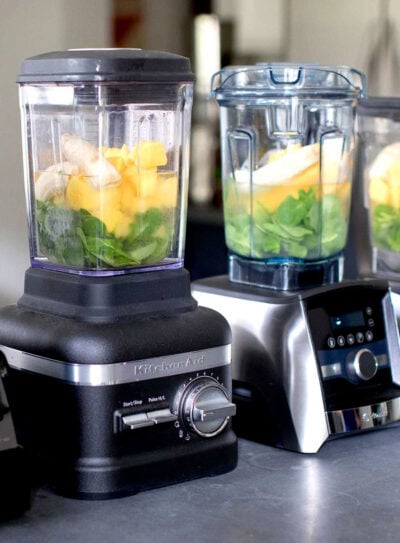
- Add ingredients from softest to firmest so the blades catch and pull everything down; that usually means liquids and banana at the bottom, then heavier frozen fruits on top.
- Blend on high speed until completely smooth, stopping to stir if needed and adding tiny splashes of liquid if the mixture is too thick to move.
- Clean your blender as soon as you finish blending to minimize cleanup.
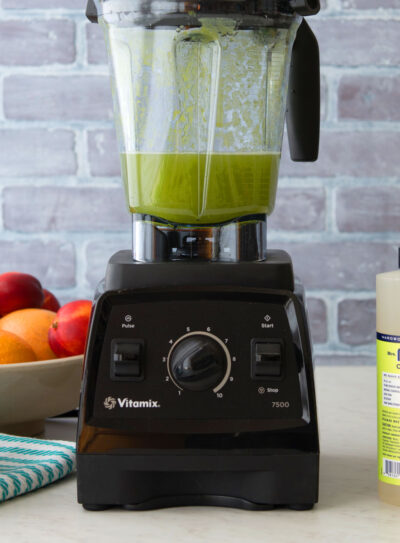
Aim to reach a “vortex” in the blender—a visible whirlpool that shows the smoothie is circulating evenly—without over-blending, which can warm and thin the drink.
If you share your preferred milk type, sweetness level, and any dietary needs (dairy-free, high-protein, low-sugar, etc.), a tailored “master smoothie” template can be created specifically for your audience.
Smoothie Ingredient Swaps
Need to swap an ingredient or accommodate a food allergy? Click the button below for tailored suggestions just for you:
Types of Smoothies
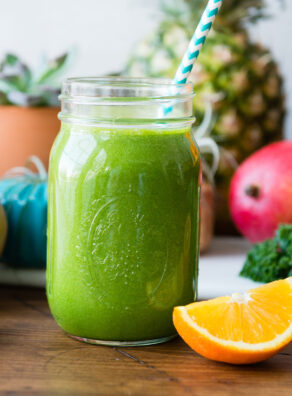
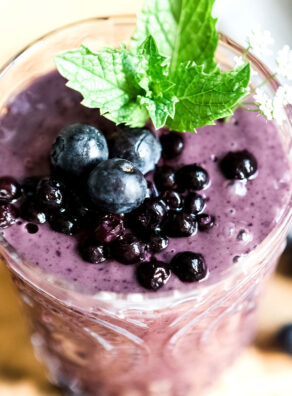
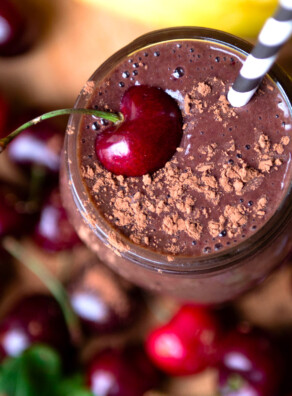
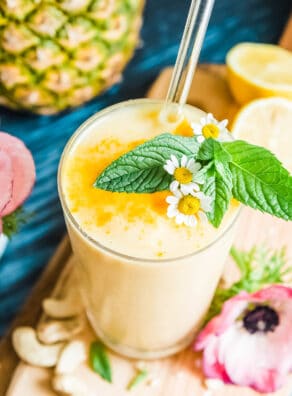
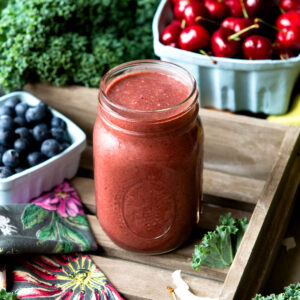
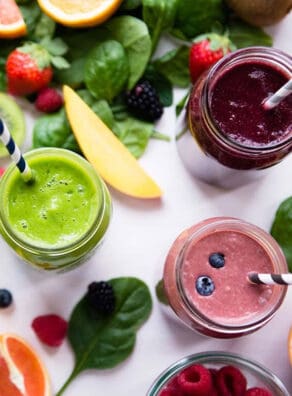
Smoothies aren’t one-size-fits-all—and that’s what makes them so fun. Whether you’re craving a fresh, veggie-packed green smoothie, a vibrant fruit blend, a rich chocolate treat, or a sunny tropical sip, there’s a smoothie recipe for every mood and season.
How to Make a Smoothie
Jen HansardVideo
Ingredients
- 1 banana
- 1 cup almond milk
- 1 cup mixed berries frozen
- ¼ cup cauliflower florets frozen
- 2 tbsp chia seeds
Instructions
- Add ingredients to blender in order above.
- Blend on high speed until smooth.
- Pour into a glass and enjoy!
Recipe Notes
- If blender isn’t creating a vortex when blending on high, add an extra splash of liquid to pull the ingredients toward the blade.
Nutrition
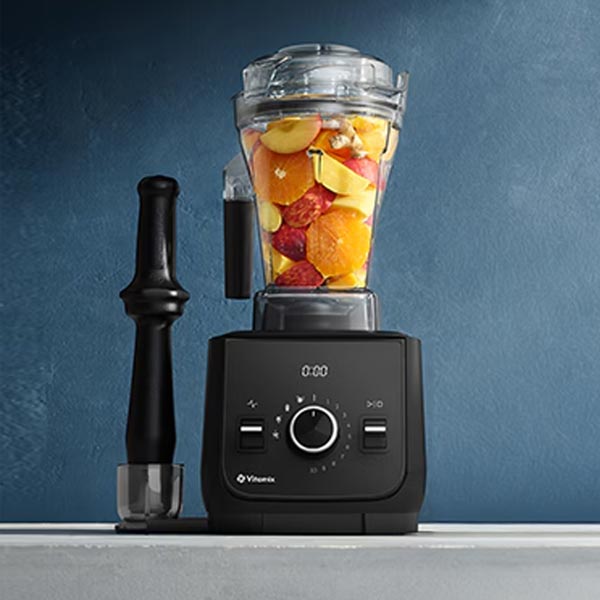
Equipment
Common Questions
If your smoothie is too thick or the blender won’t turn, add a few tablespoons of extra liquid at a time (like water, milk, or plant milk) and blend again until it moves smoothly.
If your smoothie is too thin or icy, add more frozen fruit or a bit more yogurt or banana to thicken it, and then reblend until you reach your desired texture.
If your smoothie isn’t sweet enough, blend in a soft, sweet fruit like banana or mango, or add a small amount of honey or dates to boost the sweetness.
Using ice can dilute the flavor as it melts and may dull your blender blades over time, which is why it’s often better to rely on frozen fruit instead of loading up on ice.










Quite tasty and satisfying
Yay! Let us know what is your favorite smoothie.
Thanks for finally writing about > How to Make a Smoothie | Expert
Guide + Blending Tips stashpatrick
You are welcome. Hope this helps you create fabulous smoothies.
I like seeing the smoothie formula so I can make my own recipes with whatever fruit I have on hand. Thanks Jen!
You’re welcome Karla! Happy blending.
I read through this entire guide and found it very helpful. I never thought to add frozen cauliflower to my smoothie, use cold brew as a base or make my own protein powder! Thank you for putting so much into this! I did have a question: you say “use a protein shake as a base”. What brands would you recommend?
I’m glad this was helpful for you, Sharon. You really can do so much with a smoothie! As for protein shakes, we often have FairLife in my house for my son, so I will sometimes use that as my base. I also buy Owyn at Target (it’s plant-based) and use that. Keep in mind, when I use a shake, I drastically reduce the fruit I use since the shake is already sweetened with monkfruit or stevia. I often add frozen cauliflower and a 1/4-1/2 cup fruit to bulk it up— and sometimes sneak some spinach in, too.