

This post may contain affiliate links.
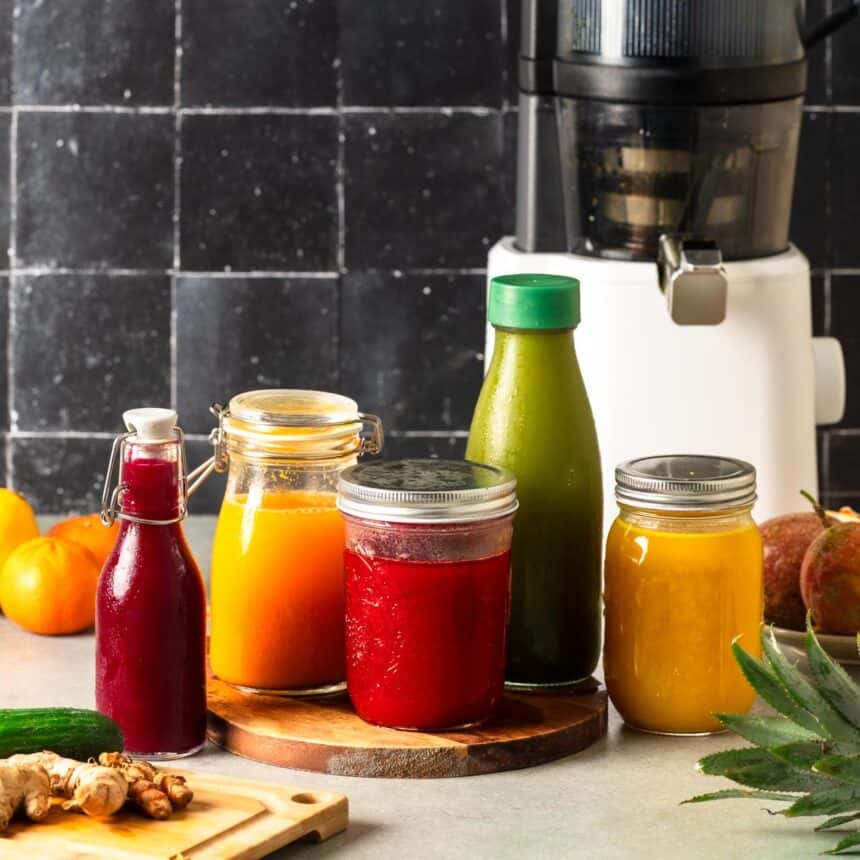
In a world that’s increasingly turning to foods that are low in nutrients, I want to instill the healthy habit of smoothies and juice recipes each day to as many people as I possibly can. I get asked all the time, should I use a juicer or a blender? Especially from people who are starting a plant-based diet journey.
The honest answer is, it depends on what you want to make and how you want to fuel your body. Both are a small appliance that can help you drink more fruits and veggies, but they work in very different ways. Today I’m breaking down the juicer vs blender debate in a simple, practical way so you can decide what fits best in your kitchen, or if you might actually want both.
Table of Contents
Why Use a Juicer or Blender?
Whether you choose to blend or juice, you are gifting your body improved health by using these nutrient-packed drinks. Regularly drinking smoothies or fresh, veggie-based juice will:
- Increase your veggie intake dramatically.
- Make it easier and quicker for your body to absorb nutrients. Blending and juicing breaks down the food into a form that’s easier for your body to process.
- Curb appetite and reduce cravings for sugar and processed foods by nourishing your body with real nutrients.
Now, let’s put the juicer vs blender debate to the test!
Juicer vs Blender: Key Differences
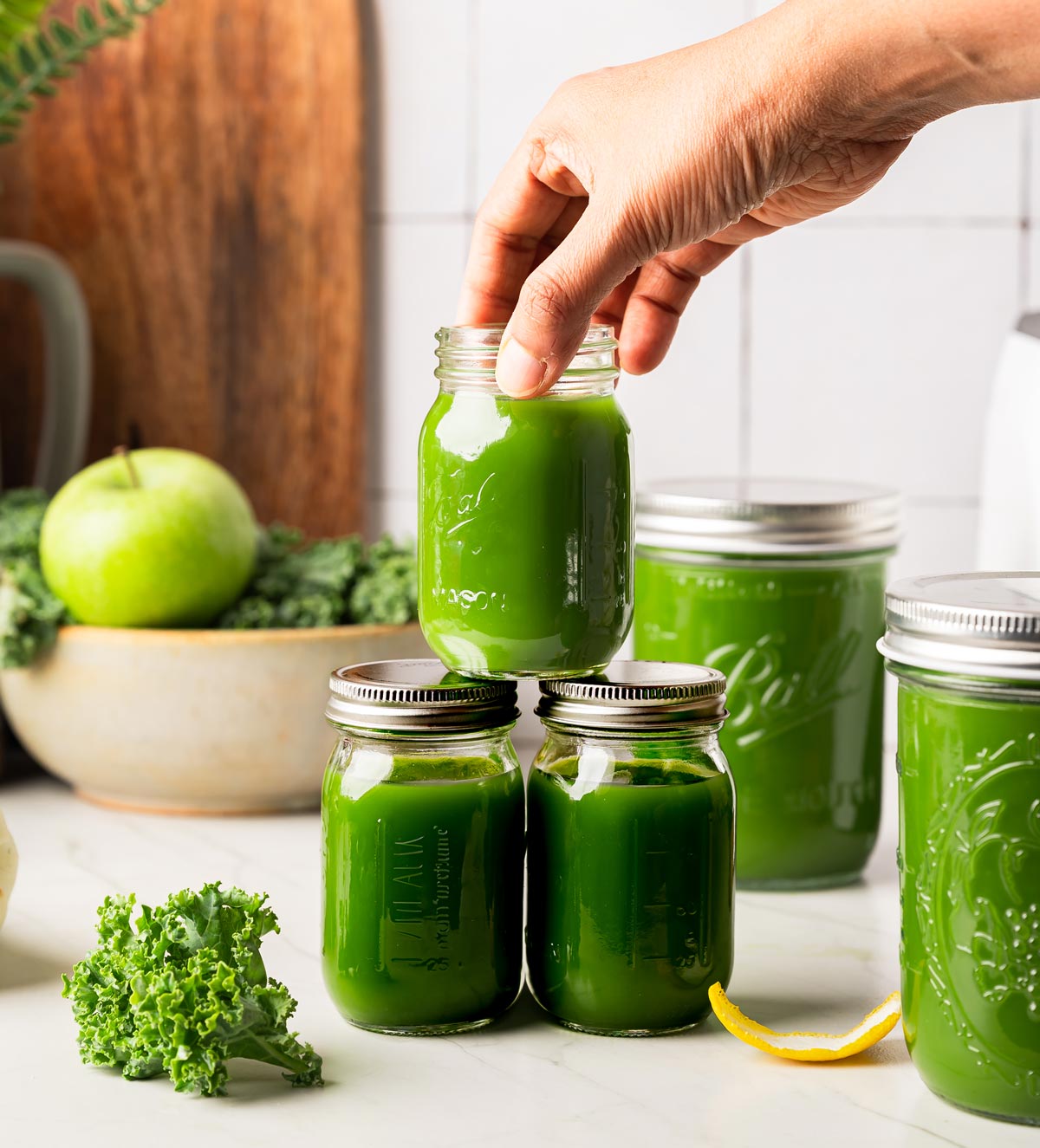
At first glance, juicers and blenders might seem similar. After all, both help you turn fruits and vegetables into a drink. But the way they work and the results you get are quite different. Here are a few quick, easy-to-scan differences:
| Feature | Juicer | Blender |
| Texture | Thin and smooth | Thick and creamy |
| Fiber | Removed | Retained |
| Fullness | Less filling | More filling |
| Best for | Juice | Smoothies |
| Versatility | Limited | Very versatile |
| Cleanup time | 10 minutes | 2 minutes |
| Nutrition | More concentrated nutrients | More complete nutrition |
At the end of the day both options offer great nutritional value. It really comes down to what you want. If you want something filling and satisfying, go with a blender. If you prefer something lighter and more concentrated, a juicer might be your best pick. Let’s break down both.
Benefits of Blending
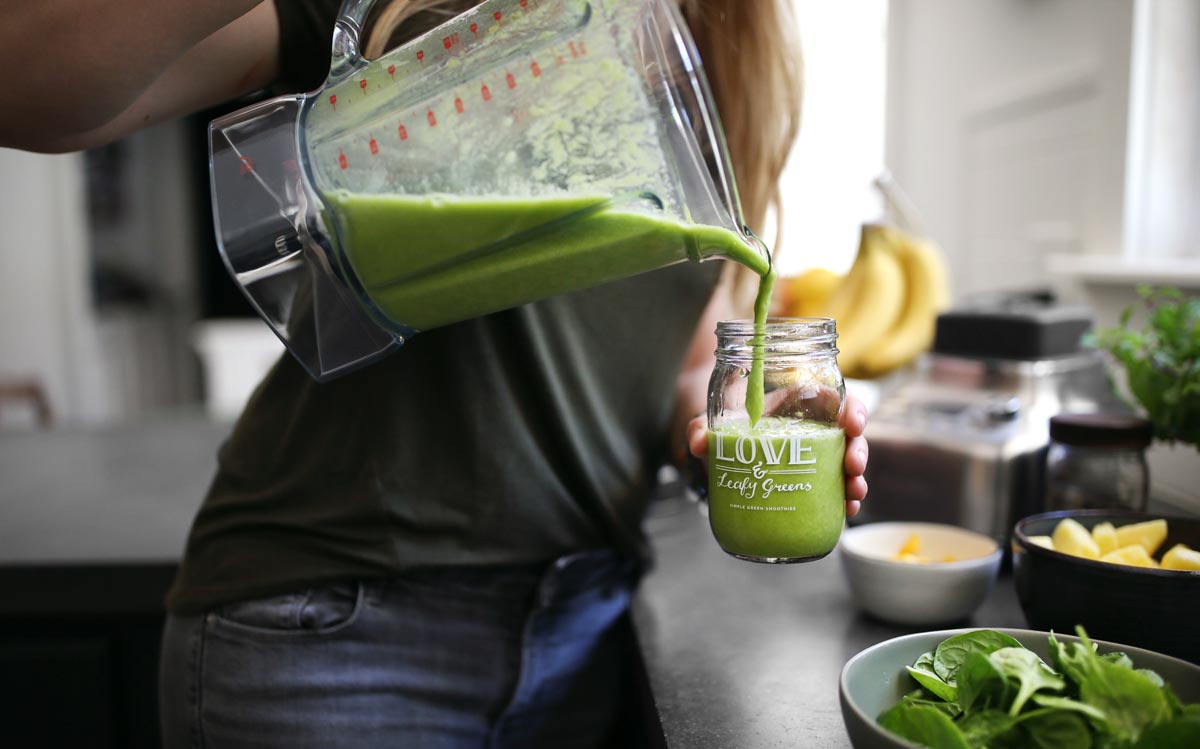
Spoiler alert—I’m firmly on team blender when it comes to drinking my greens. But there’s a reason for that. Whether you’re using a full-size countertop blender or a personal blender, having plenty of power helps create that silky smooth consistency we all love in smoothies. Here’s why blending wins for me in the juicer vs. blender debate:
- More versatile: Blenders let you combine non-dairy milk, ice, nuts, seeds, nut butter, oils, protein powders and supplements. You can also make soups, protein smoothies, sauces—you name it.
- Fiber is your secret weapon: When you blend the whole fruit and veggie, you keep the fiber that helps you stay full, supports digestion, and keeps your energy steady. Plus there’s less food waste since nothing gets left behind
- Cost of the blender is minimal: Most people already have a blender in their kitchen.
- Smoothies are much more kid-friendly: In my experience, kids love smoothies more than veggie-based juice because you can thicken them up to look and taste like a frozen dessert.
Cons of Blending
- Lower nutrient density per sip than juice: Because fiber stays intact, smoothies are more filling, so you may not consume as many fruits and veggies in one sitting compared to juice.
- Some veggies don’t blend well: Root veggies like carrots, sweet potatoes, parsnips, and beets are nutrient-dense but can taste chalky or bitter in smoothies. They’re often better suited for juicing.
But that’s not all… juicers have a lot of great features too. So let’s talk about the flip side of the juicer vs blender debate.
Benefits of Juicing
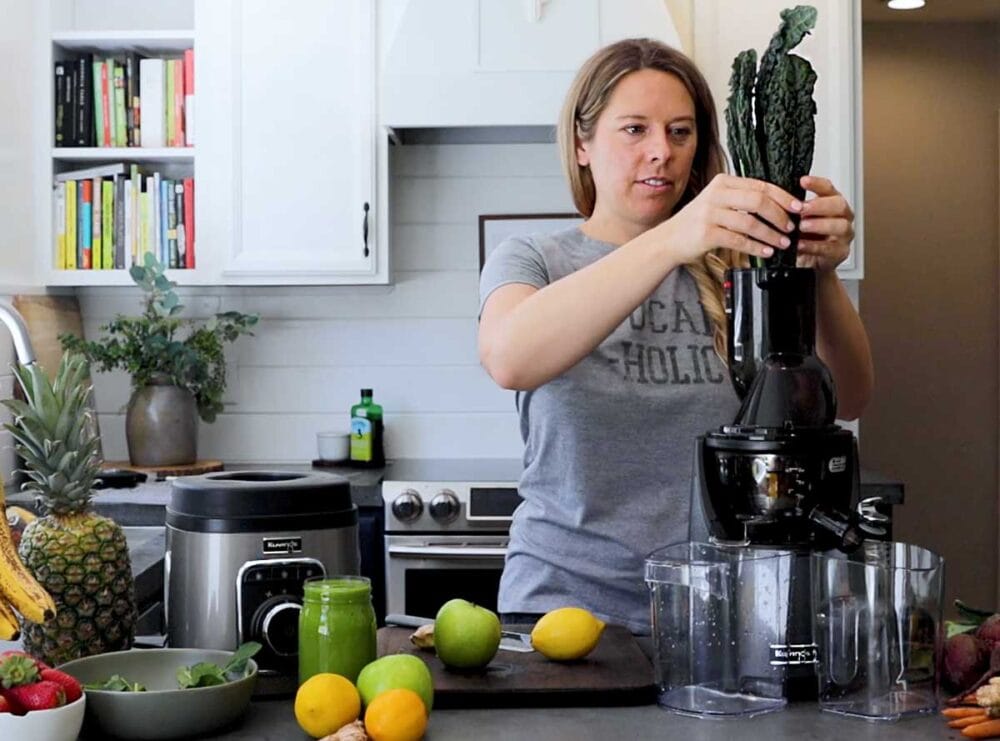
I may be team blender, but I won’t lie, fresh juice has its moments. It feels fancy, refreshing, and seriously delicious. But is it actually better? Let’s break down the benefits and drawbacks of juicing:
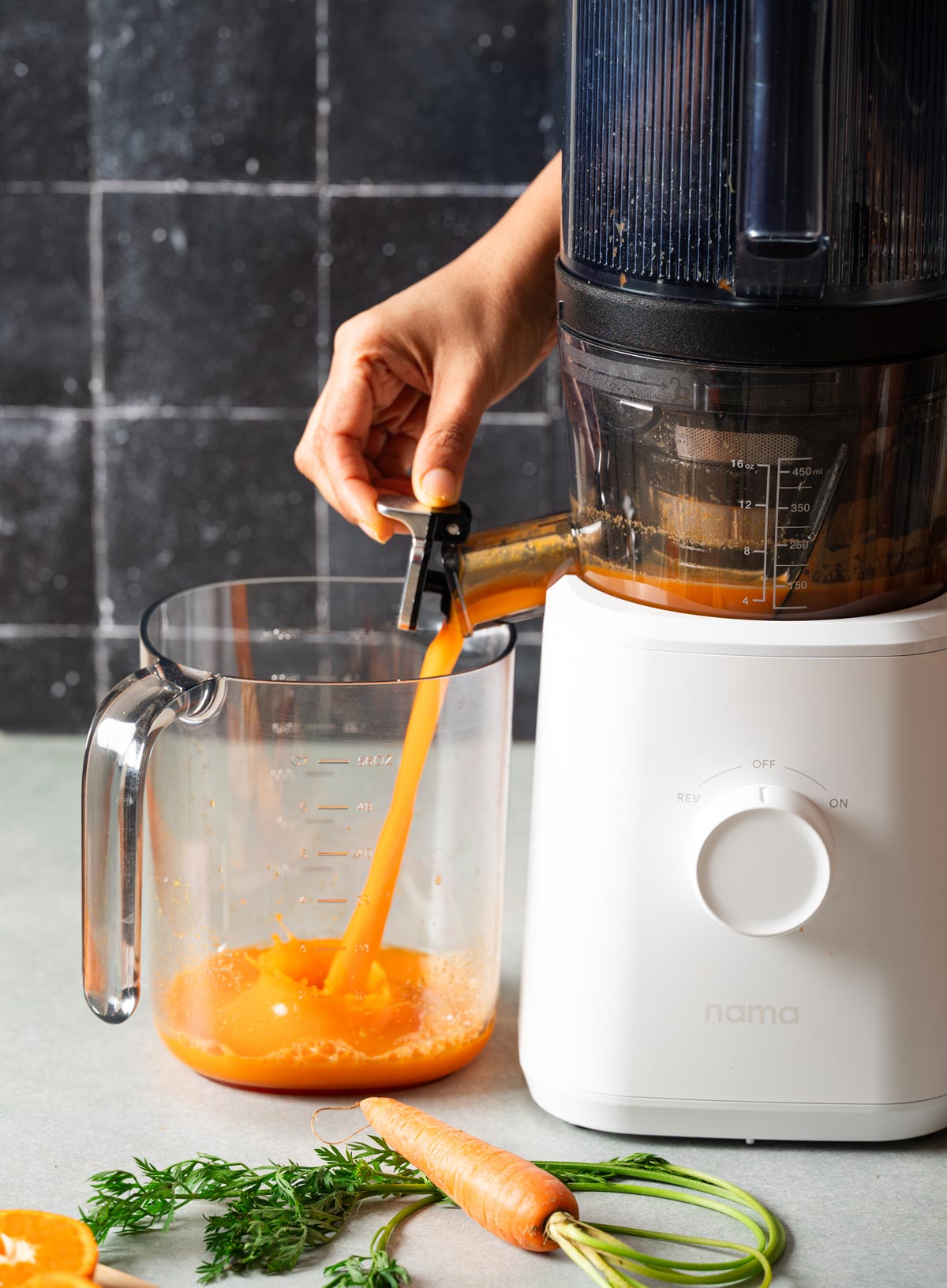
- More veggies per serving: Since the fiber is removed, you can fit more fruits and veggies into one glass, giving you a more concentrated dose of vitamins and nutrients.
- Easier to digest nutrients: Unlike blending, juicing pulls out the vitamins, minerals, and water from fruits and veggies while leaving the fiber behind. That means your body can absorb those nutrients more quickly, without having to work through the fiber first.
- Quicker energy boost: Juice has a higher concentration of veggies (and therefore nutrients) per glass versus a smoothie, and is in an even more pre-digested format than smoothies for quicker nutrient absorption.
- Less heat exposure: Juicers don’t rely on fast-spinning blades, which can slightly warm ingredients during blending.
Downside of Juicing
- Juicing machines are sometimes more difficult to clean: Juicers usually have more parts to clean and take a little longer to clean than blenders.
- Requires more produce (and fridge space): Juicing uses more fruits and veggies per serving, so you’ll need to buy and store more ingredients.
- Can get expensive: It takes a lot more produce to make a single glass of juice, which can add up quickly.
- You don’t get the whole fruit or veggie: Juicing removes the fiber and pulp, so while you still get plenty of vitamins, you’re not getting the whole plant.
As you can see, both juicers and blenders have some great positives. No matter which appliance you’re in the market for, I’ve got my personal recommendations to share.
Best Juicers to Buy
Juicers can be pricey, but there are great options that won’t break the bank. Here’s my recommendations in order for you to explore:
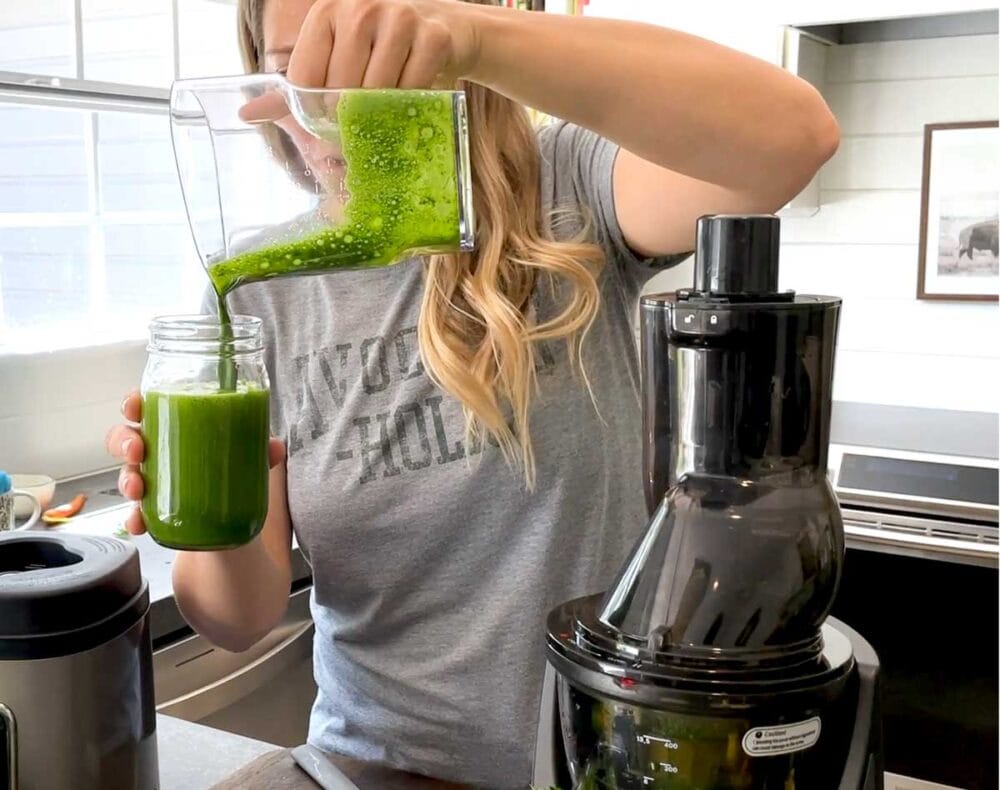
- My top pick is the Nama J2 Cold-Press Juicer (10% off with code: JEN10). It’s a little more pricey, but the hands-free design and high juice yield make it totally worth it. Plus, it’s the easiest to clean and sleekest model ever.
- I’ve also enjoyed the Breville Juice Fountain Plus — it’s the most affordable option, quite powerful and handles leafy green vegetables with ease.
- In the demonstration video, I used the Kuvings Cold Press Juicer, which is also quite powerful, highly rated and very good.
Best Blenders to Buy
While I’m always on the lookout for different types of blenders for smoothies, these are my top picks:
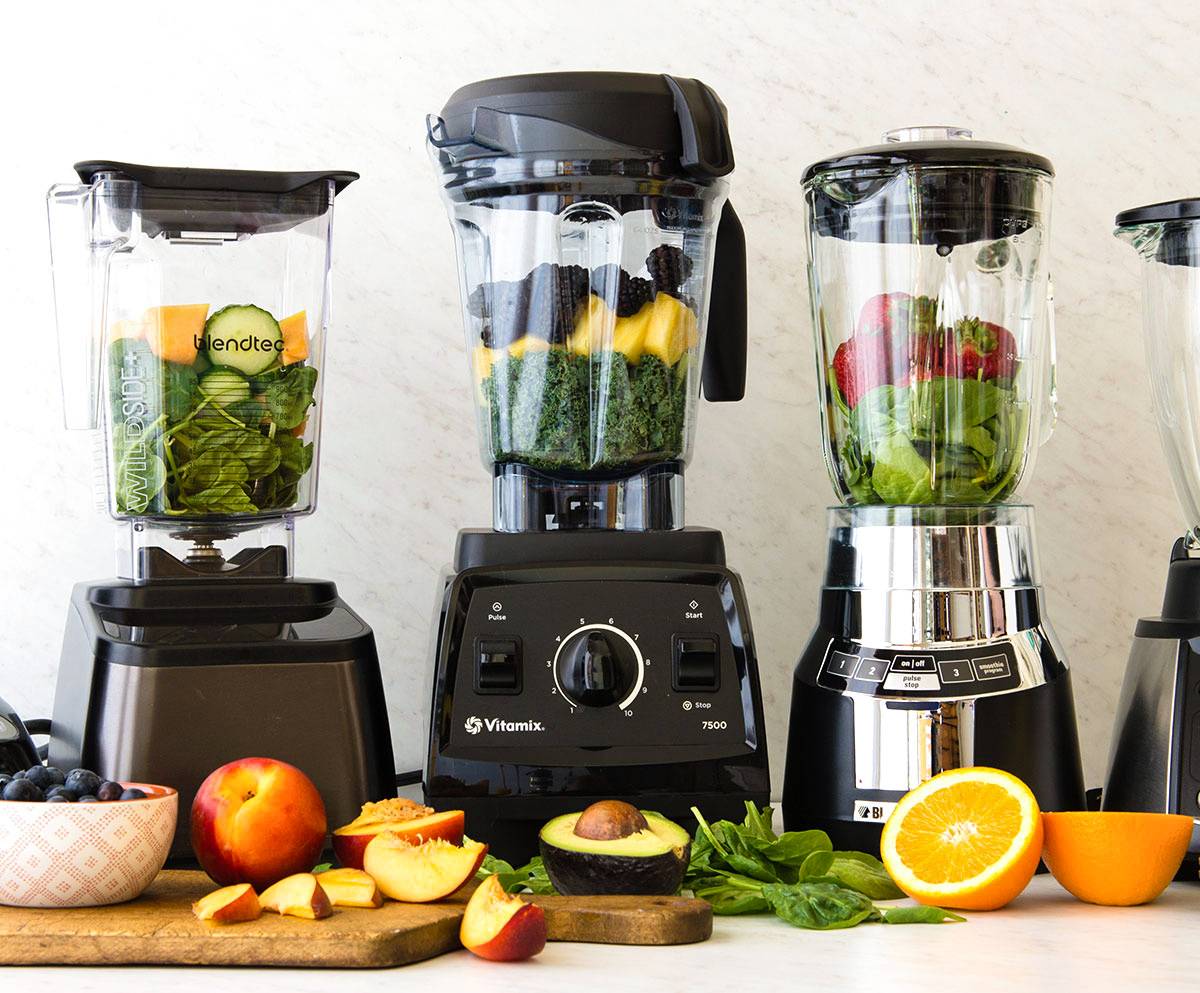
- Vitamix blender is my go-to for the best blender out there—you can’t go wrong with this brand.
- The Breville Super Q Blender is a powerful blender that can handle just about anything you throw in, giving you smooth, consistent results every time.
- You don’t need a high-end blender to get started. Handheld options like an immersion blender or budget-friendly models like Nutribullet can still whip up numerous smoothie recipes.
If you’re new to blending or just want to perfect your technique, check out my guide on how to make a smoothie for tips, tricks, and step-by-step instructions.
Can You Make Juice in a Blender?
Yes—you actually can! If you don’t own a juicer but want to try juice-style drinks, a blender can still work. Here’s a simple method:
- Blend fruits or vegetables with water.
- Pour the mixture through a fine mesh filter, strainer, or nut milk bag.
- Press out the liquid and discard the pulp.
This gives you a homemade juice without needing a separate appliance. You can also check my blender green juice recipe for a detailed guide.
Juicer and Blender Recipes You’ll Love
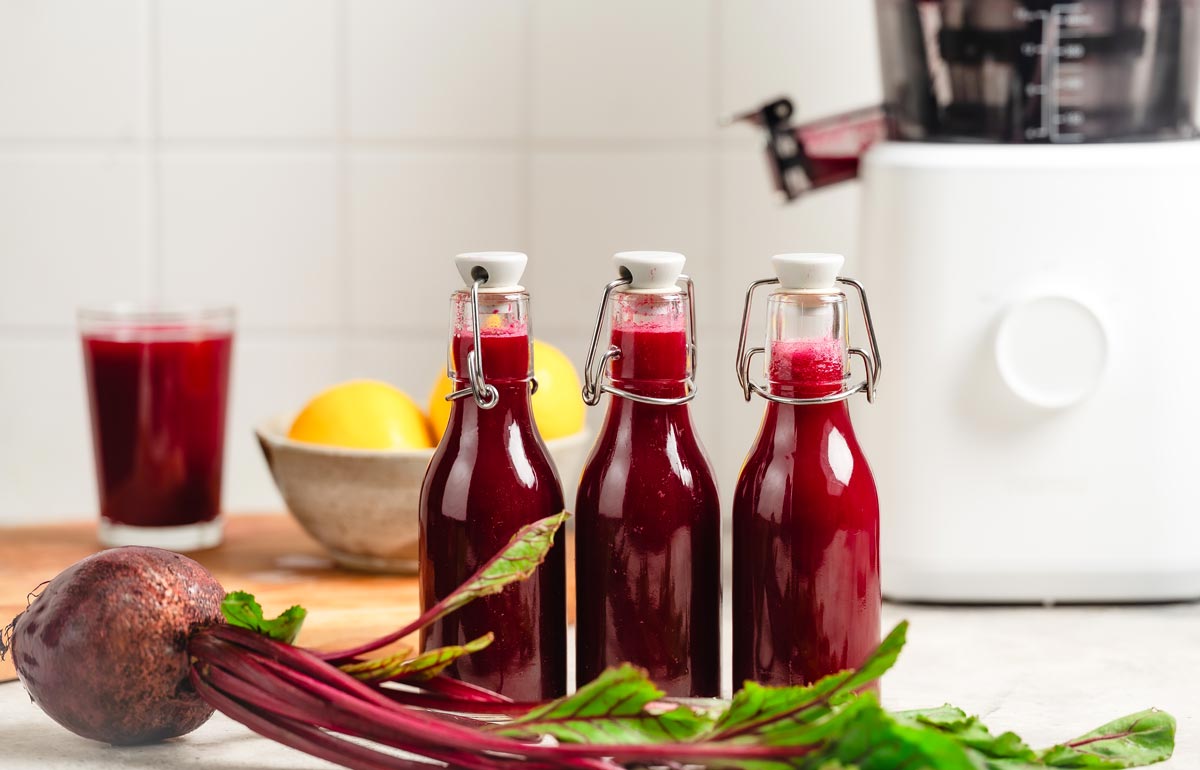
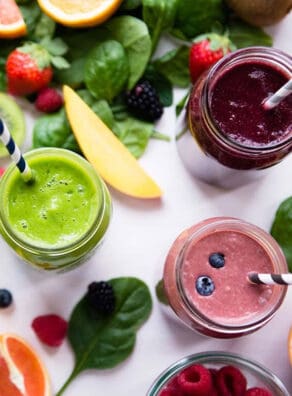
If you can’t get enough of smoothie recipes and juice recipes, these ones below are about to become your new favorites. Packed with fruits, veggies, and all the good stuff, they’re easy to make, delicious to sip, and perfect for keeping your energy up all day:
If this juicer vs blender guide helped clear things up for you, I’d love to hear which one you prefer in the comment box below. And if you’re interested in more smoothie tips and plant-based recipes, sign up for my weekly recipe newsletter.
Common Questions
Both juicing and blending can be healthy ways to enjoy fruits and vegetables. Juicing provides a concentrated source of vitamins and minerals because the liquid and nutrients are extracted from the produce. Blending, however, keeps the fiber from the whole fruits and vegetables, which helps support digestion and keeps you feeling fuller longer.
Blenders typically retain more of the whole fruit or vegetable because they blend everything together, including the fiber. While juicers still provide plenty of vitamins and minerals, they remove the pulp and fiber during the extraction process.
Yes, you can make juice in a blender. Simply blend fruits or vegetables with a little water until smooth, then strain the mixture through a fine mesh sieve or nut milk bag to separate the liquid from the pulp. For a more detailed guide, you can check out my green juice in a blender recipe.
If you’re choosing between the two, a blender is often the better first investment. Blenders are more versatile and can be used for smoothies, shakes, sauces, nut milk, and more. A juicer is great for making fresh juice, but it has a more limited range of uses compared to a blender.
Both appliances can handle vegetables, but they serve different purposes. Juicers work well for extracting juice from vegetables like carrots, celery, and leafy greens. Blenders, on the other hand, are great for incorporating vegetables into smoothies while keeping the fiber intact.











does anyone know the science behind what you lose in terms of nutrients by not drinking either the juice or smoothie right away? i’d like to make the smoothie or juice first thing in the morning and take it with me for lunch. lunch wouldn’t happen for 5 or 6 hours. i don’t want to go through the expense and time of doing this if oxidation has removed a lot of the value of the smoothie or juice. any science people out there?
many thank, c. healey
I blend…God intended for us to eat the fiber
Crissie!
Thanks for this input! It is great to learn more about pros for juicing, especially since we aren’t highly involved with it 🙂
I agree with Jason on this topic, have done both with seperate machines until I realised that the Vitamix blender is good for juicing as well – what I love about this is, that nothing will be wasted, as I can use the pulp later in almost every dish!
I have done both, and like most i love the pros of both but hate the cons of both. I tend to blend more because the fiber makes me feel full longer and i feel more satisfied and the clean up is much easier, BUT juicing to me taste alot better but my old juicer which works great takes a long long time to clean and is pain staking.