

This post may contain affiliate links.
Can I tell you about the meal I skip most? Lunch. Not on purpose — it just… doesn’t happen. I’m answering one more email, switching the laundry, and suddenly it’s 2:30 and I’m eating crackers over the sink wondering why I’m cranky.
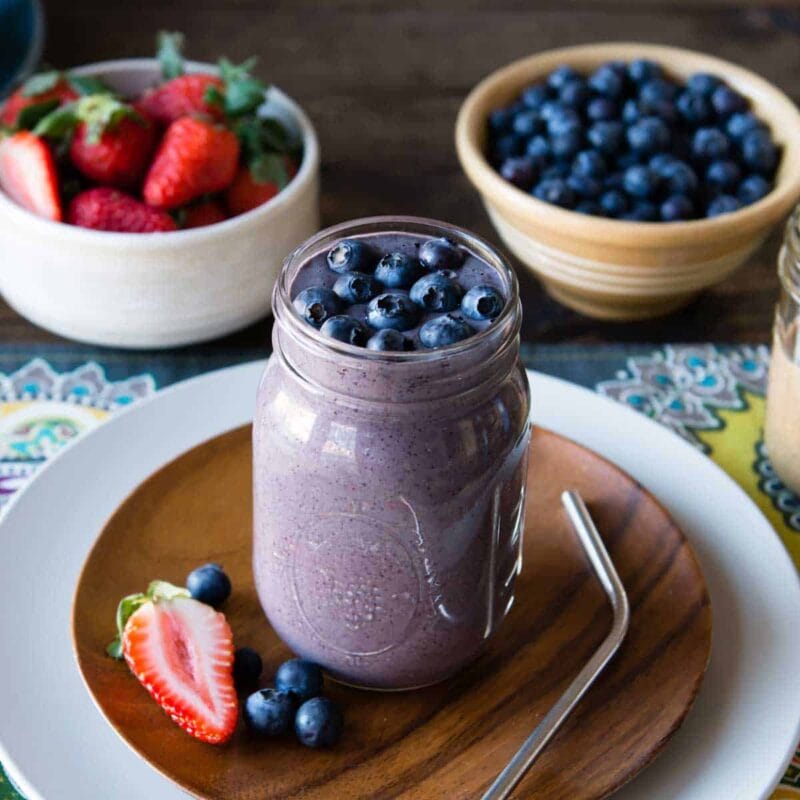
Sound familiar? For years my “solution” was to grab whatever was fast and easy. Yet what actually satisfied me was a meal replacement smoothie. Kale, blueberries, banana, almond butter, and oats — blended in 5 minutes, sipped with one hand while life happens around me.
Once you learn the simple formula behind it (I’ll show you below), you can turn any smoothie into a meal. That’s the part that changed everything for me. You’ll also find it in my roundup of the best weight loss drinks.
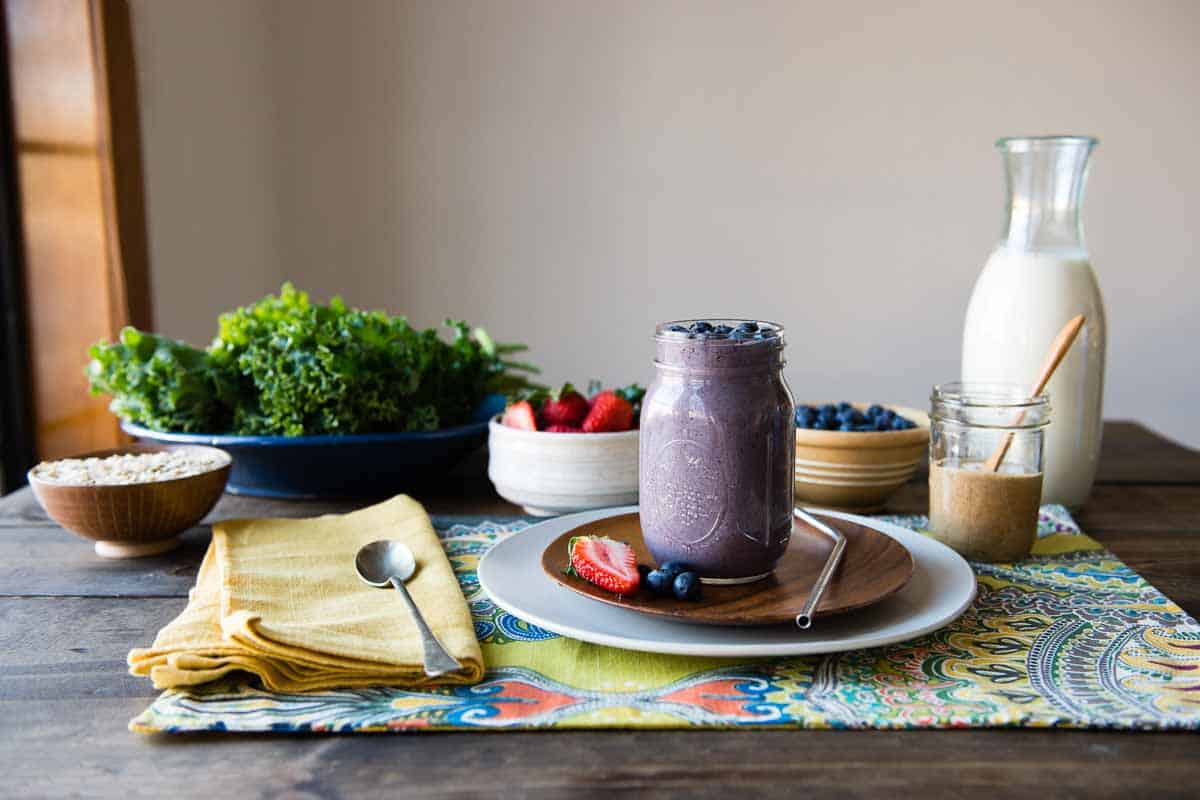
Table of Contents
Why You’ll Love This Meal Replacement Smoothie
- Just 7 whole-food ingredients — kale, almond milk, blueberries, banana, almond butter, rolled oats and unflavored whey protein isolate.
- It actually keeps you full. With 10 grams of fiber, 34 grams of protein, and healthy fats from almond butter, this is built to carry you for hours — not leave you hungry by 10am.
- Tastes like a blueberry-almond treat. Juicy blueberries and banana bring the sweetness, almond butter adds a rich, nutty creaminess, and the oats give it a satisfying, milkshake-hearty body. The kale? Completely undercover.
- 5 minutes, one blender, zero cooking. Faster than a drive-thru line, and you can drink it in the car anyway.
Want more smoothies that pull meal-duty? My breakfast smoothies are built to keep you satisfied all morning, my chia seed smoothie adds fiber and healthy fats in the easiest way possible, and my 3-day smoothie diet plan makes every smoothie a complete meal for a simple reset.
Save this Recipe
Enter your email & I’ll send it to you!
Ingredient Notes
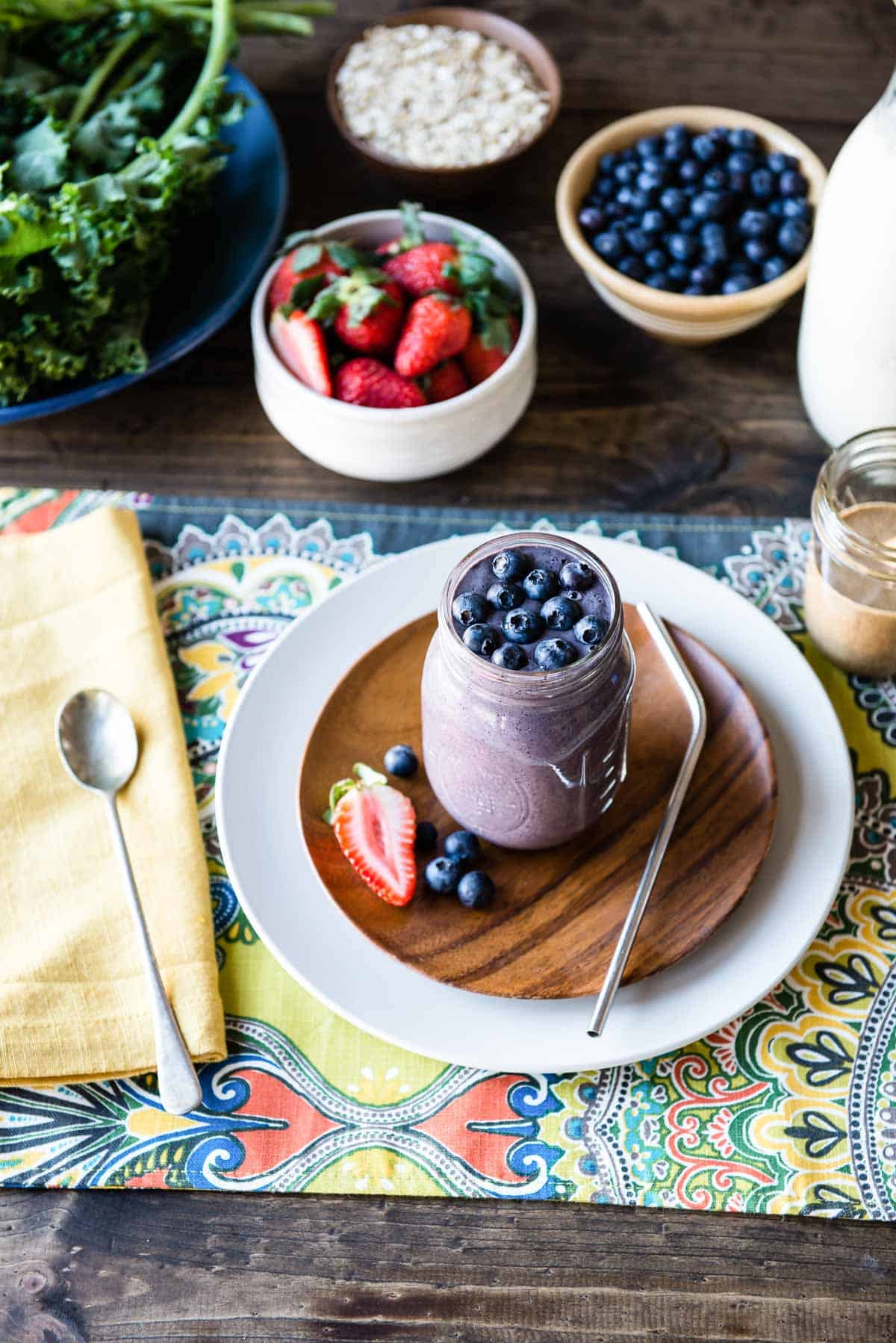
- Kale: One cup of this hearty green blends smoothly behind the fruit — you won’t taste it, promise. Swap in spinach for an even milder start, or check my leafy greens guide for options.
- Almond milk: Unsweetened almond milk keeps it creamy without added sugar. Any non-dairy milk works.
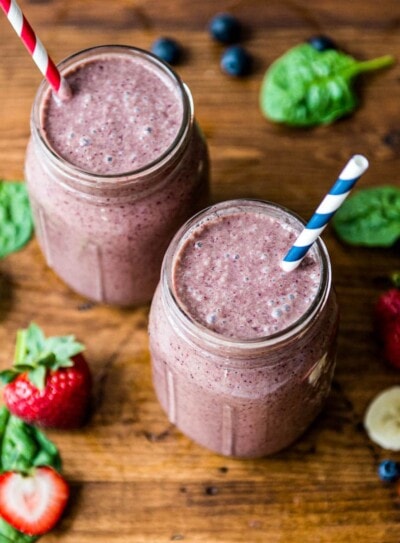
- Frozen blueberries: The flavor star — juicy, sweet-tart, and they chill the whole smoothie without ice. They also turn it a gorgeous purple.
- Banana: Natural sweetness and that creamy body smoothies need. Ripe is right — the browner the peel, the sweeter your smoothie.
- Almond butter: The healthy-fat hero. One tablespoon adds rich, nutty flavor and real staying power. My homemade nut butter works beautifully here.
- Rolled oats: The secret to “this actually filled me up.” Two tablespoons of oats add fiber and slow-digesting carbs that make this a meal, not a snack. They blend right in — no oatmeal texture. If you love oats, check out my collection of oatmeal recipes for breakfast.
- Whey protein isolate: This unflavored single-ingredient powder adds 30 grams of protein to the smoothie. It’s also gentler on the stomach than tradition whey and has a very smooth texture unlike plant-based powders.
How to Turn a Smoothie into a Meal
Here’s the formula that makes this recipe work — and lets you build your own. A true meal replacement smoothie needs three things in the blender: fiber, healthy fats, and protein. Nail all three and your body feels nourished, your cravings stay quiet, and you’re genuinely full for hours.
- Pick a protein: Protein powder (16g-30g per ¼ cup), hemp hearts (8g per 3 tbsp), chia seeds (5g per 2 tbsp), rolled oats (3g per ¼ cup), collagen peptides, silken tofu (10g per ½ cup).
- Add a healthy fat: ¼ avocado, a tablespoon of nut butter, a tablespoon of coconut oil, or 2 tablespoons of chia or flax. Healthy fats bring the creamy texture and the staying power.
- Load the fiber: 2 cups of leafy greens, oats or cooked sweet potato, or apples and pears with the skin on. Fiber is the most underrated fullness ingredient there is.
This recipe checks all three boxes as written — oats and kale for fiber, almond butter for fat, and oats, protein powder and almond butter teaming up on protein.
Power-Up Combos
Want to customize? Try one of these add-in duos to level up any smoothie into a meal:
- Power Green Boost: 2 tbsp hemp hearts + ¼ avocado — smooth, nutty, and macro-balanced
- Protein + Fat Fuel: 2 tbsp homemade protein powder + 1 tbsp coconut oil — my post-workout pick
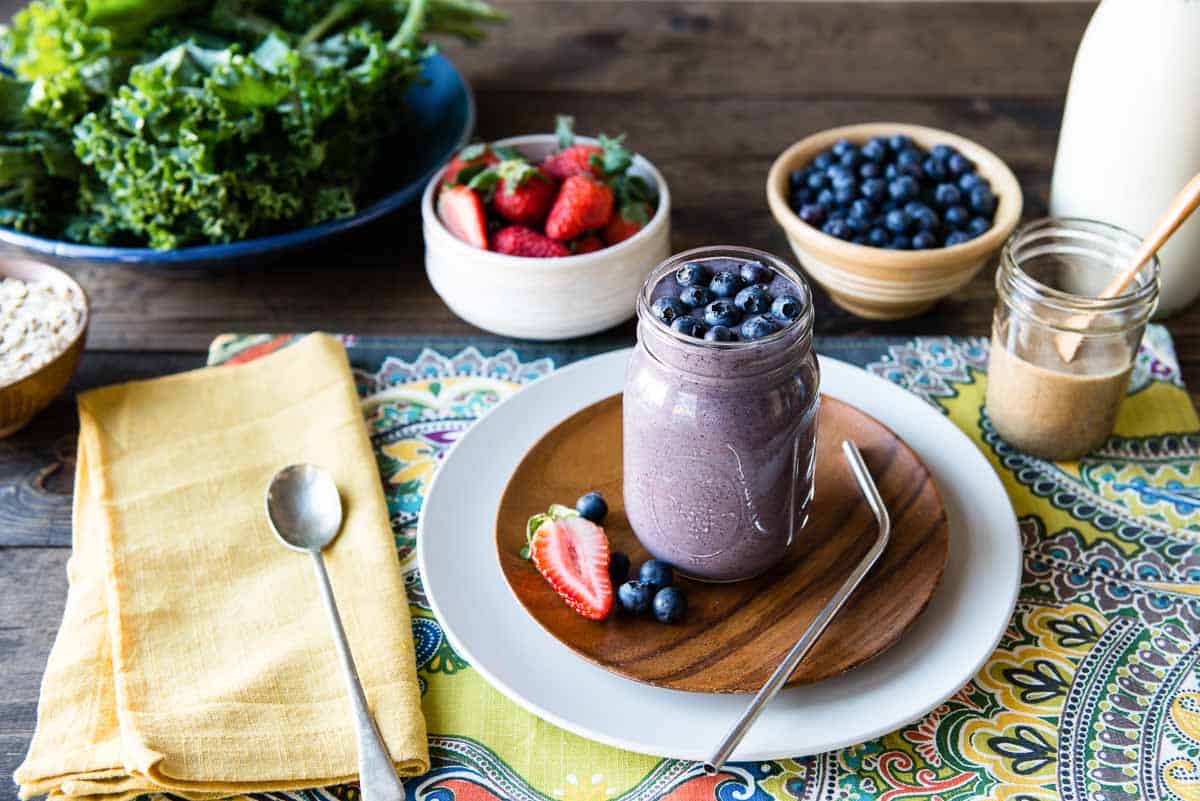
- Fiber Lover: 1 tbsp almond butter + 2 tbsp rolled oats — the keeps-you-full-for-hours combo (it’s what this recipe uses!)
- Supercharged Energy: 2 tbsp chia seeds + 2 oz silken tofu — omega-3s meet plant protein
- Creamy Dreamy: 2 tbsp chia seeds + 1 tbsp coconut oil — thick, rich, and satisfying
Prep-Ahead Tip
Busy weeks call for frozen smoothie packs. Portion the kale, blueberries, banana, and oats into freezer bags on Sunday. When a meal needs to happen now, dump a pack in the blender, add almond milk and almond butter, and blend. Five minutes from freezer to full — it’s the consistency hack that makes this a habit instead of a nice idea.
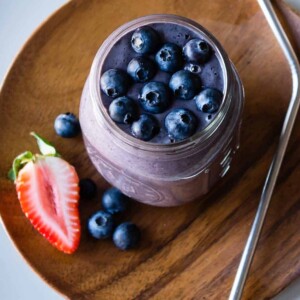
Meal Replacement Smoothie
Jen HansardVideo
Ingredients
- 1 cup kale
- 1 cup almond milk unsweetened
- 1 cup blueberries frozen
- ½ banana
- 1 tablespoon almond butter
- 2 tablespoon rolled oats
- 1 serving protein powder
Instructions
- Pour the almond milk into a high-speed blender and add the kale. Blend until smooth.
- Add the blueberries, banana, almond butter and oats and blend until smooth.
- Add the protein powder and blend on low just to combine. Serve immediately.
Recipe Notes
- Hungry an hour later? That’s your cue to boost next time: add a scoop of homemade protein powder (16g protein) or an extra tablespoon of almond butter. Sluggish or too full? Ease back on the oats.
- Use frozen blueberries (or a frozen banana) for a thick, cold smoothie without ice — ice just waters down the flavor.
- Prep it as a freezer pack: portion the kale, blueberries, banana, and oats into a freezer bag ahead of time. Add almond milk and almond butter when you blend — a real meal in 5 minutes, even on your busiest morning.
Nutrition
Dietary Adjustments & Substitutions
Need to swap an ingredient or accommodate a food allergy? Click the button below for tailored suggestions just for you:
Whenever a real meal isn’t going to happen otherwise! Mornings are the classic — greens and protein for steady energy. At lunch, this heartier oats-and-nut-butter blend keeps you focused through the afternoon. Post-workout, lean on protein and electrolytes (coconut water + banana is a great base) to help your body recover.
Your body will tell you. Hungry an hour later? Add more protein or fat next time. Sluggish or overly full? Ease back on the oats or nut butter. It’s about finding your personal “just right” — and it usually takes two or three tries.
Yes — blend the night before, store it in a sealed jar in the fridge, and shake well before drinking. It stays fresh up to 24 hours. For the freshest taste with almost no morning effort, use the freezer-pack method above instead.
As written, it’s a legitimate light weight-loss meal — about 343 calories with fiber, protein, and fats all present. For bigger appetites or post-workout recovery, add a scoop of protein powder or an extra tablespoon of almond butter. And listen to your hunger: a meal replacement smoothie should leave you satisfied, not white-knuckling it to dinner.
That’s not the goal — variety is your friend, and chewing real food matters too. I use meal replacement smoothies for the meals that otherwise wouldn’t happen: the rushed breakfast, the skipped lunch. One great smoothie a day beats three mediocre ones. Progress over perfection.










I love your smoothie recipes! My question is for a friend. Her husband has stage 4 cancer and he cannot eat regular food or liquids. She was beside herself trying to think of a way she could feed him thickened liquids. Then I remembered your site and all the recipes you have. Can you offer any suggestions as to which smoothies would be best for him? She is so afraid he will not be able to get all the nutrients he needs. Thanks in advance.
Hi Lori,
Thank you so much for reaching out! We are so sorry to hear about your friend’s husband. Sending them plenty of warm hugs + healing vibes. While we’re not doctors or nutritionists carrots, raspberries, cantaloupe, beets, green tea + kale, are known for their cancer fighting properties.
Have you seen Amanda + Matt’s Cancer Fighting story?
Hello, I am new to your site and LOVE it! I have a question regarding my low carb diet with your smoothies. I’m in the first stages of the Atkins WOE, the Induction phase, and can’t really eat fruit at this time. Is there a green smoothie in existence that doesn’t have the fruit? Bananas are high in sugar, a big no-no for me.
Hi Vicky,
We love adding fruits to our recipes, it ensures they taste great + are sweetened naturally, so we don’t have many recipes without them. We do love blending, spinach, celery, tomatoes, water + a little bit of lemon…it’s the perfect “pick-me-up”!
Hi! Great tips and website! I’m allergic to Bananas and have always been bummed to see them in almost every smoothie recipe out there. What is the best fruit substitute that offers the same consistency? Can’t do pineapples or raspberries either. Thanks so much!!!
Hello! I also can’t have bananas and pineapples, so thank you for this list of substitutes! My question is this: when I substitute pears or mango or chia seeds for the bananas, is it an even substitution? 1/2 cup mango for 1/2 cup banana? How much of thechia seeds would I use to replace the banana?
Hi Emily,
Great questions! When substituting other fruits for banana, it’s an even trade. Half an avocado, 4 tbs of chia seeds, or 2 tbs of almond butter will also do the trick! Looking for the creamy consistency of bananas, definitely reach for avocados!
Can’t do pineapples or raspberries? Orange, grapefruit + mango are great pineapple substitutes. And swap in another berry or cherries in place of raspberries.
Hope this helps!
Hello I have only just found this site and it’s great! Do you have any other meal replacement recipes? Also could I make up larger batches of these smoothies and freeze them?
Hi Clare,
Welcome, we’re so excited you found us! You can turn any green smoothie into the perfect meal by adding any of our meal replacement boosters! Check them out here…
https://simplegreensmoothies.com/meal-replacement-smoothie
Also, some people love to freeze pre-blended smoothies, while others enjoy blending them fresh each day. It’s all about what works for you. If you freeze your blended smoothie, we suggest thawing them in the fridge overnight. And separation is natural, so just give your smoothie a quick shake before enjoying!
I tried this smoothie and really liked it. It actually flowed out of my mixer cup easier than the smoothies I mix with water and greek yogurt. I add some more vegetables to it. Throw in some carrots, maybe a half a cucumber. Maybe even some celery- all in small amounts.
Hi Carl,
Great additions! We love blendin’ with vegetables! Check out our recipes with root vegetables here…
https://simplegreensmoothies.com/fruit-and-vegetable-smoothie