

This post may contain affiliate links.
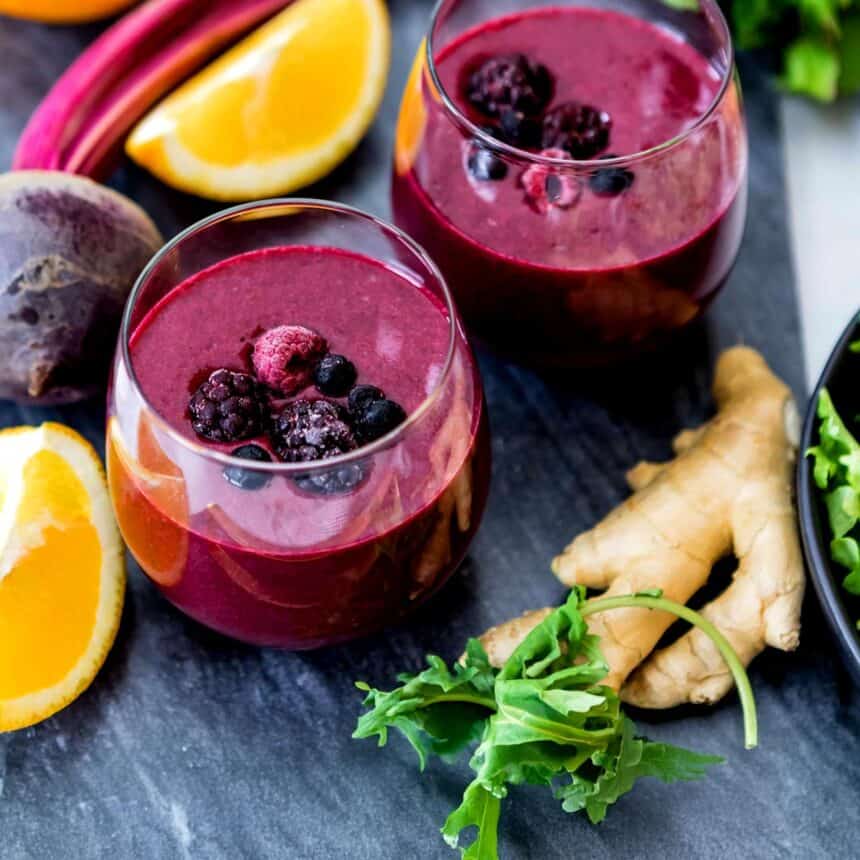
Aging is wild. One day you’re doing handstands in the grass, the next you’re Googling “why does my knee sound like popcorn?” A lot of our aches and pains come down to inflammation—the bloating, brain fog, random rashes, and that lovely mid-afternoon crash. To combat it all, I created this anti-inflammatory smoothie recipe using plant-based ingredients that combat inflammation and are packed with nutrients.
Table of Contents
Why You’ll Love It
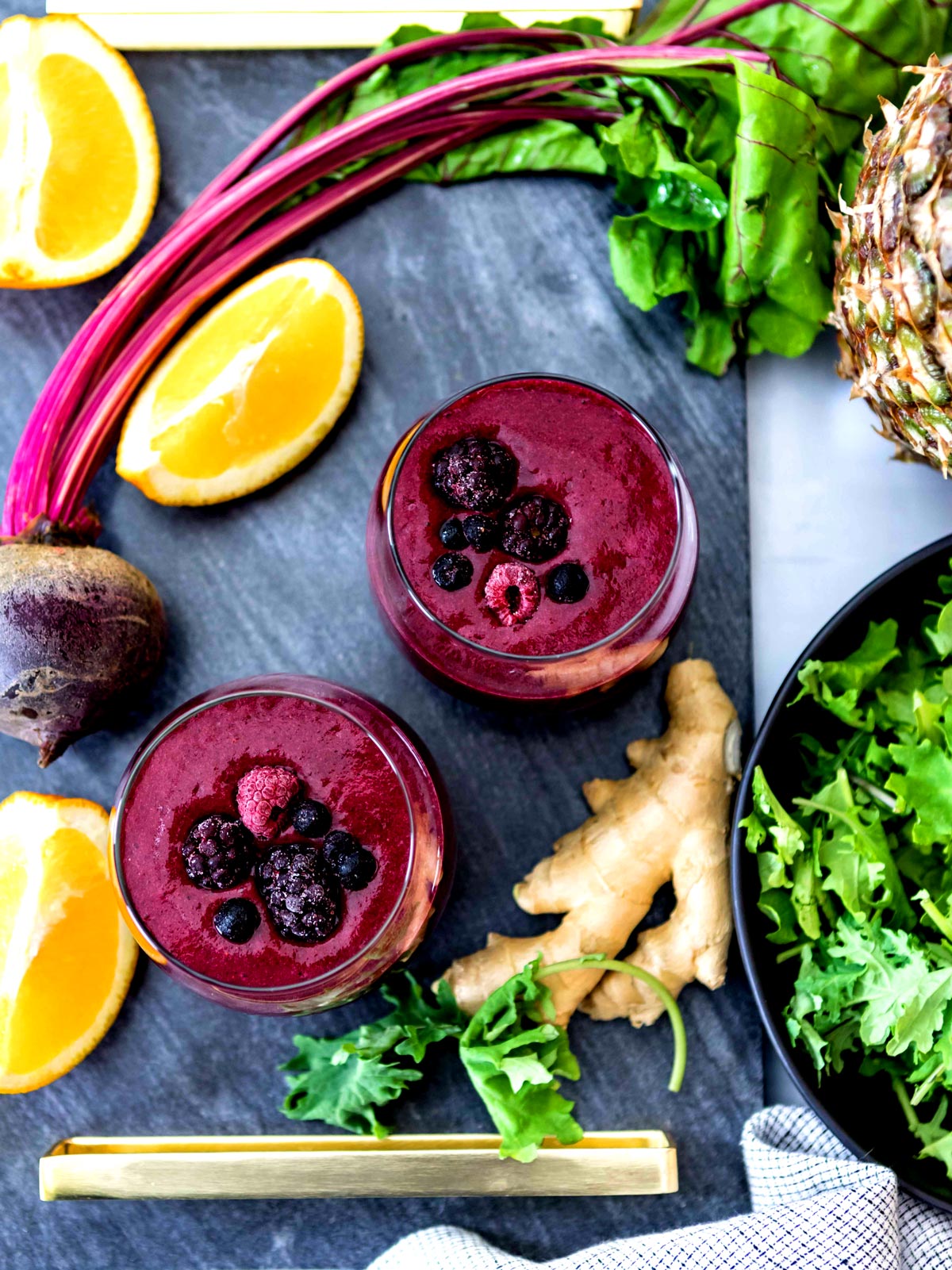
- It tastes like a tropical treat. Earthy beets and baby kale get totally balanced out by sweet pineapple, mixed berries, and fresh orange—bright, tangy, and surprisingly smooth.
- It helps calm everyday inflammation. Each ingredient is chosen to support your joints, digestion, and energy—from ginger and berries to chia seeds and leafy greens.
- It’s a 5-minute reset. Perfect after a long run, a Costco marathon, or anytime your body needs a little extra love without any fuss.
- It’s nutrient-dense without being heavy. Fiber, antioxidants, and healthy fats come together in a refreshing, 16-oz blend your body will thank you for.
Save this Recipe
Enter your email & I’ll send it to you!
Ingredients You’ll Need
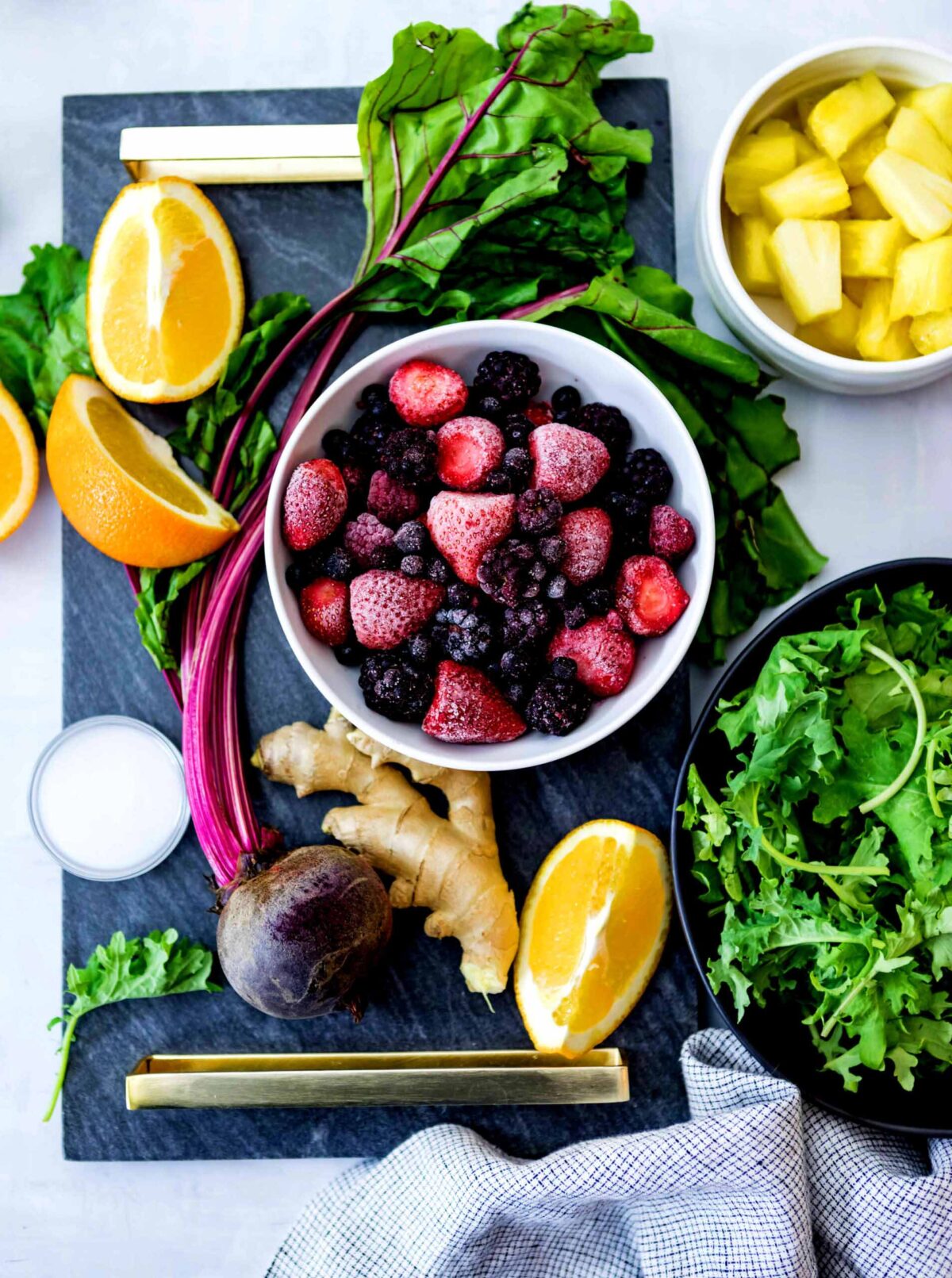
Sip on this smoothie with fresh beets, citrus fruits and anti-inflammatory ginger to recover from a Saturday morning shopping trip to Costco (never a good idea), a long run with your bestie or just another day living la vida loca. Here’s what goes into your glass, how each ingredient tastes and blends, plus the nutrition perks they bring to the party:
- Baby kale: Earthy and mildly grassy leafy green vegetable, kale blends best when mixed with liquid first. It’s rich in antioxidants like vitamin C and flavonoids that help reduce inflammation.
- Beets: Sweet, earthy, and vibrant, beets add natural color and depth. They contain betalains—powerful anti-inflammatory compounds that support heart health.
- Oranges: Bright and juicy, oranges balance earthy flavors and create a silky texture. Their vitamin C helps reduce inflammation and support immune health.
- Mixed Berries: Tart and jammy, berries thicken smoothies while delivering anthocyanins, potent antioxidants linked to reduced inflammation.
- Pineapple: Sweet with a hint of tang, pineapple blends smoothly and contains bromelain, an enzyme known for its anti-inflammatory and digestive benefits. If using fresh pineapple, cut pineapple and then freeze to chill the smoothie before blending.
- Ginger Root: Warm and spicy, ginger adds bold flavor in small amounts. Its gingerols are known to help reduce inflammation and muscle soreness.
- Coconut Oil: Lightly sweet and creamy, coconut oil blends best when softened. This healthy fat contains lauric acid, which may support immune and anti-inflammatory pathways.
- Chia Seeds: This superfood naturally thicken smoothies and provide omega-3s, fiber, and protein to support inflammation balance and fullness.
Dietary Adjustments & Substitutions
Need to swap an ingredient or accommodate a food allergy? Click the button below for tailored suggestions just for you:
How to Make Anti-Inflammatory Smoothie
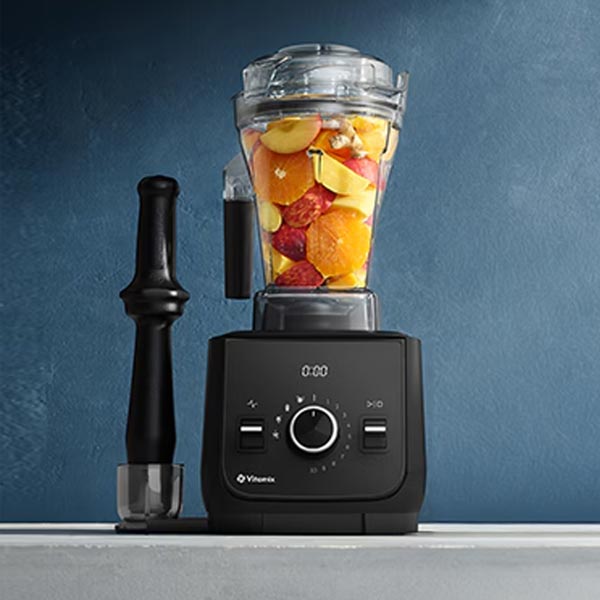
- Prep your produce. Wash and chop the kale and beets. Peel the orange and remove any seeds so it’s ready for the blender. Check out my recommended blenders for smoothies.
- Blend the base. Add the kale, chopped beets, peeled orange, and water to your blender. Blend on high until everything is completely smooth, scraping down the sides if needed.
- Add the fruit and flavor boosters. Toss in the frozen mixed berries, frozen pineapple, fresh ginger root, chia seeds, and coconut oil (if using).
- Blend until creamy. Blend again on high until the smoothie is thick, creamy, and no chunks remain. If it’s too thick, add a splash more water and blend again.
- Pour and enjoy. Pour into your favorite glass or jar. Garnish with extra chia seeds or a slice of orange if you’re feeling fancy, then sip right away for the biggest nutritional boost.
Time-Saving Tip
Instead of adding multiple ingredients to your blender every time, you drop an anti-inflammatory blender bomb into your smoothie to boost anti-inflammatory support.
If you make this anti-inflammatory smoothie recipe, I’d love to hear how it turned out in the comment box below. Your feedback helps me and all the readers in this community. And if you’re interested in more plant-based recipes (and exclusive content), sign up for my weekly recipe newsletter.
Anti-Inflammatory Smoothie
Jen HansardIngredients
- ½ cup kale
- ½ cup beets peeled and chopped
- ¾ cup water
- ½ orange peeled
- 1 cup mixed berries frozen
- ½ cup pineapple frozen
- 1 teaspoon ginger root peeled
- 2 tablespoon chia seeds
- 1 teaspoon coconut oil optional
Instructions
- Add kale, beets, water and orange to blender container.
- Puree on high until the mixture is smooth. Scrape down the sides of chunks of the green stick to the sides of the blender.
- Add remaining ingredients and blend again on high until everything is well combined and smooth.
Recipe Notes
- Carrots can be substituted for the beets.
- Mango can be substituted for the pineapple.
- Baby kale or spinach can be used to make the smoothie less bitter.
- Use at least one frozen fruit for a refreshingly cool smoothie.
Nutrition
Equipment
Common Questions
Yes—anti-inflammatory smoothies taste amazing when you balance earthy ingredients (like kale or beets) with naturally sweet fruits (like pineapple, orange, or berries). A little ginger or citrus helps brighten everything up too.
You can have this smoothie every single day, yet feel free to start with just a few times a week to see how your body adjusts. This can be a powerful addition to your routine if you’re working on reducing inflammation.
To mask the taste of beets or leafy greens, add more ginger, pineapple, orange, or berries to help cut the “earthiness.”
Yes, you can make this anti-inflammatory smoothie in advance to save time. Blend it the night before and refrigerate in a sealed jar (drink within 24 hours). Or try freezing meal prep smoothie packs with pre-measured ingredients and dump them into the blender when ready. Another options is to make smoothie cubes (freeze the smoothie in an ice tray) and re-blend with liquid when needed.










Wow! Thank you for sharing this recipe. I’ve recently been diagnosed with mild Chron’s disease. I do not want to be on any medications and an asymptotic for the most part. So I am trying to heal my body as naturally as possible. I have introduced more fiber in my diet (which I’m already seeing positive results from!), and plan on eating as many anti-inflammatory foods/shakes as I can tolerate to help balance my system again! The ginger in this shake really sets it off, I think! Thanks again.
So sorry to hear about your recent diagnosis, Diana. Yet, super proud of you for seeking natural solutions! All the best as you step toward healing.
Do you cook the beet or is it raw? If you cook it, what is the best way without losing all the nutrients?
Totally your choice, Amy! You can use either cooked (steamed is best) or raw beets here. Raw beets have a more earthy flavor. Cooked beets area slightly sweeter + are easier to peel.
Hi can i put almond milk instead of water?
Hi Mary Jane! Generally speaking, it’s totally fine to exchange water and plant-based milk for each other in any recipe. However, depending on the smoothie it can affect the taste. Plant-milk usually does better in smoothies that aren’t citrus based. Since this is a mix of citrus and berry – we say go for it! Give it a blend and let us know what you think. 🙂 We would def avoid traditional cow’s milk dairy here as it can increase inflammation in many cases.
Can I use spinach instead of Kale??
Kale would make a great swap here. It’s even higher in flavonoids, which give it more anti-inflammatory super powers!
I have ginger powder can I use that
Would it be possible to use frozen spinach instead of fresh?
Absolutely Chanelle!
Do you use raw beets or do you cook or stem the beets first?
Hi Dorothy – You can totally use either raw or steamed. Raw beets are a bit more earthy while roasted, steamed or cooked beets have a slightly sweeter taste and are easier to peel.