

This post may contain affiliate links.
Recently, I stumbled across an article that talked about toothpaste ingredients and the issues they can actually cause rather than prevent— and it startled me. I know there are TONS of natural toothpaste companies out there nowadays… yet they’re a bit pricey. If I can make something simple + effective at home for a fraction of the price, why not? Here’s my very own homemade toothpaste recipe… full of only the good stuff.
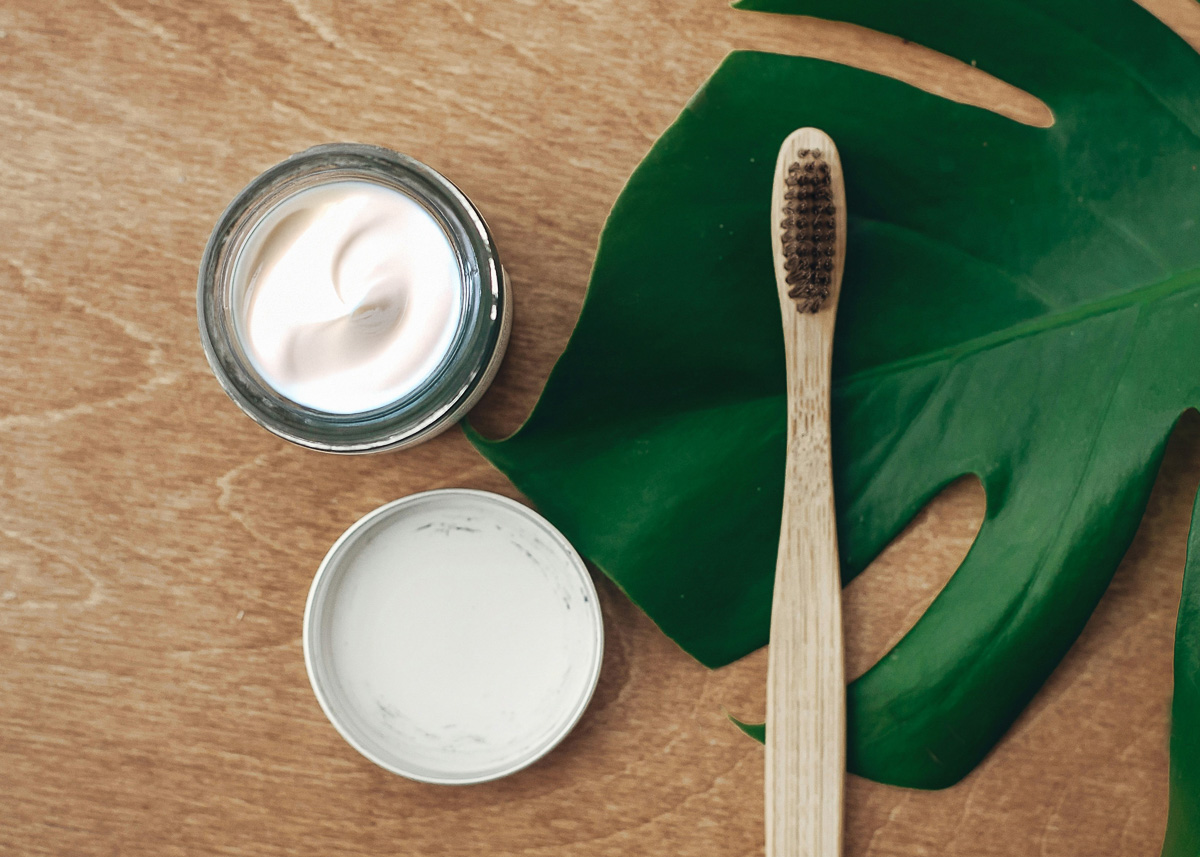
I can honestly say this is the best natural toothpaste I’ve tried, and that’s saying something since I’ve been on the hunt for a great option for a while!
Note: There is no fluoride in this recipe. Depending on your stance with this, feel free to add in a fluoride product or use a fluoride mouthwash afterwards.
Common toothpaste ingredients
Two ingredients that have a pretty bad wrap are:
1. Glycerin: It gives toothpaste a nice creamy texture and coats the teeth for “protection”, yet at the same time it also stops re-enamalization (so cavities can’t self-heal.)
2. Sodium fluoride: A by-product of aluminum manufacturing that is found in rat poisons and industrial pesticides).
Scary stuff, huh? Well, rather than freak out about it every time I brush my teeth, I decided to make some homemade toothpaste sans weird stuff. And yes— I threw in some wonderful coconut oil that I’m beyond obsessed with and it’s millions of effective uses.
Natural toothpaste recipe
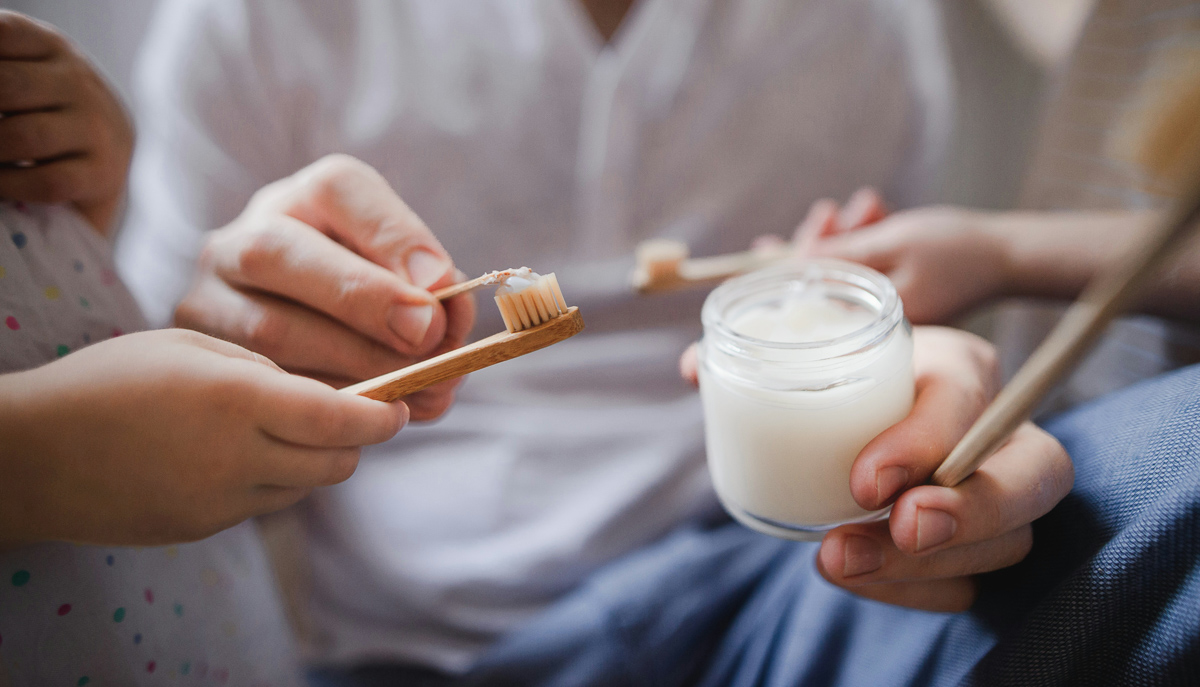
Once I started experimenting with a homemade toothpaste recipe, I was pleasantly surprised to find out how few ingredients I actually needed. My recipe has 4 ingredients, with an optional 5th if you add in activated charcoal. Not only is this recipe simple, it contains only plant based ingredients that are common. No weird chemical compounds or additives here!
When whipping up a batch of this homemade toothpaste, I typically triple the batch. That way each bathroom has its own container, so there’s no family fights over the jar. To keep the ingredients light and airy, I use an immersion blender rather than mixing with a blender or food processor.
Antibacterial essential oils
If you choose the right essential oils, then you can create a strong antibacterial toothpaste. I suggest these essential oils, which I typically purchase from Plant Therapy:
- Grapefruit Oil
- Peppermint Oil
- Tea Tree Oil
- Orange Oil
- Lemongrass Oil
I am thrilled to have found a homemade toothpaste replacement that I actually enjoy using as well as have fun making. I like that I can tweak the recipe depending on my personal preference at the time (sweeter, minty, fruity, etc— it’s all about what essential oils I put in it). This summer I made a batch with grapefruit oil and it has a citrus-tang to it, which was refreshing. Now I am using eucalyptus oil and I love the minty taste.
How to store DIY toothpaste
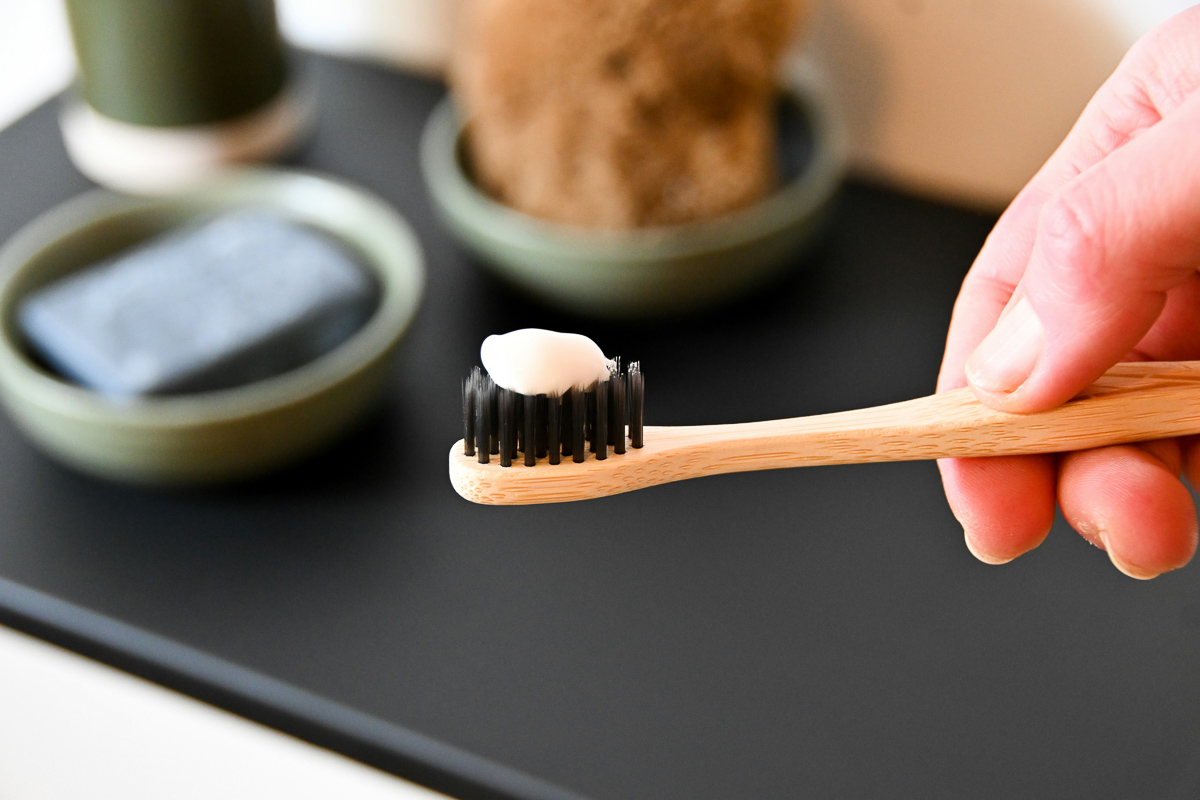
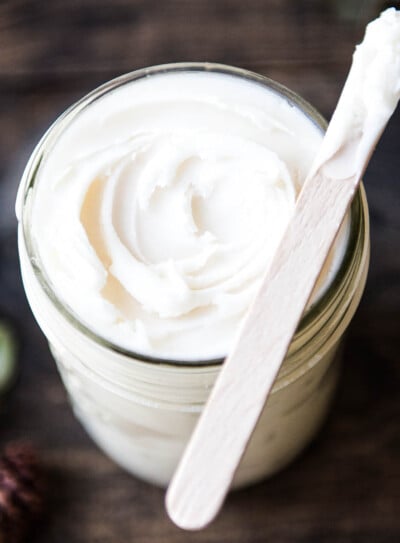
I like to store homemade toothpaste in a wide-mouth mason jar or leak-proof metal tin. Use a popsicle stick to dip into the toothpaste and and then spread your toothbrush. You can also use a squirt bottle and cut a wide tip on it to help it come out.
Homemade Dog Toothpaste
YES… I made this recipe for me and my family… yet it also works with dogs! Since my sweet dog (Barrett the Huskador), cannot resist licking and swallowing everything in his face, I made this for him too. Since they are completely natural ingredients, there’s no harm if he licks it while I brush.
Other DIY recipes
If this natural recipe has piqued your interest in more natural products you can use in your home, then I’ve got some more great recipes for you. These recipes are plant based versions that seriously work, just like this homemade toothpaste recipe:
- Homemade chest rub
- Fire cider
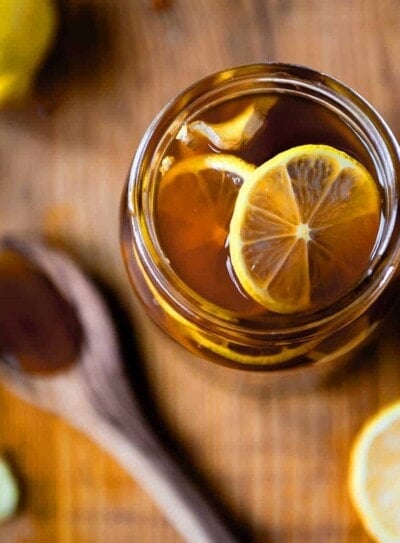
- Ginger lemon honey tea
- Homemade deodorant
- Elderberry syrup
- Anti-inflammatory smoothie cubes
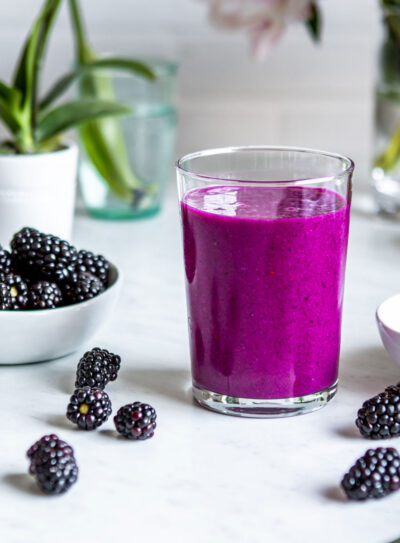
- Bloat-fighting smoothie
- DIY lip scrub
Homemade Toothpaste Recipe
Jen HansardIngredients
- 6 tablespoon coconut oil, unrefined
- 6 tablespoon baking soda
- 25 drop essential oil eucalyptus, grapefruit, peppermint
- 1 teaspoon stevia or more if you like it sweeter
- activated charcoal optional
Instructions
- Mix all ingredients together in a bowl. I used my to whip it really well and give it a light creamy texture.
- Pour into a mason jar and seal it up until ready to use.
Recipe Notes
- Getting it out of the mason jar can be an adjustment. Use a popsicle stick to dip into the toothpaste and spread nicely onto the toothbrush. You can also use a squirt bottle (you will need to cut the pointed tip wider).
- Adding activated charcoal can be a gentle way to whiten your teeth.










Hey, I am looking forward to make this recipe! I do have a question about the use of stevia. I have no experience with this and I am unsure whether to use the green stevia (plant material) or extracted powder. The latter does not seem to have a very good rep. Did you do some research on this? Thank you!
I don’t know much about stevia but I would say choose the one that is the least refined/processed. It’s simply used to add a bit of sweetness to your toothpaste so it’s an optional ingredient and you can leave it out altogether if you choose.
50% baking soda is way too much, especially to use on a daily basis. You might want to look this up and rethink it because it can have a deleterious effect on tooth enamel.
Thanks for joining the conversation, Leslie. We encourage everyone in our community to educate themselves on what they put in/on their bodies and we realize there is no “one size fits all” solution.
If essential oils are not for ingesting why are they being used for toothpaste?
Some essential oils are ok for internal use. Make sure you check the label/information before you add EO to your toothpaste to make sure it’s one that is ok to use internally.
I use Young Living Vitality essential oils. Young Living Vitality oils are for ingesting.
Hi,
I really would like to try this out after reading about the dangers of ingredients in store-bought toothpaste.
Do we need liquid or solid coconut oil for this?
Thanks
Hi Ishana, you’ll want to use the type of coconut oil that’s solid at room temp.
Hi,
I am very interested to use your recipe. How long have you been using this? Do you use this at least 2x a day everyday? Any health/dental problem encountered?
Hi Ryan! I believe Jen’s been using this toothpaste for a while now. She switched to homemade toothpaste to avoid health and dental problems that can be caused by store-bought toothpaste. 🙂
Xylitol from birch bark (not from corn) could be used instead of stevia since stevia has an after taste. Xylitol is excellent for killing bad bacteria. Just a gentle suggestion ! Thank you so much for sharing this recipe
Great suggestion Michele!