

This post contains affiliate links.
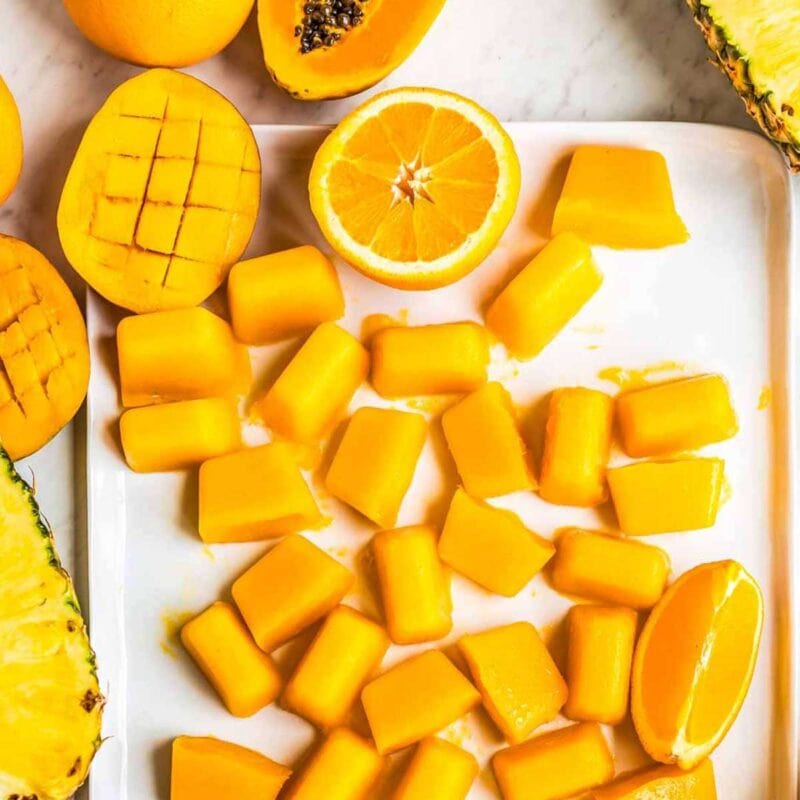
Instead of overpriced powders, I reach for whole foods. These frozen immunity cubes are made with vitamin C–rich fruits and vegetables that blend easily into smoothies and taste naturally sweet and bright. They’re an easy way to keep nutrient-dense ingredients on hand, so a good smoothie feels simple, not complicated.
Table of Contents
Why These Ingredients Work Together
This blend focuses on fruits and vegetables naturally high in vitamin C and antioxidants:
- Oranges: Juicy and refreshing, they provide natural sweetness and liquid for blending.
- Papaya: High in vitamin C, with a soft, tropical sweetness.
- Pineapple: Adds tropical flavor and a bright, tangy sweetness. It’s high in vitamin C too.
- Mango: Brings natural sweetness and a smooth texture.
- Orange cauliflower: It’s high in beta-carotene and vitamin C, and it blends in with a mild flavor.
Together, these ingredients create a concentrated fruit blend that freezes beautifully and blends seamlessly into smoothies.
NOVEMBER 9-13, 2026
Free 5-Day Soup Challenge
Celebrate this cozy season with us! For 5 days, we’re cooking up fall-inspired soup each day—packed with veggies, perfect for busy nights, and every bowl you make is a chance to win $750 in prizes!
How to Make Frozen Immunity Cubes
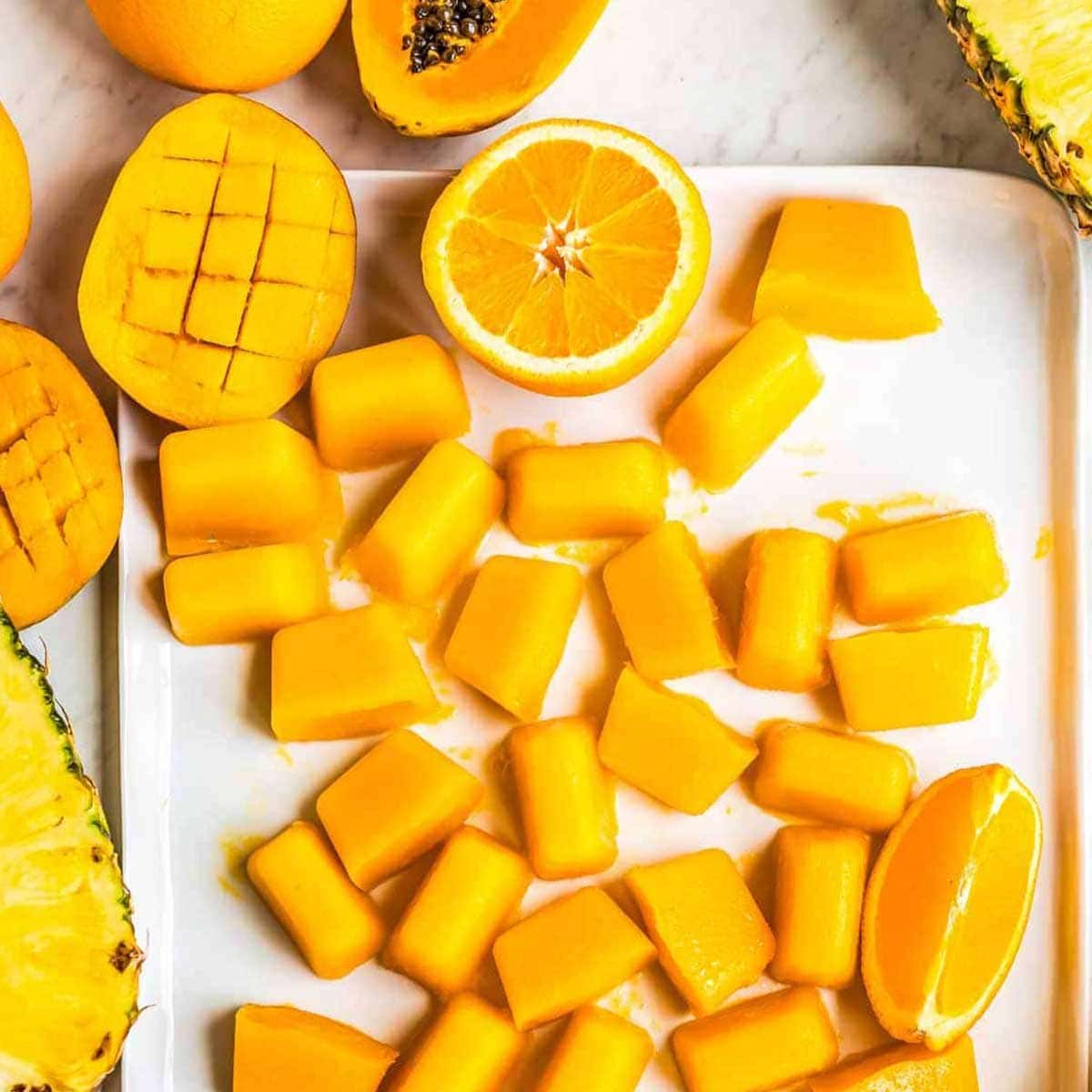
Frozen immunity cubes make healthy habits easier to keep. You prep once, freeze, and then have nutrient-dense ingredients ready whenever you need them. No supplements, no powders, just whole foods.
- Place all ingredients into a blender in the order listed.
- Blend until completely smooth. The oranges usually provide enough liquid, but add a splash of water or orange juice if needed.
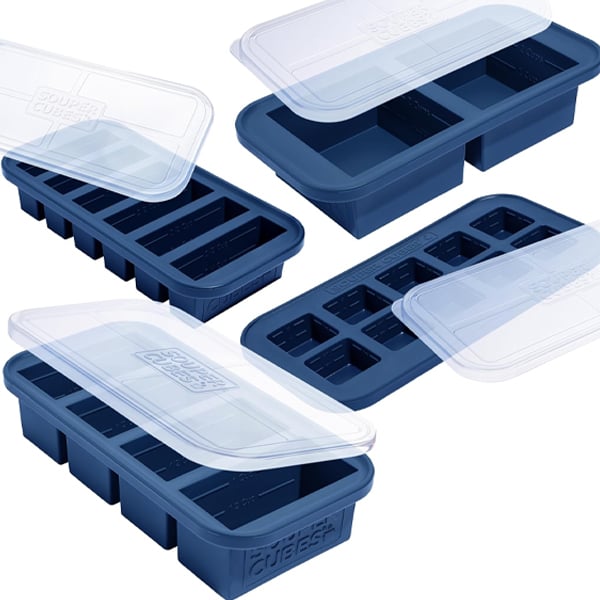
- Spoon the mixture into two 16-well ice cube trays, filling each well with about 2–2½ tablespoons.
- Freeze until solid, at least 3–4 hours or overnight.
- Transfer frozen cubes to an airtight, freezer-safe container.
How to Use Immunity Cubes
Add 4 immunity cubes to your favorite smoothie to replace about ½ cup of fruit. Adjust up or down depending on your taste and texture preferences. These cubes are especially helpful when you want a vitamin C-rich boost without extra prep time.
More Smoothie Cube Recipes
If you love the idea of smoothie cubes, there are plenty of ways to use them. My anti-inflammatory blender bombs are made with anti-inflammatory ingredients, while antioxidant smoothie cubes pack in antioxidant-rich fruits and veggies for one easy add-in. Electrolyte cubes are perfect for post-workout smoothies when you want something hydrating, and green freezer cubes bring a variety of greens together for an easy, everyday boost.
I’d love to hear how it turned out in the comment box below. Your feedback helps me and all the readers in this community. And if you’re interested in more plant-based recipes (and exclusive content), sign up for my weekly recipe newsletter.
Make-Ahead Frozen Immunity Cubes
Jen HansardIngredients
- 2 oranges peeled and halved
- 1 cup papaya cubed or sliced
- 1 cup pineapple cubed
- 1 mango cubed
- 1 cup orange cauliflower florets see notes
Instructions
- Add the oranges, papaya, pineapple, mango and cauliflower to a blender in the order listed. Blend until smooth. It shouldn’t need any liquid, but if it does, add a little water or orange juice.
- Spoon the puree into two 16-well ice cube trays. Freeze until firm, at least 3 to 4 hours or overnight.
- Transfer the cubes to an airtight, freezer-safe container. They will keep for several weeks in a standard freezer or up to 6 months in a deep freezer.
- To use, add the cubes to your favorite smoothie in place of some of the fruit.
Recipe Notes
- Cauliflower Swap: If you can’t find orange cauliflower, regular white cauliflower works; the cubes will just be a little paler.
- Fruit Swaps: Strawberries, cantaloupe, kiwi or red bell pepper can replace any of the fruits. Keep the total amount about the same.
- Prep Tip: Frozen fruit and cauliflower can stand in for fresh; let them thaw for about 10 minutes so they blend easily. Here’s how to cut a mango if you’re using fresh.
- Freezing: Keep the cubes in an airtight, freezer-safe container for several weeks in a standard freezer, or up to 6 months in a deep freezer. Add them to the blender straight from frozen.
Nutrition
Love my recipes?
Let me plan your week!
Dinner decided, grocery list done. 750+ ad-free recipe library and live coaching calls included.
7 days free. Cancel anytime.











I have a lemon tree and had LOADS of lemons to use, I juiced and froze them in cubes for future Morning Tonics. I was just wondering this morning about freezing the juice of oranges and grapefruits a neighbor gave me. I hadn’t thought about blending the entire orange for cubes. I use frozen pineapple and mango from Trader Joes, so I’m not sure I’d need to blend those into cubes with the oranges. I likely won’t get out for papaya or cauliflower, so I think I’ll be freezing a lot of just plain orange cubes.
As someone else mentioned, I’ll need a bigger freezer!
Hey Kimberly! First of all, I’m so jealous you have a lemon tree. It would be so awesome to have fresh lemons at your fingertips!!
I think it’s a great idea to blend and freeze the oranges and grapefruits. If you plan to use them in your smoothies anyway, I think blending them as opposed to juicing them would be the better option. That way, you’ll get the fiber and all the awesome nutrients that are in the pith (the white part). I’d recommend zesting them (you can freeze the zest as well for future smoothies and/or other recipes), then peeling them, and then blending and freezing.
Done….in the freezer waiting to be bagged. Used regular cauliflower since the orange one is not available right now. Had a bit left over which will be a tasty frozen dessert treat.
Nice job!
Utilizing the Smoothie Cubes idea for all seasons.
So convenient. Great idea.
Sorry, went back and re-read the notes that I somehow skipped over. Yes! You can substitute frozen for fresh!
No worries, hope the cubes worked out great for you!
Silly question perhaps but can you use frozen fruit to make these cubes?
Not a silly question and yes, you definitely can use frozen fruit to make these!