

This post may contain affiliate links.
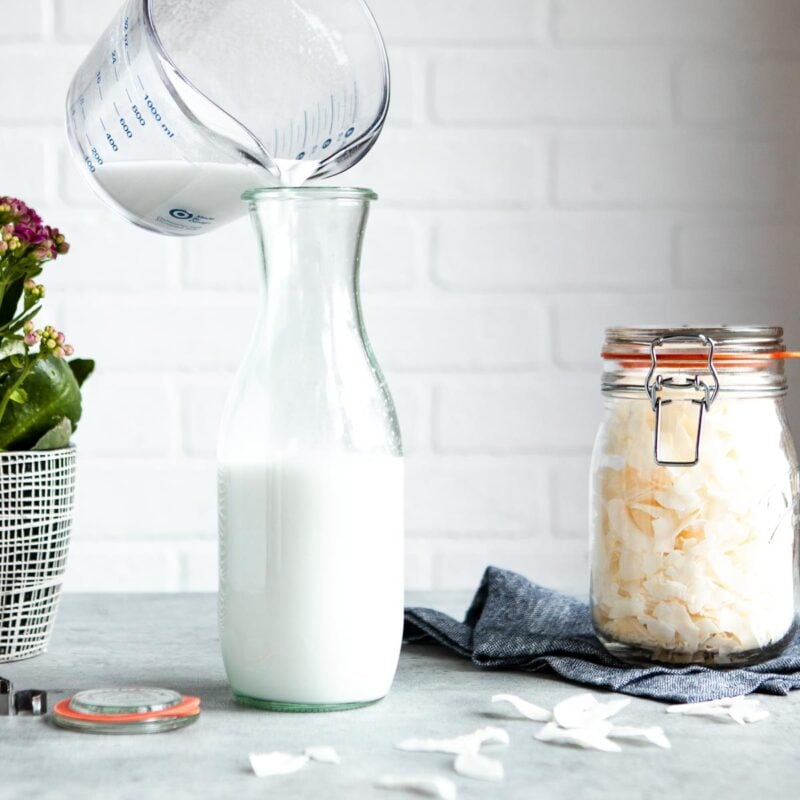
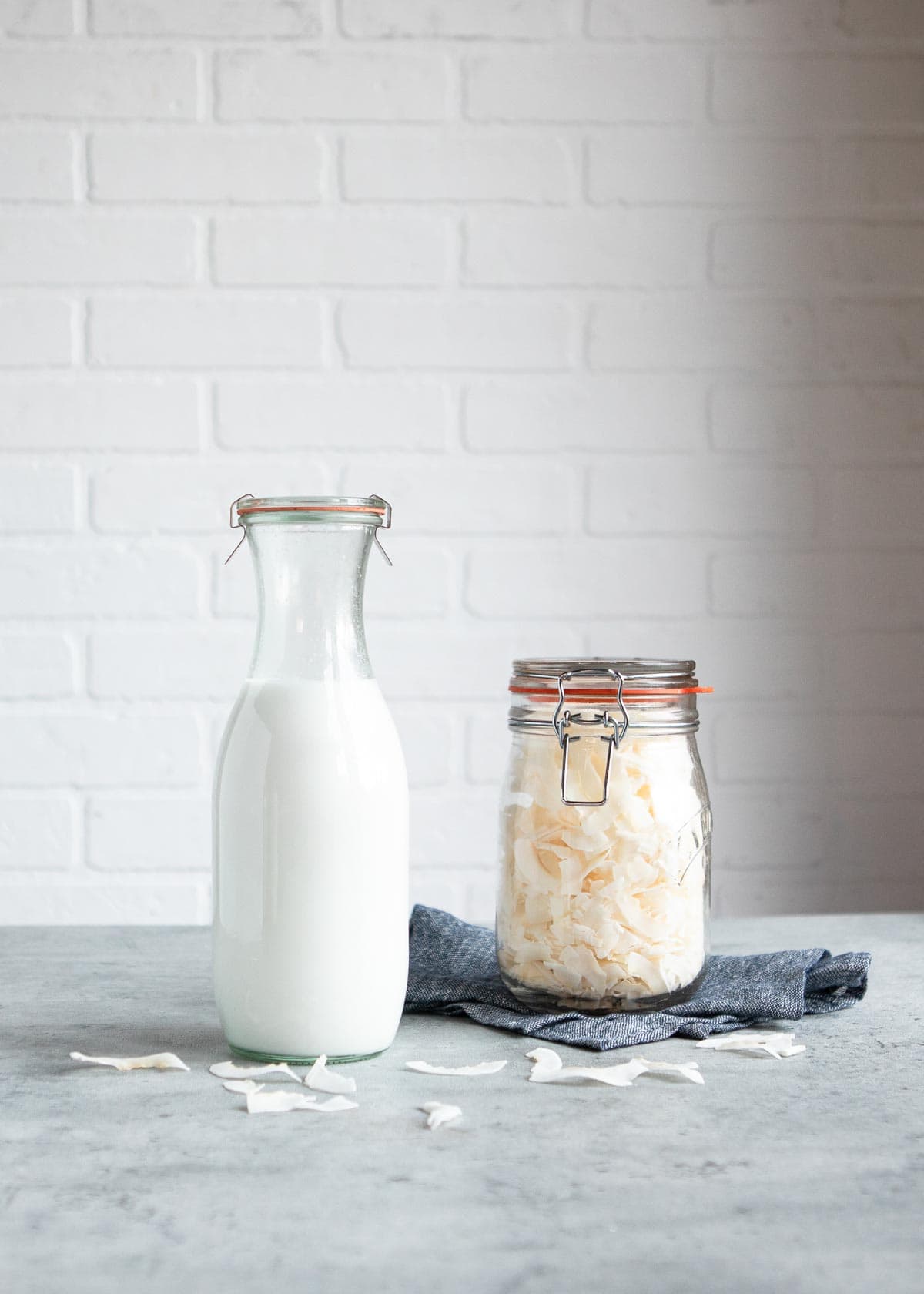
Here’s how to make coconut milk that’s silky and low-pulp, with only three ingredients. A hot soak softens the flakes, and a double strain catches the pulp. The result is a creamy non-dairy milk with no gums, artificial flavors or sweeteners.
If you’ve ever pulled a gritty jar of homemade plant milk from the fridge, this method is for you. Making my own also changed how I shop for cartons. When I buy one now, I look for a short ingredient list without fillers or sweeteners.
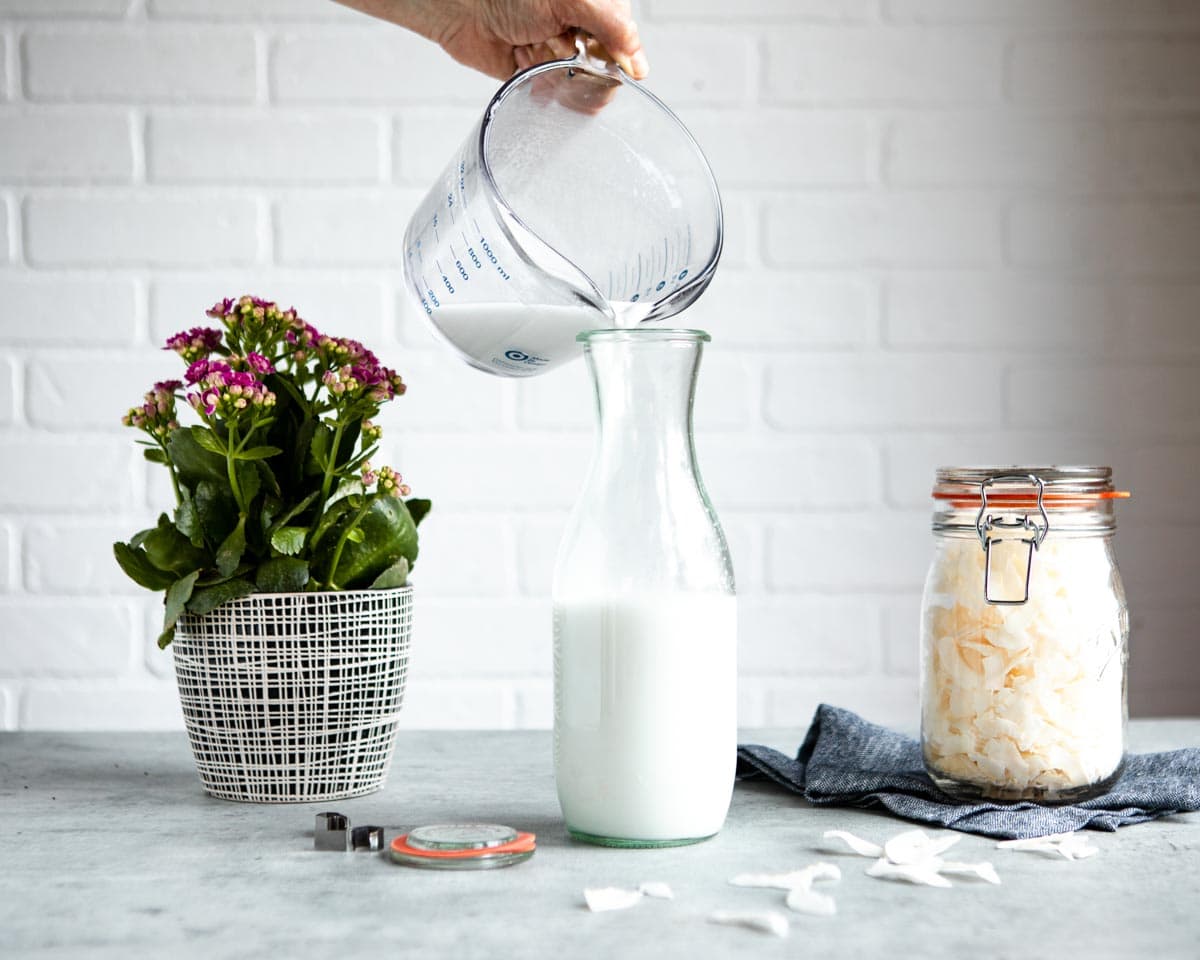
Table of Contents
Why This Method Works
Many recipes blend the flakes straight into the water. This one adds two small steps, and both change the texture.
- A hot soak. Boiling water softens the flakes before they reach the blender. In my kitchen, that means a smoother blend with less pulp.
- A double strain. A nut milk bag or cheesecloth lines a mesh strainer, so two layers catch the fine pulp.
- Three simple ingredients. You need coconut, boiling water and a pinch of salt. Nothing else goes in.
- Fifteen minutes. Prep takes 5 minutes, and the soak takes 10.
Homemade Coconut Milk Ingredients
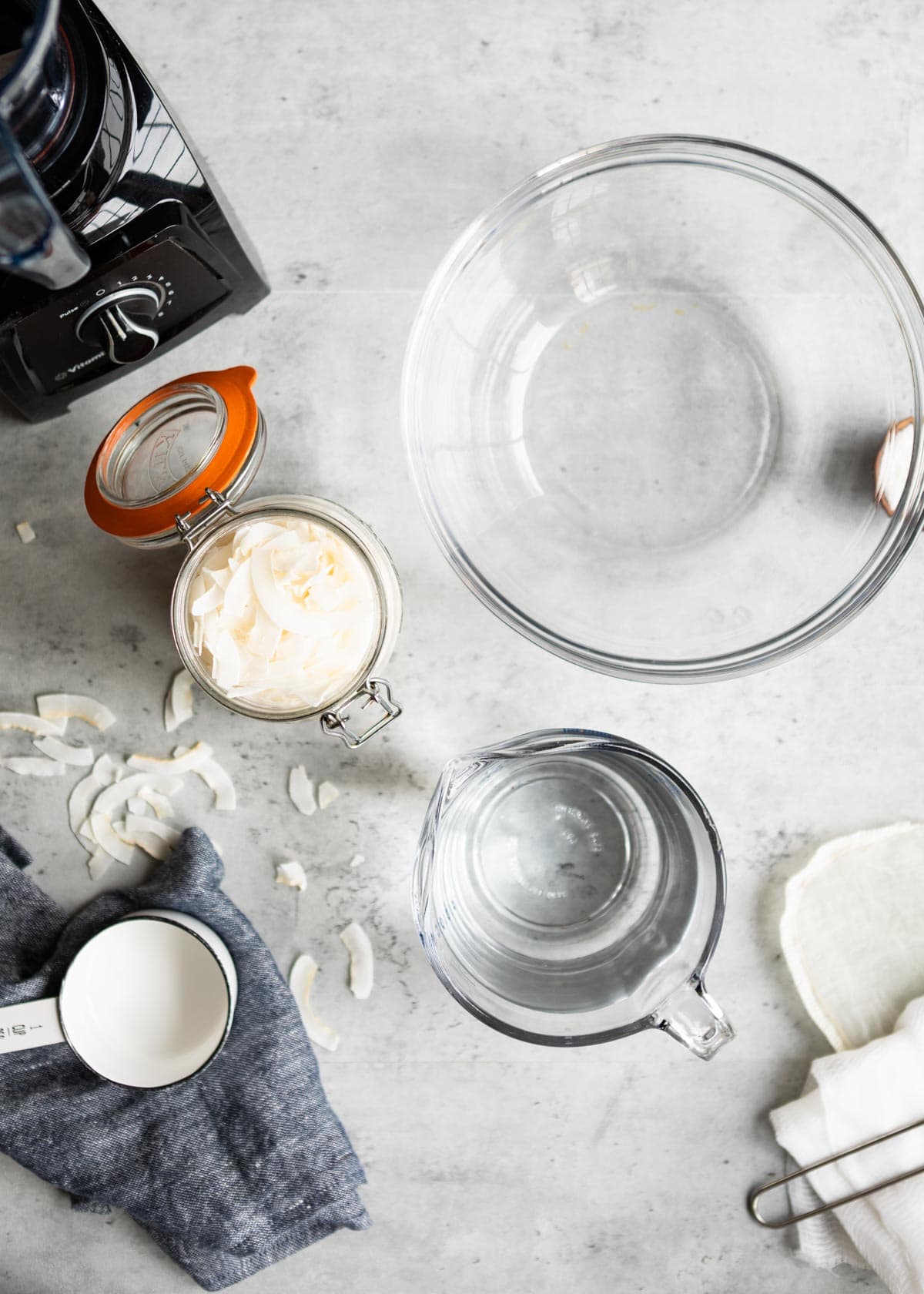
- Unsweetened shredded coconut: Choose the unsweetened kind. Sweetened flakes add sugar and make the milk taste candied.
- Boiling filtered water: The heat softens the coconut so it blends smooth. Water just off the boil works too, though the milk may turn out a little more pulpy.
- Sea salt: A pinch rounds out the coconut’s natural sweetness. You can skip it.
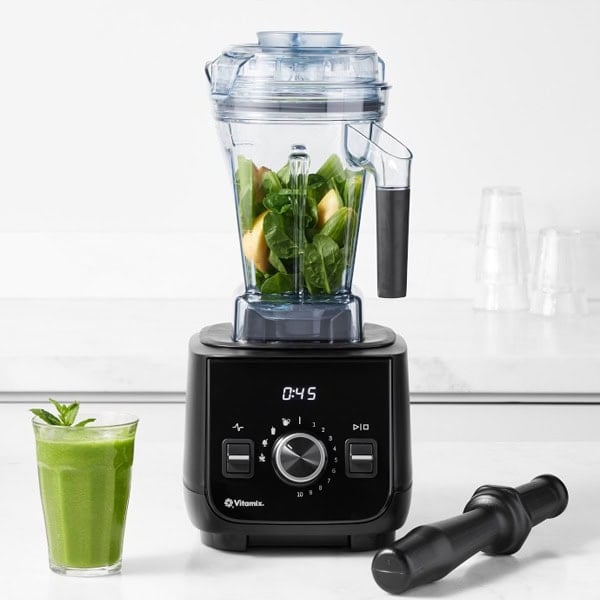
- High-speed blender: A powerful blender breaks the soaked flakes down fully. If yours struggles, my blender guide walks through the options.
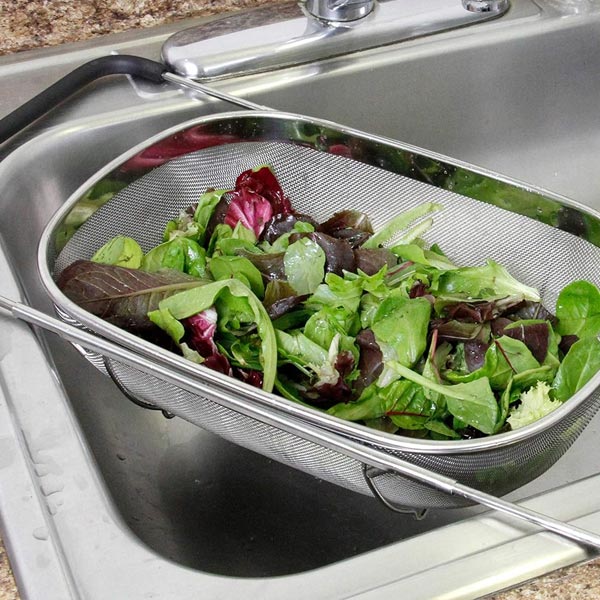
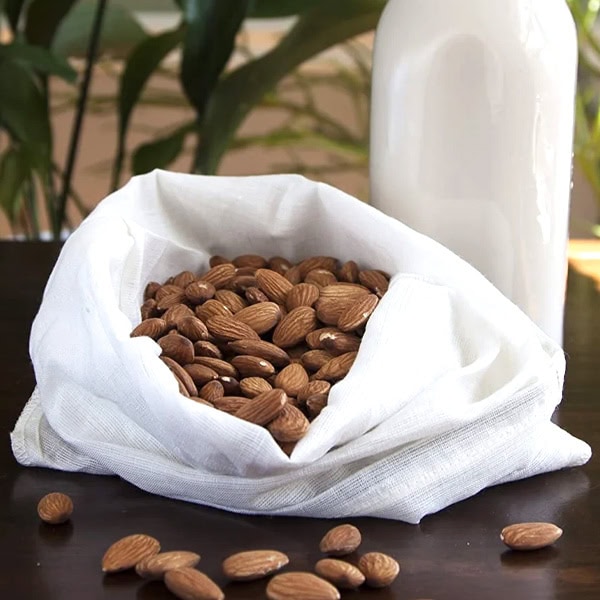
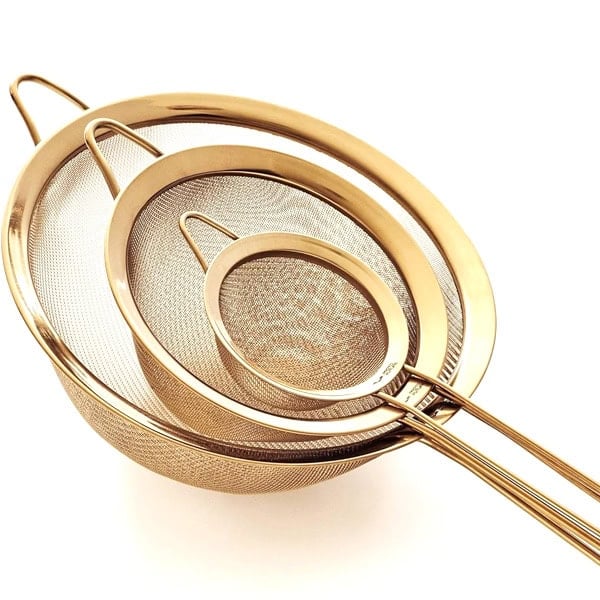
- Mesh strainer and nut milk bag: Together they make the double strain. A mesh strainer holds the bag, and cheesecloth or a thin tea towel works in its place.
Free 5-Day Soup Challenge
To celebrate this cozy season, we’re cooking up a fall-inspired soup each day—packed with veggies, perfect for busy nights, and every bowl you make is a chance to win $750 in prizes!
How to Make Coconut Milk
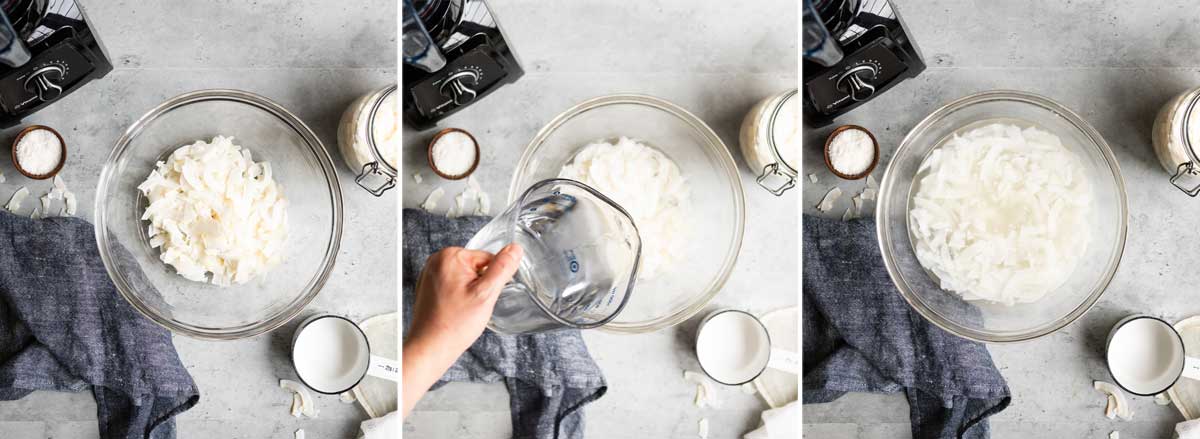
- Soak the coconut. Place the coconut in a heatproof bowl and pour in the boiling water. Stir so every flake stays submerged. Then let it sit at least 10 minutes, until the flakes turn soft.
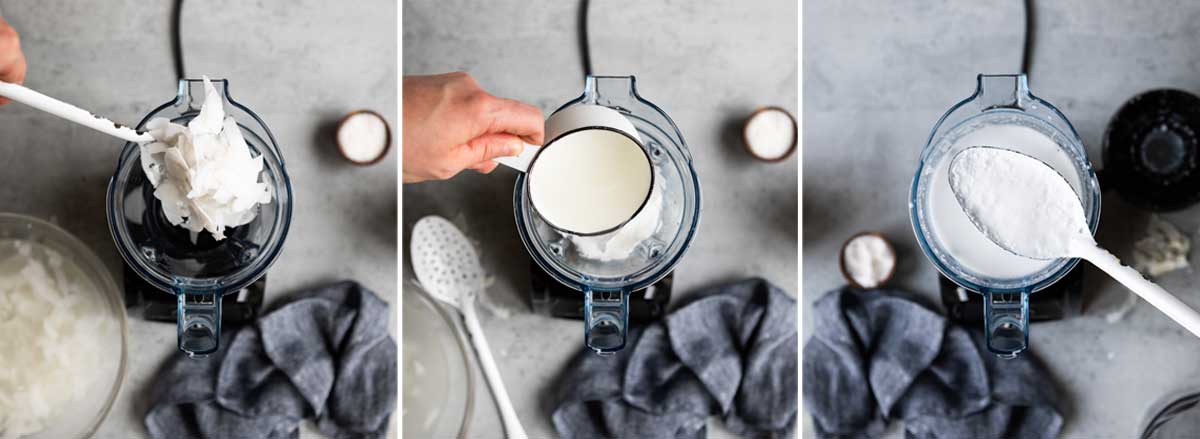
- Blend. Pour the coconut and all of the soaking water into a high-speed blender. Start on low and vent the lid, since hot liquid expands. Then blend until thick and creamy.
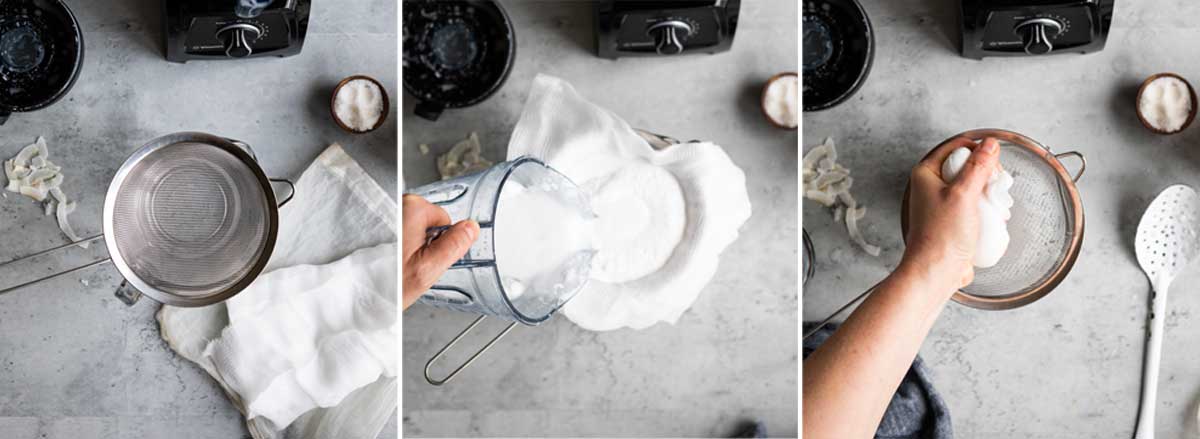
- Strain through two layers. Set a mesh strainer over a bowl and line it with a nut milk bag, cheesecloth or thin tea towel. Pour in the blend slowly.
- Squeeze. Gather the cloth, twist and press gently. Keep going until the pulp feels fairly dry.
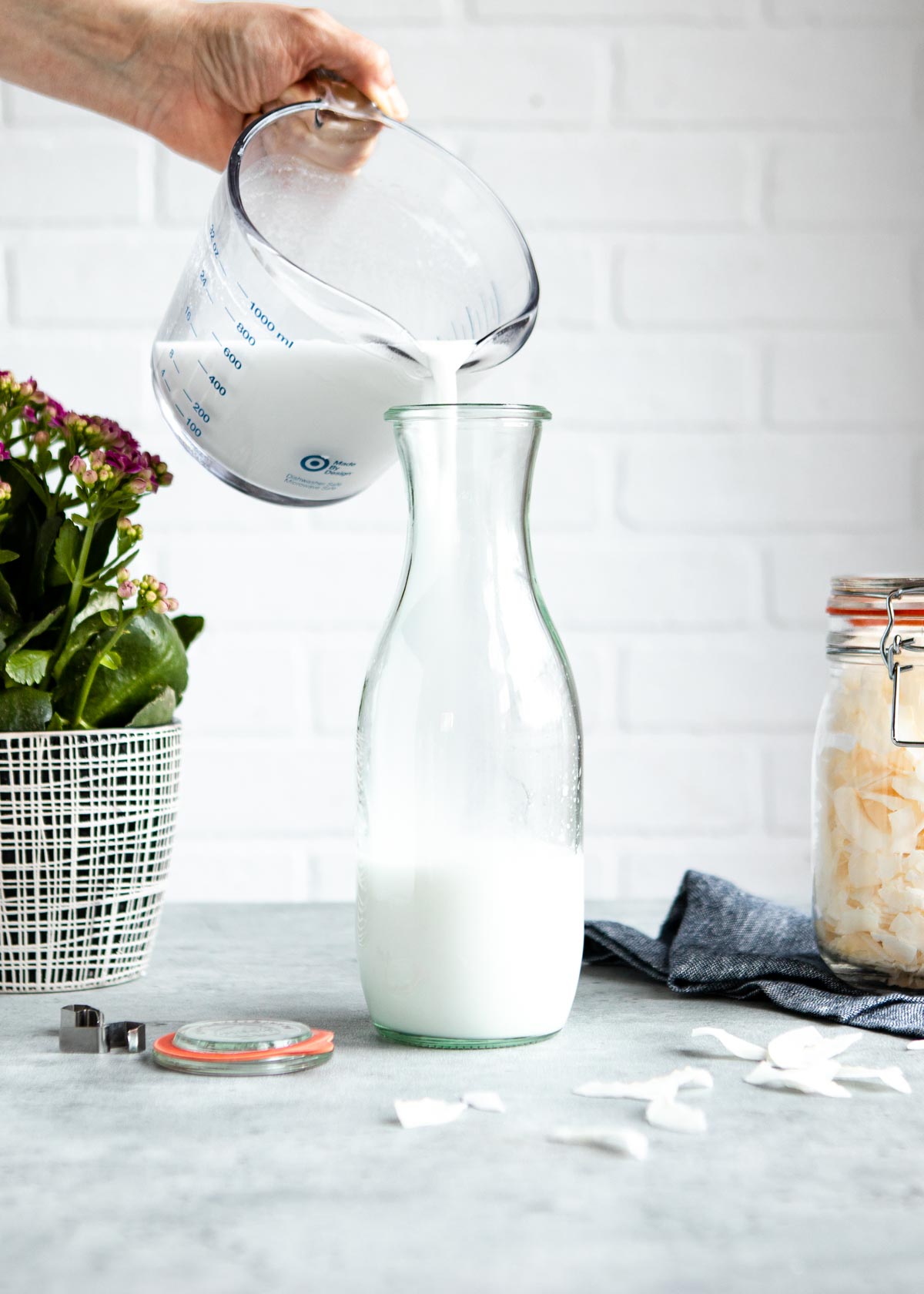
- Store. Pour the milk into an airtight jar and refrigerate it until you’re ready to use it.
Save the pulp. It adds fiber to baked goods and smoothies.
Substitutions and Variations
- Water temperature: Water just off the boil works. Expect a little more pulp than you’d get from a full boil.
- Thicker milk: Use less water for a creamier result. A single layer of cheesecloth also gives a thicker pour with a bit more pulp.
- Strainer swap: Cheesecloth or a thin tea towel replaces the nut milk bag.
- Extra smooth: If you spot any grit, pour the milk through the strainer one more time.
- Flavor: Stir in a splash of vanilla or a teaspoon of maple syrup for a sweeter milk.
How to Store Homemade Coconut Milk
- Refrigerator: Keep it in an airtight glass jar, like a wide-mouth quart jar, for 3 to 4 days.
- Separation: The fat rises as the milk chills. Give the jar a good shake before every pour.
- Coconut cream: The top layer is coconut cream. Spoon it off for recipes that call for a richer milk.
- Freezer: Freeze the milk in an ice cube tray for up to 2 months. Then thaw it in the fridge and shake or re-blend.
Nutrition at a Glance
Each 1-cup serving has 1 g protein, 3 g fiber and 2 g sugar, based on the recipe card. The recipe has no added sugar.
How to Use Coconut Milk
Next, use your milk anywhere a carton of coconut milk works. It tastes naturally sweet, so desserts and smoothies make an easy start. That said, it has less fat than canned coconut milk, so save the canned kind for curries. Try it in these:
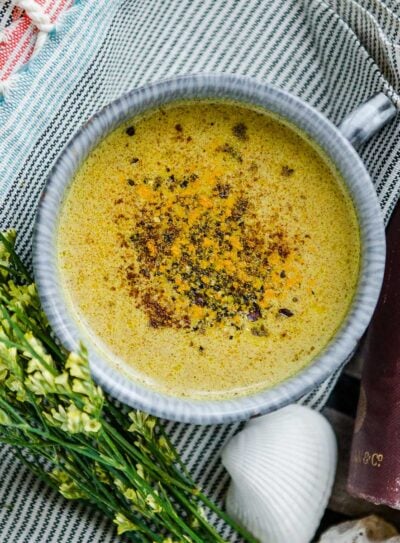
- Spiced Golden Milk: a warm, comforting drink for the end of the day.
- Creamy Blackberry Coconut Sorbet: cold, fruity and refreshing on a warm day.
- Peach Coconut Milk Smoothie: quick, easy and silky.
How to Make Coconut Milk
Jen HansardIngredients
- 1 cup raw coconut flakes
- 3 cup water boiling
- pinch sea salt, unrefined
Instructions
- Soak the coconut flakes in the boiling water for at least 10 minutes.
- Transfer the coconut and water to a blender and carefully blend until smooth.
- Set a strainer lined with cheesecloth or a tea towel over a bowl, or use a nut milk bag, and pour in the mixture. Let the coconut milk drip into the bowl.
- Gather the cloth at the top, twist and gently squeeze out as much coconut milk as possible; the remaining pulp should be fairly dry. Stir the salt into the coconut milk.
- Transfer to an airtight jar or bottle and refrigerate until ready to use.
Recipe Notes
- Blender Tip: The water is hot, so blend with the center cap removed and a towel over the opening to let steam escape.
- Texture Tip: This makes a milk similar to refrigerated carton coconut milk, not the richer canned kind. Use less water for a thicker, creamier result.
- Coconut Cream: The layer that rises to the top is coconut cream. Spoon it off for recipes that call for full-fat coconut milk.
- Storing: It keeps in a sealed jar in the fridge for 3 to 4 days. It separates as it sits, so shake well before using.
Nutrition
Common Questions
Soak unsweetened shredded coconut in boiling water for at least 10 minutes. Then blend it with the soaking water until creamy. Finally, squeeze the blend through a nut milk bag.
Soak the coconut in boiling water first so the flakes soften. Next, blend until the mixture turns thick and creamy. Then pour it through two layers, a mesh strainer and a nut milk bag. Squeeze until the pulp feels dry.
No, water just off the boil also works. However, a full boil softens the flakes more. In my kitchen, that means less pulp after blending.
Homemade coconut milk keeps for 3 to 4 days in an airtight jar in the refrigerator. Because it has no stabilizers, the layers separate as it sits, so stir or shake it before pouring.
No. This recipe makes a milk similar to refrigerated carton coconut milk. It has less fat than canned coconut milk, so use the canned kind for rich curries.
Add the leftover pulp to baked goods or smoothies for extra fiber.
Love my recipes?
Let me plan your week!
Dinner decided, grocery list done. 750+ ad-free recipe library and live coaching calls included.
7 days free. Cancel anytime.














My homemade coconut milk separates as you said, but the top layer is not spoonable. It actually solidifies over the liquid watery layer. I have to break it up to get “milk” but then it’s not very smooth after. Am I not squeezing too hard or something?
Hey Miranda,
Thanks for reaching out, sounds like that is the healthy fats solidifying in your coconut milk, give it a shake and they should go away. 🙂 If it doesn’t, for sure when you blend it. 🙂
Where are you getting dried unsweetened coconut? Even at Trader Joe’s all they have is sweetened!!!!–thanks!
Hi there,
Whole foods, sprouts, online. 🙂
I’m using dried shredded coconut that is extremely fine and practically grated. Do I still need to blend?
That’s perfect. Just use it in place of the coconut. 🙂
So I don’t blend or I do?
Hey Amy,
I would blend it still, just not as long. 🙂
Hi there,
I’ve just started buying the fresh coconuts from the supermarket & once I’ve drank the water out of it, what is the time frame that the coconut left inside has to be eaten or used by? Thanks.
Hey Sasha.
I am not sure of that answer. I would imagine if you are storing it in fridge, it should last a few days. Next time you are in the store, ask the produce manager, they could give you a more exact time frame.
We use lot of coconut in our indian cooking.how we store coconut is, grate the coconut and freeze it in ziplock.it stays for months.whenever you want to make coconut milk, just blend the grated coconut with warm water, it prevents the milk from curdling .Filter the milk. Leftovers can be used for your coconut cookies, salads and soups as a topping
I can keep my fresh coconut in a little water in the refrigerator for about 5-6 days. After reading how to make your own coconut milk though, I am going to try shredding then dehydrating it myself.
Rachel,
Rawsome! Let us know how it turns out, or if you have any questions along the way!
can coconut milk be made from coconut flour?
Hi Jan.
Great question. I haven’t tired to make coconut flour, but here is a video you might enjoy:
Yes, Coconut nut flour is super easy to make.
Preheat oven to 200, spread coconut pulp on cookie sheet and bake.
Stir and break up clumps while it is drying in about 2hrs take it out set aside to cool. Place dried coconut into coffee/ spice grinder, give it a whirl and Viola coconut flour! Take a look at how much coconut flour cost and give yourself a pat on the back and the wallet.
Here is a web version as well.
Thanks for sharing, Sara. 🙂