

This post may contain affiliate links.
Table of Contents
When flu and cold season kicks into gear, I start disinfecting shopping carts, blending this elderberry smoothie, and making my soothing homemade ginger lemon honey tea. This is a classic cold remedy that combines ginger’s anti-inflammatory magic, lemon’s vitamin C boost, and honey’s soothing qualities.
Breath in deep while sipping on this homemade cold and flu remedy to relieve congestion while strengthening your immune system during cold and flu season. No one likes being sick, but having a batch of this tea on hand can really make a difference.
Ginger Lemon Honey Tea Health Benefits
This all-natural home remedy is my first defense when I get sick. It tastes amazing, makes me feel better quickly and speeds up recovery. Here’s some of my favorite health benefits of this tea:
- Ginger helps reduce inflammation and swelling in the body when fighting off a common cold. Fresh lemon juice is rich in vitamin C, which helps boost the immune system and neutralize the free radicals in the body.
- Fresh lemon juice has natural acidity to help break down mucus as well as alleviate congestion.
- Ginger contains a bioactive compound called gingerol, which helps you sweat out the toxins in your body, which is helpful when you have a cold or flu. It’s also a helpful home remedy for cough, settling upset stomachs, dizziness, nausea, vomiting, and cold sweats.
- Raw local honey is a natural cough suppressant. It can also improve the body’s ability to fight infection and decrease the risk of fevers. Raw honey and warm water also helps sooth a sore throat, fight infection and help with seasonal allergies.
Ingredients You’ll Need
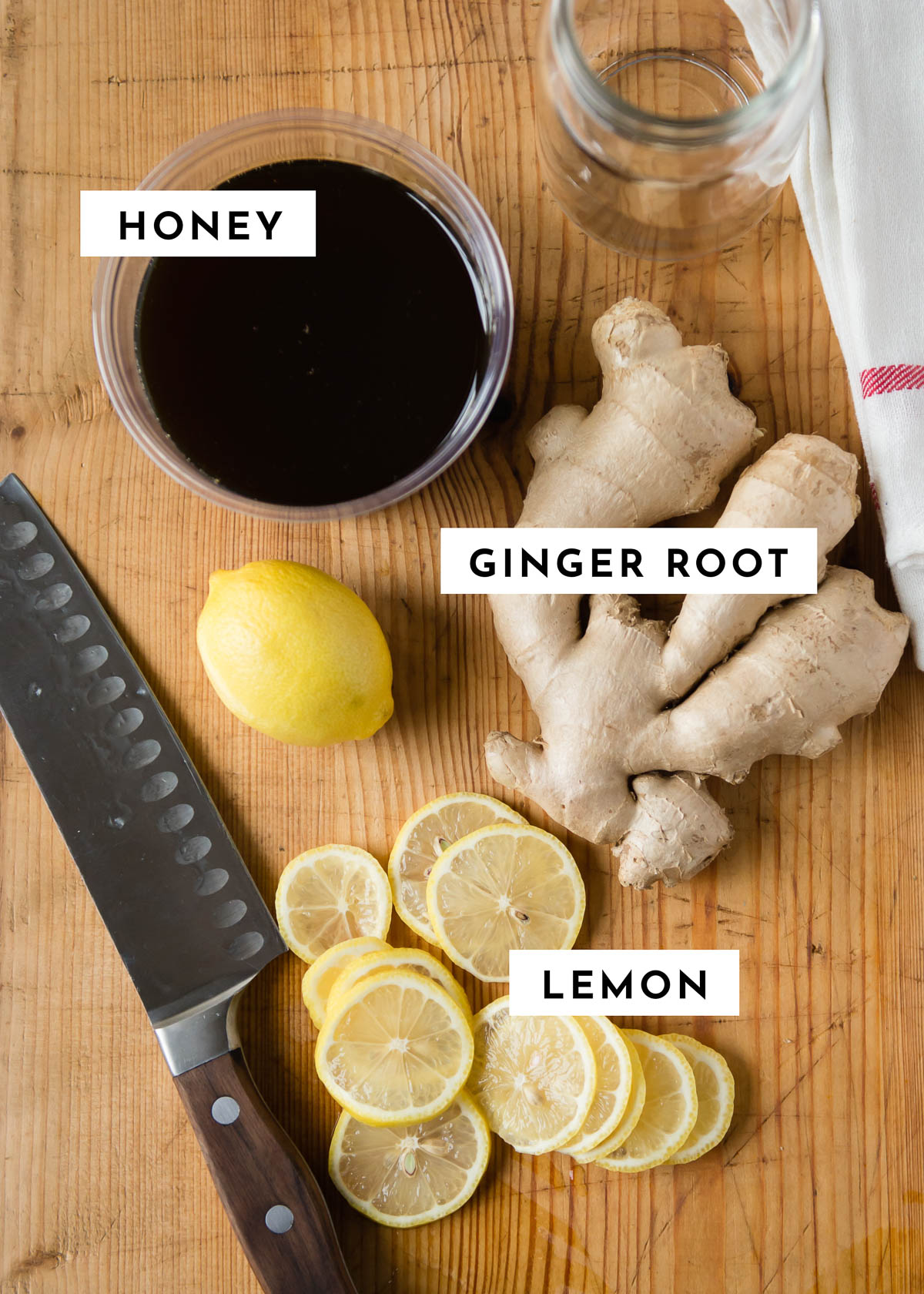
You only need three ingredients to make this Ginger Lemon Honey Tea. I like to batch it out into a large mason jar and store in the fridge until needed.
- Fresh lemons: use organic lemons or really scrub the peel to remove any pesticide or wax residue. You can create fresh lemon juice by squeezing by hand our using a juicer.
- Fresh ginger root: Found in the produce section. You’ll want to wash it well and cut into thin ginger slices. If you can’t find it, try using herbal ginger tea from a box.
- Raw honey: The natural sweetness of honey balances the tartness of the lemon + ginger. Use raw local honey or Manuka honey for the best results. Infants under one year of age should avoid honey as it can cause botulism.
How to Make Ginger Lemon Honey Tea
This ginger, lemon and honey tea is ideally made in a large batch to have all season long. It’s perfect for soothing a sore throat and relieving congestion in just a few minutes. You can make it fresh with hot water, slice of lemon, ginger, and honey, or you can make it in bulk like I do. Here’s my preferred method:
- Cut lemons and fresh ginger root into thin slices.
- Alternate layering into an airtight jar (ex: mason jar).
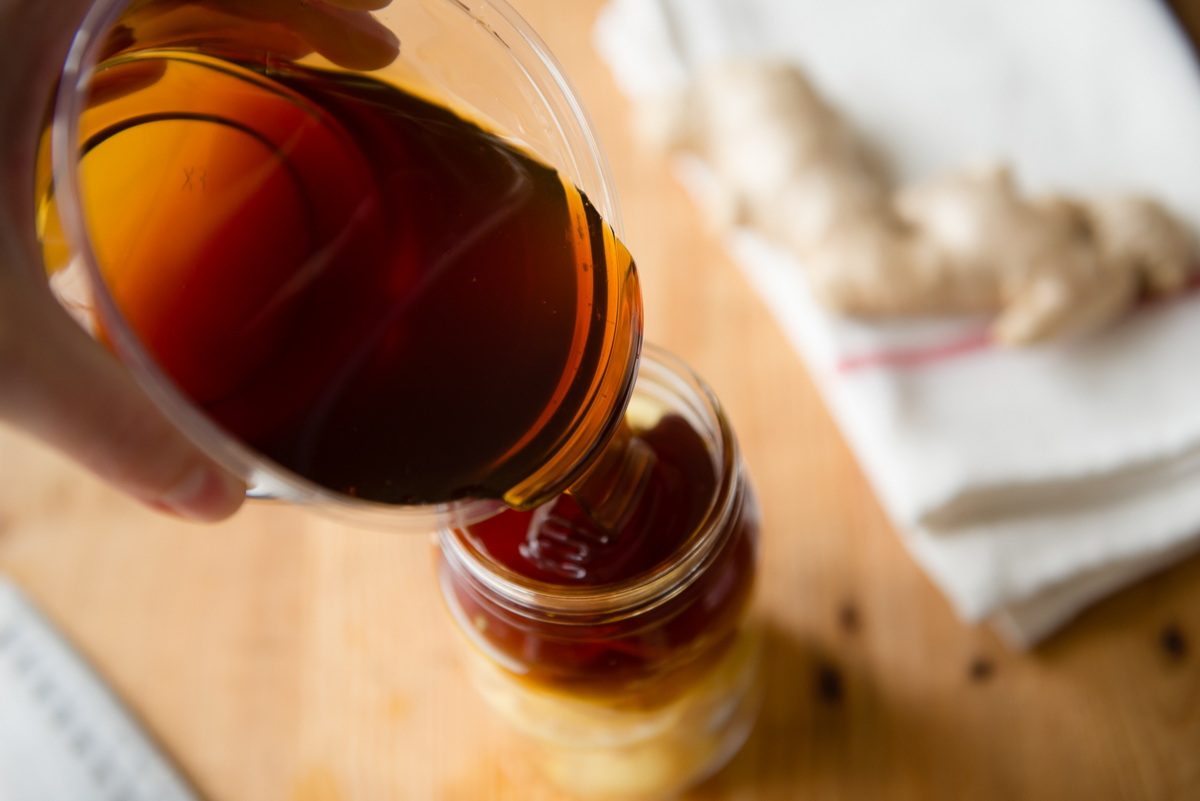
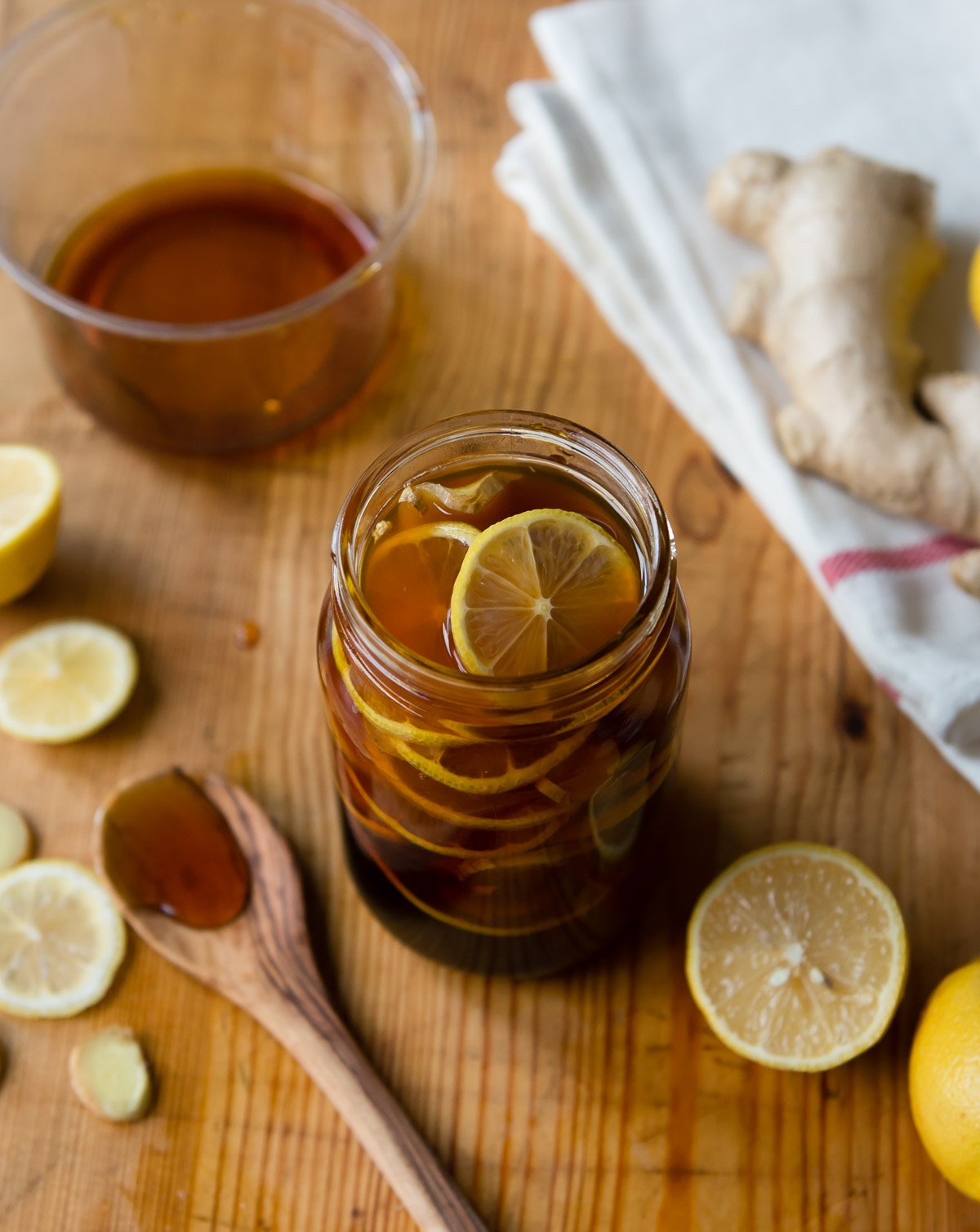
- Slowly, pour honey over the lemon slices and fresh ginger root and fill jar to the top. Seal tightly.
- Store in the refrigerator until needed.
- When ready to use, add a large scoop to a mug of hot water. Stir well and sip it down.
Storage Tip
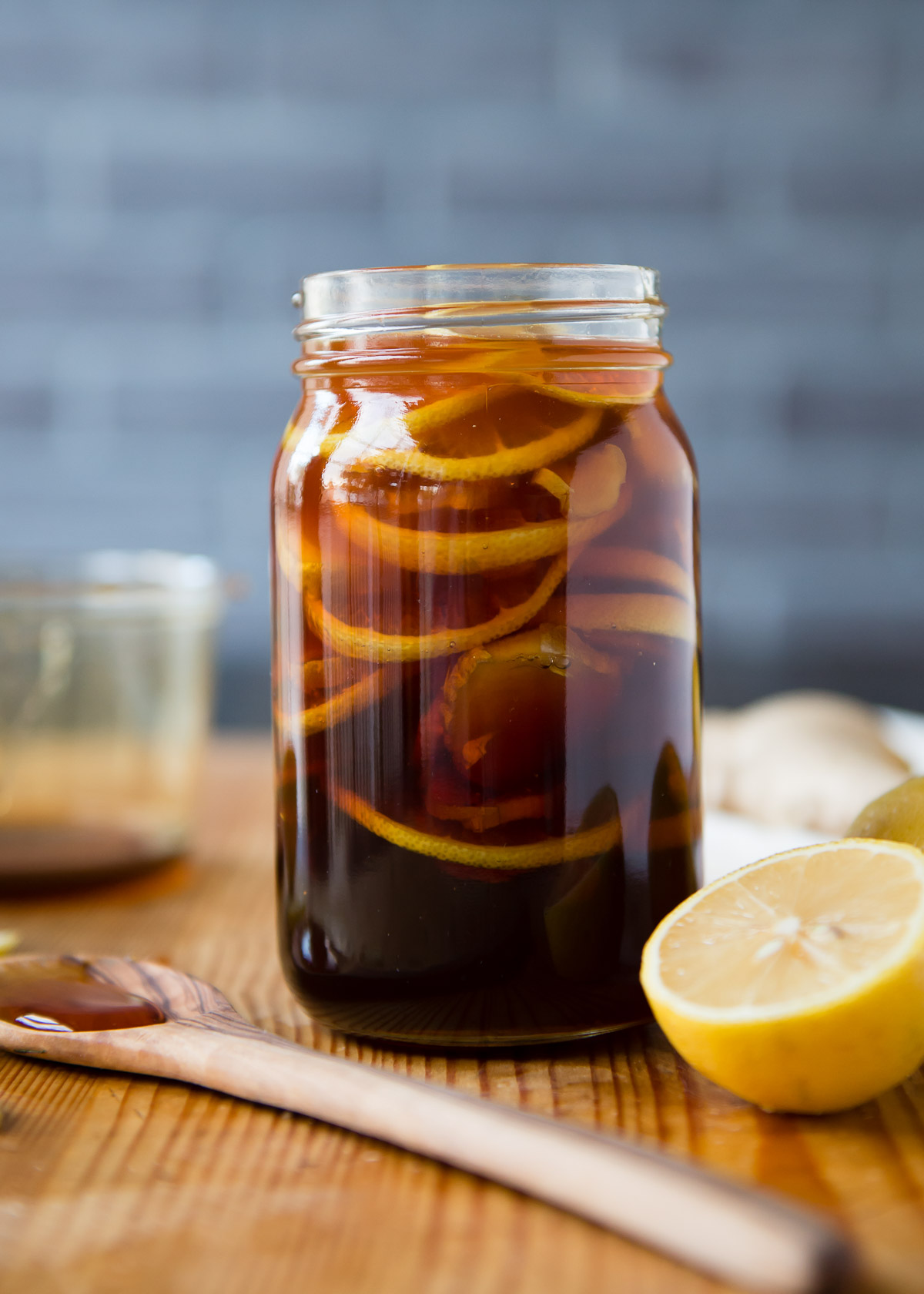
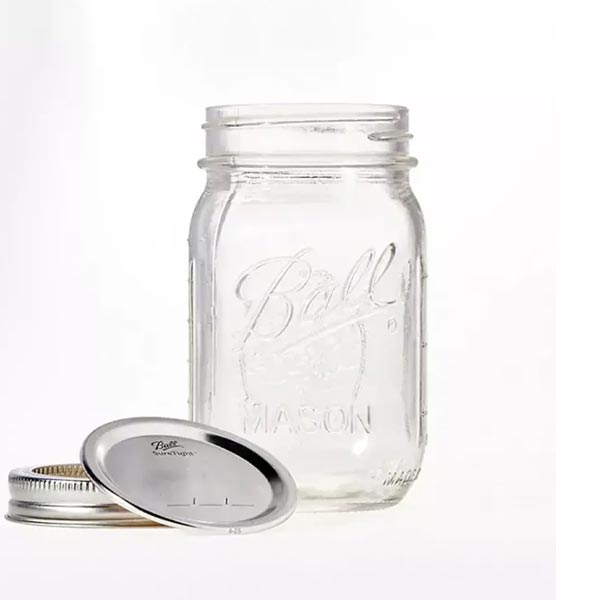
I love using mason jars to store my home remedies, like this ginger lemon honey tea that’s in a quart-size mason jar with a wide mouth.
Common Questions
Lemon ginger honey tea offers numerous health benefits, including boosting the immune system, aiding digestion, and relieving cold symptoms. Ginger may help relieve nausea and increase digestive efficiency. The combination of ginger and honey tea provides anti-inflammatory and antioxidant properties, while the lemon adds a dose of vitamin C. Together, these ingredients can help soothe sore throats, reduce nausea, and improve overall wellness.
Yes, lemon ginger tea can be an effective home remedy for cough relief. The ginger acts as a natural expectorant, helping to loosen mucus and ease coughing. To make ginger lemon tea for cough, simply add a bit more ginger when preparing the tea and sip it slowly. The honey helps soothe the throat, making it easier to manage coughing fits.
The lemon ginger tea benefits can be enhanced by the addition of honey, which is known for its antibacterial and soothing properties. Ginger is excellent for digestion and reducing inflammation, while honey helps coat and calm an irritated throat. Together, ginger and honey tea can help alleviate symptoms of colds and flu, improve digestion, and provide a natural energy boost.
More Natural Remedies for Cold and Flu
Thirteen years ago, I started on this wellness journey to discover the best home remedies for coughs, colds, and flu. Some we’re a bit wild and I only did once, whereas others were winners and I still use. Here are a few recipes that have stuck with me over the years:
- Elderberry Syrup: can be taken daily, and taken multiple times a day when experiencing cold or flu symptoms. And when you can make a medicinal syrup into popsicles for sore throats, I’m 100% in.
- Homemade Fire Cider: while this tonic is not for the faint of heart, it does wonders in limiting the life of a cold or the flu, and helps to strengthen the immune system along the way. This is one home remedy that’ll scare the cough right out of ya!
- Homemade Vapor Rub: this is a perfect natural remedy for cough + decongestant. Use it on the chest, as well as the feet to soothe.
Ginger Lemon Honey Tea
Jen HansardVideo
Ingredients
- 2 lemons organic
- 2 inch ginger root
- 1 cup raw honey
Instructions
- Slice lemons and ginger.
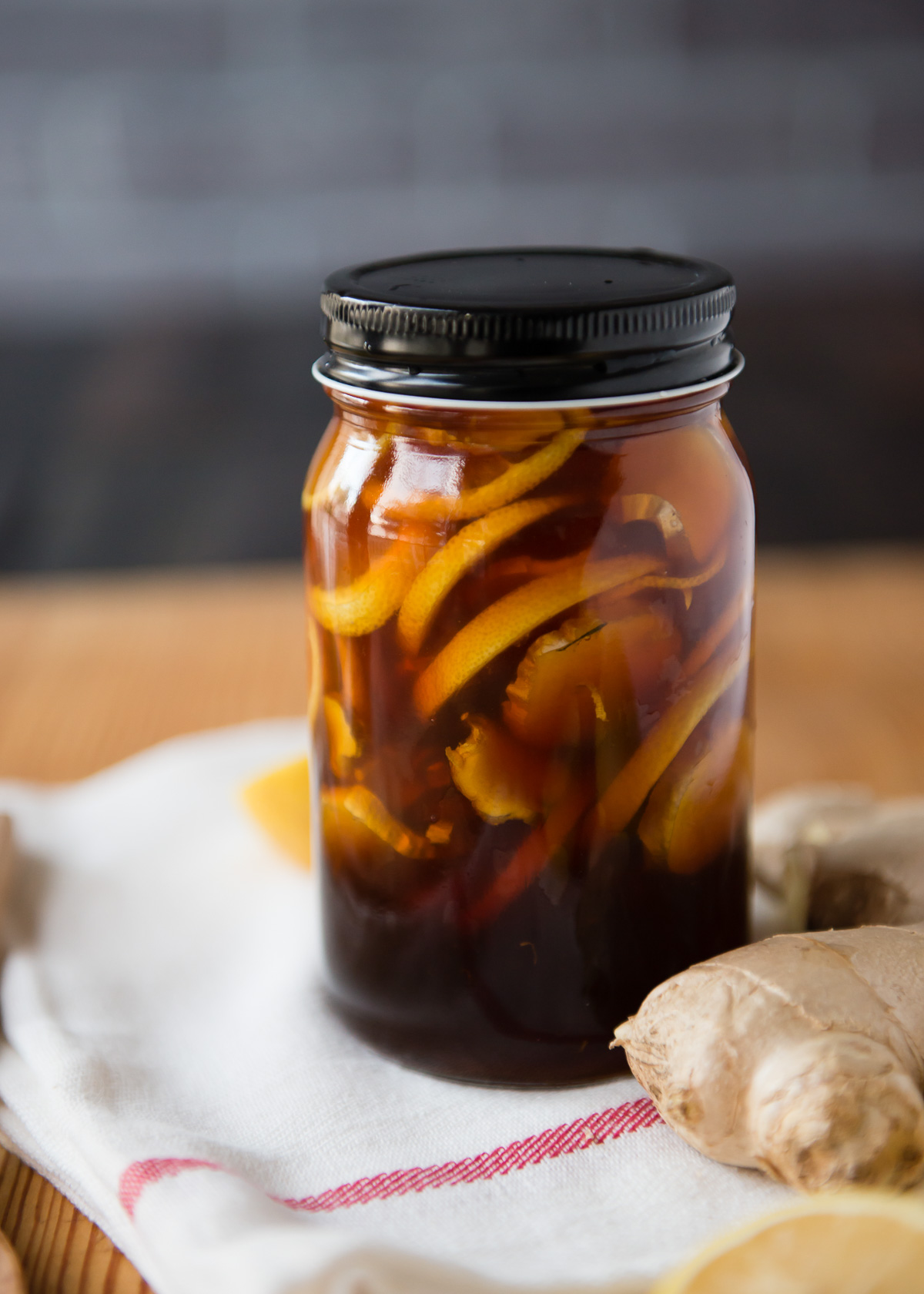
- Place the lemon and ginger slices in the mason jar, alternating layers of each.
- Slowly, pour honey over the lemon and ginger. Allow the honey to sink down and around the lemon and ginger slices. Fill jar to the top with honey and seal tightly.
- Store in the refrigerator. Over time, the mixture will start to turn into a loose jelly.
- When you are in need of some soothing tea for cough, scoop 2-3 tablespoons into a mug full of hot water—be sure to scoop whole pieces of ginger and lemon. Allow to steep for 3-4 minutes and sip away.
Recipe Notes
- Since lemons are going into this concentrate, make sure to wash them well before slicing.
- Use a jar with a tight-fitting lid to ensure this mixture stays protected.
- For best personal results, use raw, local honey that was made within the season you are using it.













How long do you let it sit for before first use and how long can you store it in the refrigerator before making a new batch?
Hi Susan,
No need to wait! You can use your All-Natural Remedy right away! Also, I usually keep mine in the fridge for up to two months. If I have any left over, I usually don’t, I then make a new batch! 🙂
Made this for the first time today, for my family, my brothers family and my Dad…it’s definitely a winner. So easy and tastes yummy! Thank you so much for the recipe…love Simple Green Smoothies! You guys are all Rawkstars!
This is very similar to a product found in many East Asian markets. I spent a winter month once in South Korea, and most of us caught colds while we were there. Following promoting from our hosts, we drank tea made with a store-bought sweet citrus syrup. I’m not sure if it contained ginger, but the slices of citrus were visible in it, much like in this. I’ve seen it in Asian markets in the US, and have bought it on occasion, though I tend to prefer onion syrup and gargled salt water (both old remedies in my family, and likely in others) as well as a simple lime tea when I find myself with a cough or sniffles.
(After a bit of googling, I’ve determined that it’s called yuja cha in Korean. It’s probably cheaper to make it yourself, but if you’re near an Asian market, I’d recommend trying it at least once!)
Hi Cam,
So cool. Thank you so much for taking the time to share your experience in East Asia + love that you found something similar on the other side of the world. And I’m definitely going to look more into your personal family remedies too!
Hi! I am unable to get to the store until this weakened but wanted to make this. I have a ginger paste, do you think I could substitute?
Hi Ashley,
I just checked with our entire team, including our recipe developer. And the verdict is that ginger paste wouldn’t be the best choice for this recipe. If you can’t find fresh ginger, dried ginger can be a good swap!
How long can you store the lemons this way?
Hi Rose,
I usually keep my mixture for about two months, and then make a new batch!