

This post contains affiliate links.
If you’ve ever stood in front of the oat milk shelf wondering what “original,” “extra creamy,” and “barista” actually mean, you’re not alone. Every brand labels it differently, and the ingredient lists range from three simple items to a dozen.
So I gathered friends for a blind taste test, scored every unsweetened oat milk we could find, and narrowed it down to the best oat milk brands for smoothies, coffee, and the cleanest ingredients. No more guessing (or wasting money).
Want even more non-dairy milk alternatives? Check out my Almond Milk Brand Guide and Coconut Milk Brand Guide.

Table of contents
Best Oat Milk for Smoothies
Oat milk makes smoothies creamy with a mild, slightly sweet flavor that lets the fruit shine. It’s my favorite base for my Banana Oatmeal Smoothie or a thick oat smoothie bowl. These two blend the smoothest:
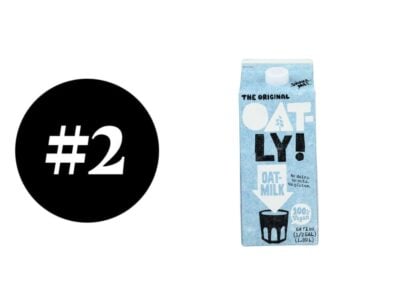
Oatly Original Oatmilk
Creamy, mild, and sold almost everywhere. It blends right in without stealing the show, and the half-gallon carton lasts all week. The trade-off is added oil and a longer ingredient list.
120 calories, 3g protein (1 cup) | $4.49
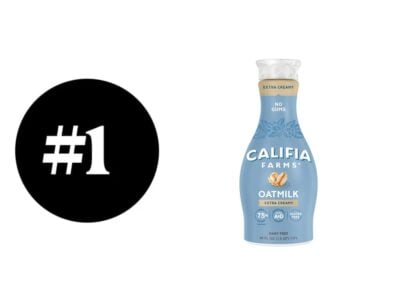
Califia Farms Extra Creamy Oatmilk
My top smoothie pick. Rich and creamy with no gums, so smoothies come out velvety instead of slimy, and it was one of the lowest in sugar of the brands we tried.
110 calories, 2g protein (1 cup) | $4.18
Best Oat Milk for Coffee
For Matcha Lattes, a Golden Milk, or a Cinnamon Dolce Latte, reach for a barista blend. They have a little more body, so they froth into thick foam and won’t split in hot coffee. Here are the three that impressed us most:
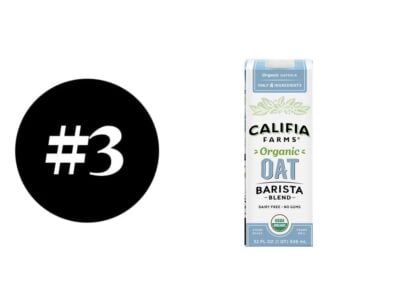
Califia Farms Organic Oat Barista Blend
Organic, only four ingredients, and no gums, yet it still steams and froths beautifully. It’s sold in 6-packs, so it costs a bit more per carton.
130 calories, 1g protein (1 cup) | $6.19
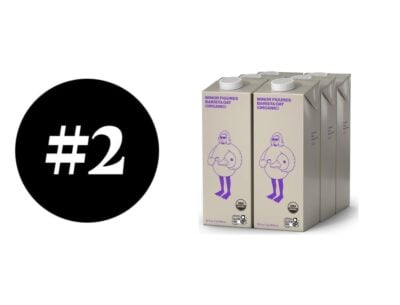
Minor Figures Barista Oat (Organic)
Made by coffee people for coffee. Organic, no added sugar, and a short ingredient list, with a silky foam that tastes like your favorite coffee shop. The shelf-stable cartons are easy to stock up on, yet the price is what stops me from using it often.
110 calories, 1g protein (1 cup) | $6.17
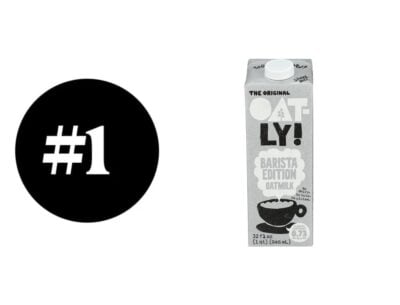
Oatly Barista Edition Oatmilk
My top pick for coffee. It froths into thick, glossy foam that holds its shape, never splits in hot coffee, and costs less than the rest. The ingredient list is longer, but for lattes nothing else comes close.
140 calories, 3g protein (1 cup) | $3.98
Save this for Later 📌
Enter your info & I’ll email the link.
Cleanest Oat Milk Brands
Most oat milks lean on oils, gums, and added minerals for texture. If you read labels like I do, these two keep it simple. Want it even simpler? My homemade oat milk takes just oats and water.
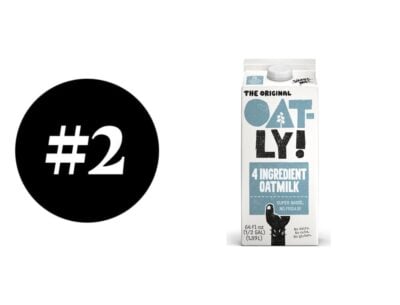
Oatly 4 Ingredient Oatmilk
Just oats, water, sea salt, and citrus fiber, with no oils or fortification. It’s a little lighter than Oatly Original but still smooth, and it’s easy to find in a big half-gallon.
80 calories, 3g protein (1 cup) | $4.49
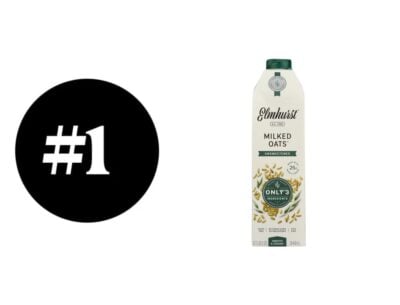
Elmhurst Milked Oats Unsweetened
My top pick for clean ingredients. Only three: water, whole grain oats, and salt, with no gums, oils, or added sugar. Give it a good shake since it naturally separates.
100 calories, 3g protein (1 cup) | $6.79

Rating System for Oat Milk Brands
Brands call their basic version “original,” “plain,” “less sweet,” or “unsweetened,” so we compared the simplest unsweetened version each brand makes (no flavors or added sugar) and scored it on three things:
- Ingredients: Short, simple lists scored highest. Added oils, gums, and long lists of additives lowered a brand’s score.
- Flavor: Mild and oaty, not bland, bitter, or sweet.
- Texture: Creamy body that blends smooth and doesn’t separate in hot coffee.
Common Questions
Oatly Barista Edition is my favorite overall, and it froths into the best foam for coffee. For smoothies, Califia Farms Extra Creamy Oatmilk is rich and creamy with no gums, and for the simplest ingredients, Elmhurst Milked Oats is just water, oats, and salt.
Barista oat milk has a little more body (usually from a touch of added oil), so it steams into thick foam and won’t separate in hot coffee. Regular oat milk is lighter, which makes it better for smoothies, cereal, and sipping.
Yes, a little. During processing, enzymes break some of the oat starch into natural sugar, so even unsweetened oat milk lists a few grams. Look for no added sugar on the label, and remember that amounts vary widely between brands.
Oats are naturally gluten free, but they’re often processed alongside wheat. If you need to avoid gluten, look for oat milk labeled certified gluten free and always read the ingredient list closely.
Most brands say to use opened oat milk within 7–10 days, kept in the fridge. Unopened shelf-stable cartons last for months in the pantry, so they’re easy to stock up on. Shake before pouring since oat milk naturally separates.
Both work great! Oat milk is creamier with a mild, slightly sweet flavor, so smoothies taste rich and velvety. Almond milk is lighter and lower in calories, and the cleanest brands are just almonds and water. See my Almond Milk Brand Guide for my top picks.
Yes, and all it takes is oats, water and a quick blend. Use cold water, don’t overblend, and strain well so it stays smooth instead of slimy. Here’s my step-by-step guide to homemade oat milk.










YAY! Love this. I switched to Oat milk last year and love it especially in tea lattes. I recently got my SO to switch over from real milk and he loves Califia and my favorite is Oatly’s Low Fat version. So we have both in the fridge now. 🙂 Thank you for the this great review.
That’s great you were able to find one for you and help your SO find one he likes, as well! 🙂
Hi Jen….thank you for all the information. I love oats and anything that you can make with them.
I do have a concern though. Glyphosate… it’s said to be used on oat crops…and not a good thing for us. What do you think?
Hi Janet. Organic farmers are absolutely forbidden from using glyphosate (a synthetic substance) in their farming practices therefore, any certified organic ingredients/products won’t contain it, nor will any products that are certified Non-GMO. Non-organic oats or oat-based products have the potential to contain glyphosate, as this is a farming aid widely used for weed control and crop desiccation.
Awesome! I am happy to know that I’m using the #1 oat milk! I live in the Pacific NW (200 mi from Seattle) and I find Califia at Safeway, usually on sale. Can’t wait until coffee shops add it to their regular non-dairy menu.
Our local coffee shops offer oat milk as an option and I was so happy when I discovered that. I’m sure more and more will follow suit!
Thank you so much for doing these. As a consumer, I get confused by which thickeners are necessary vs which ones are unhealthy. I can’t love these studies enough!! A helpful idea: Maybe make the charts into a pdf for quick access on my phone while shopping!
So glad you’re finding these helpful, Megan! And that’s a great suggestion about the charts. I will pass it on to Jen! 🙂
This is great! While some of the metrics above are obvious. I’m wondering about “quality”. Is quality linked to the how healthy the food is, how long it lasts, etc? Also, I am curious about the packaging metric because while I love the design of Califa, I often avoid it because of the plastic. Thanks for providing a great resource!
Great questions Carrie! We based quality on the following: quality of ingredients, packaging (some companies are certified B corps, so they got a boost in the quality category), and quantity of ingredients. If 2 brands had similar ingredients, yet one used organic ingredients and one didn’t, the organic one was rated higher in the quality category. All of the packaging was considered ‘recyclable’ yet the companies that use certified environmentally packaging got a better rating as well.