


This post may contain affiliate links.
Plant-based protein powder works best in a smoothie when you read the label first, then blend. This guide gives you five quick label checks, a clear amount to scoop and a straight answer on heavy metals.

Table of contents
- What Is Plant-Based Protein Powder?
- Plant-Based Protein Powder Label Checklist
- Plant Protein Sources for Smoothies
- Smoothies to Add Plant-Based Protein Powder
- How Much Plant-Based Protein Powder to Add
- Heavy Metals in Plant-Based Protein Powder
- Plant-Based Protein Powder vs. Homemade Protein Powder
- Common Questions
What Is Plant-Based Protein Powder?
Plant-based protein powder is a concentrated protein made from plants such as peas, hemp, brown rice or soy. Many brands isolate the protein, which removes most of the carbs and fat. Some powders use one source, while others blend several.
Whey and casein come from dairy, so they are not plant-based. However, a plant-based powder is not always vegan, so check the label if that matters to you.
Save for Later!
Enter your info & I’ll send it to your inbox.
Plant-Based Protein Powder Label Checklist
Start here. These five checks take about a minute, and they work on any tub or pouch.
- Protein per scoop. Check the grams per serving and the scoop size. Many plant-based powders list roughly 15 to 25 grams.
- Added sugar. Flavored powders often include sweeteners. Compare the sugar line to the flavor you plan to buy.
- Ingredient list. Shorter lists are easier to judge. Also take a second look at gums and long flavor blends.
- Third-party testing. Look for a seal such as NSF Certified for Sport or USP Verified. Then ask the brand for its heavy metal test results.
- Protein source and texture. Pea powders tend to blend smoothly, hemp tastes nutty and earthy, and brown rice can feel gritty. A blend often mixes best.
If you would rather skip the label hunt, my Homemade Protein Powder uses just hemp protein, chia and flaxseed. Otherwise, I suggest Ritual Protein or Complement Essential when I want to buy a powder. For recipes that use it, browse my high-protein smoothies.

Plant Protein Sources for Smoothies
Each source behaves a little differently in a blender. Here is how they compare in a smoothie.
- Pea: usually mixes smoothly and tastes mild, so it works in fruit and green smoothies.
- Hemp: nutty and earthy, with a slightly thicker texture. It pairs well with banana, cacao and berries.
- Brown rice: mild in flavor but can feel gritty on its own. For that reason, it often shows up in blends.
- Soy: a complete protein with a neutral taste. Skip it if you avoid soy.
- Blends: combine several sources, so they cover more amino acids and usually mix with a smoother texture.
Smoothies to Add Plant-Based Protein Powder


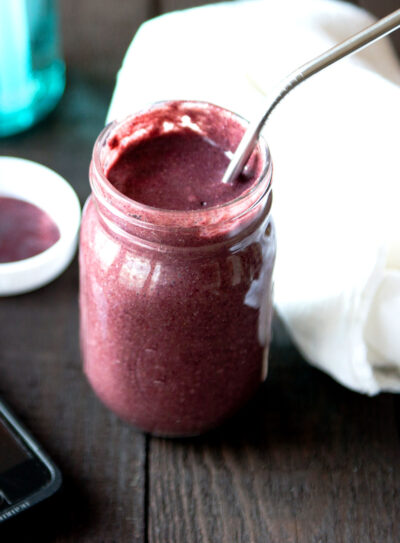
How Much Plant-Based Protein Powder to Add
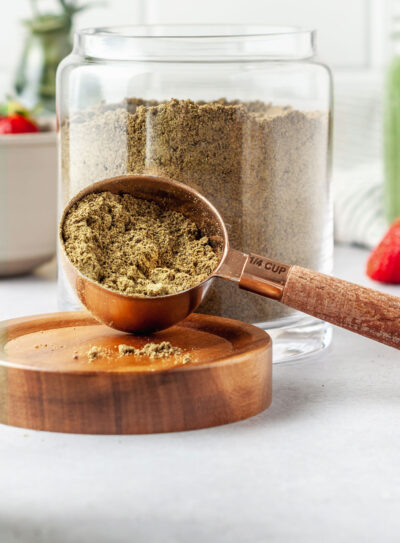
Start with one label-size scoop per smoothie. My homemade protein powder serving is 30 grams, about 1/4 cup. Next, adjust the liquid, because powder thickens a smoothie as it sits.
If your smoothie turns thick, add a splash more plant-based milk and blend again. For the full formula, see my smoothie basics.
Heavy Metals in Plant-Based Protein Powder
Testing has found lead and other heavy metals in many protein powders, and plant-based powders often scored worse. The Clean Label Project tested 134 products, and Consumer Reports reported on the results. Plants absorb metals from soil, which helps explain the pattern.
In that testing, organic powders averaged higher levels than non-organic ones. However, some brands disagree with the methods. That is why I treat the results as a reason to ask questions, not a final verdict.
So ask for proof. A good brand will share a certificate of analysis from a third-party lab. If a brand will not share one, pick another powder.

Plant-Based Protein Powder vs. Homemade Protein Powder
Homemade or store-bought comes down to what you want from each scoop. My homemade protein powder blends hemp protein, chia and flaxseed in about five minutes. Here is what my recipe card lists per 30-gram serving, which is about 1/4 cup.
- Protein: 16 grams
- Fiber: 5 grams
- Sugar: 0.1 gram, with no added sweeteners
- Calories: 140
Now compare that to a tub. Some store-bought powders list 20 grams of protein or more per scoop. That happens because isolated powders strip out most of the carbs and fat.
- Choose homemade if you want three ingredients, fiber in every scoop and no flavorings. It costs about $1 to $1.44 per serving, depending on where you buy the seeds.
- Choose store-bought if you want more protein per scoop or a vanilla or chocolate flavor. Then run it through the label checklist above.
Either way, seeds are plants too, so the testing advice still applies. For my homemade blend, I buy single-ingredient hemp protein powder. Then I check whether the brand shares its test results.
Common Questions
The best plant-based protein powder for smoothies has simple ingredients, little or no added sugar and a third-party test report. Pea powders and blends usually mix smoothly, while hemp adds a nutty flavor.
Start with one label-size scoop per smoothie. My homemade protein powder serving is 30 grams, about 1/4 cup. Then adjust the liquid, since powder thickens a smoothie.
Clean Label Project and Consumer Reports testing found heavy metals in many powders, and plant-based ones often scored worse. Look for third-party testing, and ask brands for their results.
No. Hemp belongs to the same plant family as marijuana, but it contains little to no THC. Hemp protein powder has no mind-altering effect.
Yes. My homemade protein powder blends hemp protein, chia and flaxseed in about five minutes. Each 30-gram serving has 16 grams of protein and 5 grams of fiber.










hi again, just wanted to say how helpful your websight is. thank you so much. One more question. Last time we were in the store we switched from our powdered protein to a protein shake. Says it has 30g protein 160 cal. 1 g sugar 24 minerals. It’s vanilla flavored. It, like I said makes everything taste better but, I don’t really feel good about it. Seems more like a milk shake. what is your opinion of the liquid vs the powdered. Thank you so much. kitty
Hi Kitty,
When it comes to our green smoothies we always think simple is better! After all, we’re Simple Green Smoothies! For that reason we try to stick with protein powders that have few to no additives. One of our favorites is hemp protein powder by Nutiva, it only has one ingredient!
Hope this helps!
Hi, you’ve said nuts are good for you, of course, but high in fat. What about seeds? My husband and I started making smoothies but have to be careful not to overdue the fruit smoothies. I’m looking for more veggie smoothies. I’m afraid of getting too attached to some protein powders that make you smoothies taste so good no matter what else is in it. Thinking there must be sugar in it.
Hi Kitty,
We love seeds! Two of our favorites are sunflower + pumpkin and both offer a protein punch! Worried about the sugar content of our recipes? Check out our favorite low-sugar fruit options here…
https://simplegreensmoothies.com/low-sugar-fruits
Do you actually put the sunflower or pumpkin seeds in the smoothie as a protein? Or do you just eat them on the side?
Hi Rach,
Great question! Feel free to do either! You can blend the seeds right into your green smoothie, or enjoy them on the side!
Hi. I’m currently doing the 30 day green smoothie challenge and I’m struggling with the protein powders. I prefer to use a powder in my smoothie and I’ve become accustom to whey protein. I have recently learned the benefits of eliminating animal proteins from your diet. With that said, I have started using the Sun Warrior Raw Vegan Protein Powder and the taste in my opinion is bad. I have had both the Natural and Vanilla flavors and been disappointed both times. Will you recommend a Plant Based Protein that is more palatable?
Thanks!
Hi Caroline,
Thanks for joining our 30-Day Green Smoothie Challenge and reaching out! Looking for a new plant-based protein powder. We love reaching for Nutiva Hemp Protein Powder…
Vega Protein Powder is another great option, that we’ve heard from a lot of our community!
Hope this helps!
I am using the green smoothie as a meal replacement for breakfast and lunch to help me lose weight. I did see in another comment from someone else doing the same as me, it was replied to use hemp/brown-rice type protein powders. If I substitute water with almond milk as well as using the protein powder, is that too much with trying to lose weight? or should I stick with water?
Hi Leslie,
Thanks for reaching out + great question! When using your green smoothie as a meal replacement we suggest adding protein + healthy fats, no matter the liquid base. Adding protein + healthy fats will ensure you’re fueling your body with a complete meal. Check out our favorite meal replacement booster combos here…
https://simplegreensmoothies.com/meal-replacement-smoothie
Hullo
I am so looking forward to the 30 day challenge. I loves me some green bevvies anyway but I had begun to skulk off and as a result gained 2 stones!! OMG pass me that blender quick!!
I note in your response to another poster/postee that they should add coconut oil to gain weight – I love the taste of the stuff but I don’t want to gain another lb. Do you recommend I leave it out? I make one smoothie with the Big C and another with Flaxseed…I don’t want to overdo it, my trousers are just soooo tight!! 🙁
Many thanks
SP
Hi Sarah,
Adding healthy fats like coconut oil to your green smoothie is a great way to provide your body with a boost of nutrition. When used as a meal replacement adding healthy fats + protein is the way to go to ensure you’re providing your body with a complete meal. Using your green smoothie as a healthy snack when trying to lose weight, you can always skip the coconut oil then.
Hope this helps!
It does. Many thanks
Rawesome! 🙂