


This post may contain affiliate links.
Plant-based protein powder works best in a smoothie when you read the label first, then blend. This guide gives you five quick label checks, a clear amount to scoop and a straight answer on heavy metals.

Table of contents
- What Is Plant-Based Protein Powder?
- Plant-Based Protein Powder Label Checklist
- Plant Protein Sources for Smoothies
- Smoothies to Add Plant-Based Protein Powder
- How Much Plant-Based Protein Powder to Add
- Heavy Metals in Plant-Based Protein Powder
- Plant-Based Protein Powder vs. Homemade Protein Powder
- Common Questions
What Is Plant-Based Protein Powder?
Plant-based protein powder is a concentrated protein made from plants such as peas, hemp, brown rice or soy. Many brands isolate the protein, which removes most of the carbs and fat. Some powders use one source, while others blend several.
Whey and casein come from dairy, so they are not plant-based. However, a plant-based powder is not always vegan, so check the label if that matters to you.
Save for Later!
Enter your info & I’ll send it to your inbox.
Plant-Based Protein Powder Label Checklist
Start here. These five checks take about a minute, and they work on any tub or pouch.
- Protein per scoop. Check the grams per serving and the scoop size. Many plant-based powders list roughly 15 to 25 grams.
- Added sugar. Flavored powders often include sweeteners. Compare the sugar line to the flavor you plan to buy.
- Ingredient list. Shorter lists are easier to judge. Also take a second look at gums and long flavor blends.
- Third-party testing. Look for a seal such as NSF Certified for Sport or USP Verified. Then ask the brand for its heavy metal test results.
- Protein source and texture. Pea powders tend to blend smoothly, hemp tastes nutty and earthy, and brown rice can feel gritty. A blend often mixes best.
If you would rather skip the label hunt, my Homemade Protein Powder uses just hemp protein, chia and flaxseed. Otherwise, I suggest Ritual Protein or Complement Essential when I want to buy a powder. For recipes that use it, browse my high-protein smoothies.

Plant Protein Sources for Smoothies
Each source behaves a little differently in a blender. Here is how they compare in a smoothie.
- Pea: usually mixes smoothly and tastes mild, so it works in fruit and green smoothies.
- Hemp: nutty and earthy, with a slightly thicker texture. It pairs well with banana, cacao and berries.
- Brown rice: mild in flavor but can feel gritty on its own. For that reason, it often shows up in blends.
- Soy: a complete protein with a neutral taste. Skip it if you avoid soy.
- Blends: combine several sources, so they cover more amino acids and usually mix with a smoother texture.
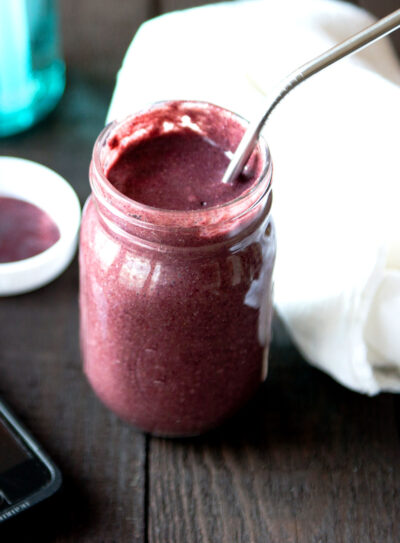
Smoothies to Add Plant-Based Protein Powder


How Much Plant-Based Protein Powder to Add
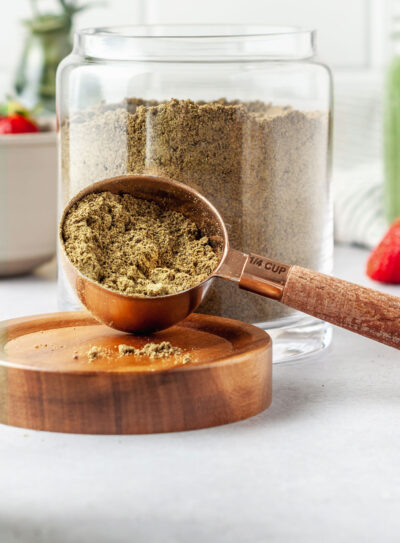
Start with one label-size scoop per smoothie. My homemade protein powder serving is 30 grams, about 1/4 cup. Next, adjust the liquid, because powder thickens a smoothie as it sits.
If your smoothie turns thick, add a splash more plant-based milk and blend again. For the full formula, see my smoothie basics.
Heavy Metals in Plant-Based Protein Powder
Testing has found lead and other heavy metals in many protein powders, and plant-based powders often scored worse. The Clean Label Project tested 134 products, and Consumer Reports reported on the results. Plants absorb metals from soil, which helps explain the pattern.
In that testing, organic powders averaged higher levels than non-organic ones. However, some brands disagree with the methods. That is why I treat the results as a reason to ask questions, not a final verdict.
So ask for proof. A good brand will share a certificate of analysis from a third-party lab. If a brand will not share one, pick another powder.

Plant-Based Protein Powder vs. Homemade Protein Powder
Homemade or store-bought comes down to what you want from each scoop. My homemade protein powder blends hemp protein, chia and flaxseed in about five minutes. Here is what my recipe card lists per 30-gram serving, which is about 1/4 cup.
- Protein: 16 grams
- Fiber: 5 grams
- Sugar: 0.1 gram, with no added sweeteners
- Calories: 140
Now compare that to a tub. Some store-bought powders list 20 grams of protein or more per scoop. That happens because isolated powders strip out most of the carbs and fat.
- Choose homemade if you want three ingredients, fiber in every scoop and no flavorings. It costs about $1 to $1.44 per serving, depending on where you buy the seeds.
- Choose store-bought if you want more protein per scoop or a vanilla or chocolate flavor. Then run it through the label checklist above.
Either way, seeds are plants too, so the testing advice still applies. For my homemade blend, I buy single-ingredient hemp protein powder. Then I check whether the brand shares its test results.
Common Questions
The best plant-based protein powder for smoothies has simple ingredients, little or no added sugar and a third-party test report. Pea powders and blends usually mix smoothly, while hemp adds a nutty flavor.
Start with one label-size scoop per smoothie. My homemade protein powder serving is 30 grams, about 1/4 cup. Then adjust the liquid, since powder thickens a smoothie.
Clean Label Project and Consumer Reports testing found heavy metals in many powders, and plant-based ones often scored worse. Look for third-party testing, and ask brands for their results.
No. Hemp belongs to the same plant family as marijuana, but it contains little to no THC. Hemp protein powder has no mind-altering effect.
Yes. My homemade protein powder blends hemp protein, chia and flaxseed in about five minutes. Each 30-gram serving has 16 grams of protein and 5 grams of fiber.










About how much fruit should go on a smoothie without consuming to much sugar? Also how much should you drink a day? I consume about 32 ounces a day. Measured with my mason jar. Is that to much? Plus everyone says how much weight there losing. I’m not. Am I don’t something wrong? Thanks
We recommend between one to two servings of smoothie a day (each serving being 16 ounces) so it sounds like you’re doing well 🙂 We recommend 1.5 cups of fruit in each serving, though you don’t have to follow that as a strict rule!
I have been trying to add green smoothies to my diet for a while, but I end up with stomache cramps and chronic diarreah. I am gluten intolerant, suffer from candida and IBS. I can tolerate just 1 cup for a couple of days but then my body goes haywire and I have to stop! What should I do??
Hi Shereen!
Sounds like you’re having a bit of trouble. We’d suggest talking to your doctor if you’re concerned and continue experiencing these symptoms.
Hi gals. Thanks so much for this site. Very informative. My question: can i substitute two meals a day? I hate to chew.
Sure!
Rice based probiotic yogurt is a non-dairy yogurt. I use
Bio K+
I tent to skip brakefast and/or lunch because I’m always on the the go 🙁 If I choose to substitute one or two of my meals with a smoothie will the protein that are part of the ingredients be enough or should I have extra protein(ex: hard boils egg, almond butter with toast, or protein powder) to make it a complete meal?
On smoothie #2 and loving it ❤️!!!!
Regina
Hi Regina!
Everyone’s different, so it’s tough to say if you’ll need the extra protein or not. We use green smoothies as meal replacements all the time without adding protein, so we’d encourage you to try it. If you find that it’s not enough, then go ahead and add some ingredients with protein!